Logline: In 1829, 19-year-old Norwegian sailor Olaf Jansen embarks on a perilous voyage with his father, only to vanish into the Arctic ice—and reemerge two years later with an impossible tale: a hidden world beneath the Earth, lit by a dim, smoky sun and inhabited by a race of 12-foot-tall giants wielding technology beyond human imagination. Declared insane, Olaf is imprisoned in an asylum for 28 years. Now, on his deathbed, he risks everything to expose the truth—a conspiracy buried by governments, a lost Eden guarded by ancient forces, and the chilling reason why no one is meant to return from the land beyond the North Wind .
A fully immersive and interactive cosmic horror experience – Awakening Cinema by Sylvie Marie Amour DeCristo
A comprehensive, innovative cinematic exhibition plan designed to transform Smoky God from a movie into a fully immersive, interactive cosmic horror experience.
The Smoky God Cosmic Horror Treatment
CINEMATIC EXHIBITION PLAN: THE SMOKY GOD – THE AWAKENING EXPERIENCE
Tagline:“The Screening Is Just the Beginning.”
This plan transcends the traditional theater model, creating a multi-sensory, narrative-driven event that begins weeks before the film and continues long after the credits roll.
PHASE 1: THE RECRUITMENT (Pre-Event – 4 Weeks Out)
The experience doesn’t start at the theater; it starts on the user’s phone.
The Agharta Initiative Website: A cryptic, minimalist website appears, offering a “Psychological & Parapsychological Aptitude Test.” It’s presented as a cutting-edge research project.
The Digital Screening: The quiz uses AI to analyze responses (e.g., “What is truth?”, “Describe the shape of reality”), social media leanings (via connected accounts), and even vocal stress in spoken answers.
The Invitation: “Qualified” individuals receive a personalized digital dossier. It includes:
A subject number (e.g., Subject #728-JANSEN).
An “Admission Ticket” with a specific date and time (always 3:33 PM or 7:33 PM).
A link to download the “Veil-Piercer AR” app.
A warning: “Your participation is mandatory. Silence is advised.”
PHASE 2: THE ARRIVAL & PRE-SHOW (Theater Lobby)
The theater is no longer a theater; it’s Surface Station #7.
Ambiance: The lobby is dimly lit, stripped of all traditional movie posters. Staff wear faux-vintage asylum orderly uniforms, unsmiling.
The AR App Activation: Upon arrival, the Veil-Piercer app triggers.
Pointing it at other “Subjects” (audience members) reveals brief, glitching text over their heads: “Unstable Recall”, “Potential Breacher”, “Cycle 144.”
Pointing it at the walls reveals hidden asylum blueprints, scrawled equations, and the recurring Black Sun sigil.
“Biometric Calibration”: Before entering the auditorium, subjects are “processed” – a quick hand scan (that collects no real data) and a “retinal stabilizer” flash (a bright light that leaves a temporary afterimage).
Theming: The concession stand sells “Nutritional Paste” (pudding cups) and “Hydration Fluid” (water in apothecary-style bottles). The popcorn is unseasoned and stale.
PHASE 3: THE SCREENING (The Immersive Auditorium)
The film itself is the core, but the environment is the amplifier.
Seating: Equipped with Subpac haptic vests or advanced seats with transducers.
Sensory Mapped Environment:
Infrasound: During the Arctic storm and Smoky God scenes, sub-20Hz frequencies are pumped into the room, creating primal unease and vibrations felt in the chest.
Directional Audio: Whispers from the film (“You’re still sleeping…”) seem to come from the empty seat next to a viewer.
Scent Diffusion: The crisp, ozonic smell of Arctic air during the voyage. The cloying scent of antiseptic and decay in the asylum scenes.
Thermodynamics: The theater temperature noticeably drops during the ice scenes.
4th Wall Breaks: At key moments (e.g., a giant’s close-up), a blast of mist or a coordinated vibration in the seats makes the audience jump.
The 3:33 Glitch: Exactly 33 minutes into the film, the screen and sound cut out for 3 seconds of absolute darkness and silence. A single, distorted voice whispers a viewer’s name (pulled from their ticket data) before snapping back.
PHASE 4: THE TRANSITION (Post-Credit Sequence)
The credits don’t roll. The screen instead displays a live satellite feed of the Arctic.
A pulse of light emerges from the North Pole.
Text appears: “VEIL INTEGRITY COMPROMISED. INITIATE RECALL PROTOCOL?”
The theater doors slam shut and lock with a heavy thud. The audience is trapped for 33 seconds of escalating alarm sounds and strobes before the doors unlock.
PHASE 5: THE AFTERMATH (The Living Experience)
The story leaves the theater and infiltrates the real world.
Personalized AR Aftermath: The Veil-Piercer app remains active.
It periodically sends “Anomaly Alerts” directing users to specific GPS coordinates (a local park, their own street). At that location, the AR app reveals a “veil thin spot” – perhaps a hovering Aghartan rune or a ghostly image of Olaf.
It allows users to “scan” friends and family, overlaying text like “Cognitive Dissonance: High” or “Unaware.”
The Data Dump: 33 hours after the screening, subjects receive an email with their “Full Declassified File,” including:
Their personalized asylum intake form.
A map of their hometown with Aghartan energy lines overlay.
A “cycle number” suggesting how many times they’ve been through this.
Live Immersive Theater Events: In major cities, secret, ticketed events are held in abandoned buildings. Actors playing asylum orderlies or Aghartan “Silent Ones” guide small groups through a 30-minute live experience that continues the story, blurring the line between performance and reality.
TECHNICAL SPECIFICATIONS & PARTNERSHIPS
Technology:
Custom AR App: Developed in Unity/Unreal Engine.
Theater Integration: Partnership with companies like D-Box (motion seats) and 4DX for environmental effects, pushed to their horror potential.
Data Handling: A secure, ethical, and transparent system for handling user data, with clear opt-outs. The horror is in the illusion of intrusion, not actual privacy violation.
Marketing:
Viral “Agharta Initiative” mystery box.
Leaked “asylum footage” and “giant anatomy diagrams” on Reddit and Discord.
No traditional trailers; only cryptic, found-footage style clips.
ETHICAL SAFEGUARDS
Clear Communication: Throughout the process, it is made clear this is an elaborate theatrical experience.
Safe Words: Staff are trained to recognize genuine distress. The AR app has a prominent “EXIT EXPERIENCE” button that immediately shuts it down.
Content Warnings: Extremely explicit warnings about the intense, immersive, and psychologically engaging nature of the experience.
This exhibition plan doesn’t just show a horror movie; it subjects the audience to it, making them active participants in the cosmic dread of The Smoky God. It creates a legend, a shared secret, and an unforgettable piece of entertainment.
PHASE 1: THE RECRUITMENT
The Digital Invitation
A sleek, minimalist website titled ‘The Agharta Initiative’ glows on a dark laptop screen. The cursor hovers over a button labeled ‘Begin Aptitude Assessment.’ In the screen’s reflection, the user’s own face is distorted, with a faint, glowing third eye sketched on their forehead.
The Psychological Profiling
A smartphone screen shows a parapsychology quiz. Question 7 reads: ‘Describe the shape of reality.’ The user’s finger, casting a long shadow, types ‘Hollow.’ The app’s UI glitches subtly, revealing a flicker of an asylum blueprint underneath.
The Personalized Dossier
A digital document titled ‘CONFIDENTIAL: SUBJECT #728-JANSEN’ is open on a tablet. It includes a distorted, glitching profile picture of the user, a map of their hometown with strange energy lines, and a ticket that simply says ‘ADMIT ONE – 3:33’.
PHASE 2: THE ARRIVAL & PRE-SHOW
The Transformed Theater Lobby
A cinema lobby is stripped of all color and movie posters. The walls are bare concrete. ‘Orderlies’ in stark white, vintage uniforms stand motionless. The only light comes from a single, flickering fluorescent tube, casting long, dramatic shadows.
Veil-Piercer AR Overlay
“A first-person perspective through a phone screen. The AR app is active, overlaying the lobby. Glowing, pulsating sacred geometry is superimposed on the walls. Over the heads of other attendees, ghostly text reads: ‘CYCLE 144 – MEMORY FRAGMENTATION DETECTED’.
The Biometric Calibration Station
A subject places their hand on a sleek, black scanner that emits a cold, blue light. An ‘orderly’ watches, holding a tablet that displays a live, glitching MRI-like image of the subject’s skull, with a highlighted pineal gland.
The Concession of Lies
The concession stand is renamed ‘NUTRITIONAL DISPENSARY.’ It sells plain oatmeal in clinical white cups and water in old-fashioned glass bottles with apothecary labels. The popcorn is pale, unappetizing, and sits under a cold, blue light.”
PHASE 3: THE SCREENING
The Haptic Preparedness
An audience sits in a dark theater, each person wearing a sleek, black Subpac haptic vest over their clothes. Their faces are illuminated by the giant screen, which shows the title: THE SMOKY GOD. A low, ominous hum is almost visible in the air.
The 3:33 Glitch Event
Absolute, perfect blackness. The theater is pitch black and silent. In the foreground, a young woman’s face is frozen in a gasp, a single tear catching the faintest light, as a distorted whisper seems to emanate from the empty seat beside her.
The Scent of Antiseptic
A close-up on a viewer’s nose wrinkling in disgust. In the background, the film shows the grim asylum. A faint, cold mist drifts across the theater floor, carrying the unmistakable, chilling scent of hospital antiseptic and damp stone.
PHASE 4: THE TRANSITION
The Live Satellite Feed
The film’s credits are absent. Instead, the screen displays a live, high-definition satellite feed of the Arctic ice cap. A massive, unexplained violet pulse of light erupts from the North Pole, washing the entire audience in an eerie glow.”
The Lock-In
The theater doors are heavy, industrial-grade metal. As the text ‘INITIATE RECALL PROTOCOL?’ flashes on screen, a heavy mechanical bolt slams into place with a loud THUD, sealing the audience inside for 33 seconds of panic.
The Strobe Light Panic
A wide shot of the theater during the lockdown. Stark, white strobe lights flash, freezing the audience in terrified tableaus—hands over ears, mouths open in screams. The alarm is a visible, physical wave of red light pulsing from speakers on the walls.
PHASE 5: THE AFTERMATH
The AR Anomaly Alert
A person stands in a mundane city park at night, looking at their phone. The Veil-Piercer app is open, its camera view showing a hovering, rotating Aghartan rune superimposed over a children’s swing set, which now looks sinister and alien.
Scanning a Friend
The Declassified Email
An inbox on a laptop screen. The top email has the subject line: ‘YOUR DECLASSIFIED FILE – THE AGHARTA INITIATIVE’. The preview shows a PDF attachment titled ‘Subject_728_Jansen_PsychEval_1893.pdf
The Live Immersive Event
A dim, damp basement. A group of participants is led by an actor in a tattered asylum orderly outfit. He holds a flickering lantern that casts shaky shadows on brick walls covered in frantic, chalk-drawn equations and the repeated number 333.
The Silent One Encounter
In the live event, a tall, impossibly thin figure (a ‘Silent One’) emerges from the shadows. It wears a featureless porcelain mask. It doesn’t speak, but a deep, sub-harmonic frequency emanates from it, causing dust to vibrate off the floor.
The Final Revelation at Home
The viewer is in their own bathroom, looking into the mirror. The Veil-Piercer app is open on their phone on the sink. In the mirror’s reflection, the app’s screen shows an overlay on their own face: ‘SUBJECT STATUS: AWAKENING. WELCOME BACK.’
Additional fully immersive and interactive cosmic horror experiences designed to deepen the dread before and during the screening of The Smoky God.
1. THE RESONANCE TUNING FOYER (Pre-Screening)
Concept: A sound-based installation that physically prepares—or unprepares—the audience’s bodies for the film.
Experience:
Before entering the main lobby, small groups are led into a pitch-black, anechoic chamber.
A deep, sub-harmonic tone (7.83Hz, the Schumann Resonance) is introduced, felt more than heard.
The Interactive Horror: A directional speaker system then “paints” specific individuals with whispers in a distorted mix of Sanskrit and the viewer’s native language. The whispers seem to come from inside their own skulls, saying things like “Your frequency is familiar…” or “You left something behind last time.”
The Twist: The room isn’t silent. The faint, amplified sound of everyone’s heartbeat and digestive systems is piped in, making them aware of their own fragile, organic biology before confronting the inorganic horror of the Asylum.
Cinematic Image:
“A group of people stand frozen in a perfectly black, sound-absorbing room. Their faces are pale in the faint light of a single, pulsating orb in the center of the ceiling. The air visibly ripples with a deep bass frequency, and one woman flinches as a voice that sounds like her own deceased grandmother whispers directly into her ear from nowhere.”
2. THE LIVING MANUSCRIPT (Pre-Screening)
Concept: An interactive prop that personalizes the lore and creates a tangible artifact to carry into the screening.
Experience:
In a dimly lit “Archive” room, attendees find a large, leather-bound book on a pedestal—a replica of Olaf Jansen’s journal.
The pages are blank. An “Orderly” instructs attendees to place their hands on the page.
The Interactive Horror: Under each page is a heat-sensitive screen and pressure sensor. When a hand is placed on it, “blood” (via projected light) spreads from the fingertips, forming into text specific to the participant (using their pre-screened data).
It might reveal a “past life regression” as an Arctic explorer.
It might sketch a map of their neighborhood with Aghartan symbols overlaid.
It might simply write their name and subject number in a glitching, alien script.
The text fades after 10 seconds, ensuring no one else sees it, making the horror intimate and unshareable.
Cinematic Image:
A person’s hand is pressed flat on a yellowed parchment page. From under their palm, a vivid red liquid light spreads, forming intricate, glowing geometric patterns that resolve into their own home address written in a spidery, unknown alphabet
3. THE VEIL THINNING HEADSET (Screening)
Concept: A personalized audio experience that isolates each viewer and subjects them to a bespoke psychological assault.
Experience:
Instead of generic headphones, each viewer is given a sleek, black headset with EEG sensors.
During the screening, the headset monitors biometrics (heart rate, sweat). During calm scenes, it plays the standard film audio.
The Interactive Horror: During high-tension scenes, if the system detects heightened anxiety, it triggers a binaural audio track that only the stressed individual can hear.
It might layer the sound of their own name being called by a Doctor.
It might play a distorted, slowed-down version of their favorite childhood song.
It might whisper a real, personal insecurity (“They all know you’re a fraud“) in a synthesized version of their own inner voice.
Cinematic Image:
A young man in a theater seat, his face illuminated by the terrifying glow of the Smoky God on screen. He alone is wearing a high-tech headset with a single, small LED that has just flickered from blue to red, indicating his personal horror track has just activated.
4. THE FLESH-WALL TUNNEL (Pre-Screening)
Concept: A tactile and olfactory horror that bridges the gap between the familiar and the grotesque.
Experience:
The final passage into the auditorium is a narrow, pitch-black tunnel.
The walls are not cold metal or stone, but warm, soft, and slightly moist, made from a high-quality silicone designed to feel like living flesh.
The Interactive Horror: As attendees walk through, the walls gently palpitate. Embedded speakers emit a low, rhythmic lub-dub heartbeat. Hidden pressure sensors cause the “flesh” to briefly contract around a person’s arm or shoulder as they pass. The air is thick with a coppery, metallic scent (blood) and the sterile smell of ozone.
This makes the transition into the theater feel like being swallowed or reborn into a new, horrifying reality.
Cinematic Images:
A long, dark corridor with walls made of glistening, meat-like tissue. Veins of faint blue light throb within them. A woman edges through, her face a mask of revulsion as the wall beside her visibly bulges outward as if something is moving just beneath the surface.
5. THE SYNCHRONIZED BIOMETRIC CHORUS (Screening)
Concept: Using the audience’s collective fear to power a visual effect on screen, making them complicit in the horror.
Experience:
At a key moment in the third act—perhaps as the Smoky God is dying—the film pauses. The screen shows the entity flickering weakly.
A message appears: “ENERGY CRITICAL. FEED IT.”
The Interactive Horror: The haptic vests begin to vibrate in sync with a heartbeat. On screen, a waveform reacts to the audience’s collective heart rate (monitored via the headsets or thermal cameras). The more anxious and elevated the group’s heart rates become, the brighter and stronger the Smoky God burns on screen. The audience literally fuels the horror with their own fear, creating a devastating feedback loop.
Cinematic Image:
The massive screen shows the dying Smoky God, its light guttering. Overlaid on top is a live, pulsating bio-feedback waveform that spikes dramatically as the audience’s collective fear rises, causing the god to flare back to life with a violent, crimson burst.
6. THE GRAVITY DISTORTION CHAIR (Screening)
Concept: A physical disorientation mimicking the journey into the Earth’s interior.
Experience:
Select seats (or all, in a premium setup) are equipped with full-motion capabilities like advanced D-Box systems, but programmed for cosmic horror, not action.
The Interactive Horror: Instead of just jolting for jumpscares, the chairs create a sustained, uncanny feeling of wrongness.
During the boat voyage into the whirlpool, the chairs tilt 15 degrees backwards and slowly spin, inducing vertigo.
In Agharta, where gravity is different, the chairs subtly vibrate at a frequency that creates a feeling of lightness or unease in the stomach.
During the asylum scenes, the movements become jerky and unpredictable, like the convulsions of electroshock therapy.
Cinematic Image:
Awakening Cinema Cosmic Horror The Smoky God immersive interactive experience.
I FEAR the seemingly incredible story which I am about to relate will be regarded as the result of a distorted intellect superinduced, possibly, by the glamour of unveiling a marvelous mystery, rather than a truthful record of the unparalleled experiences related by one Olaf Jansen, whose eloquent madness so appealed to my imagination that all thought of an analytical criticism has been effectually dispelled.
Marco Polo will doubtless shift uneasily in his grave at the strange story I am called upon to chronicle; a story as strange as a Munchausen tale. It is also incongruous that I, a disbeliever, should be the one to edit the story of Olaf Jansen, whose name is now for the first time given to the world, yet who must hereafter rank as one of the notables of earth.
I freely confess his statements admit of no rational analysis, but have to do with the profound mystery concerning the frozen North that for centuries has claimed the attention of scientists and laymen alike.
However much they are at variance with the cosmographical manuscripts of the past, these plain statements may be relied upon as a record of the things Olaf Jansen claims to have seen with his own eyes.
A hundred times I have asked myself whether it is possible that the world’s geography is incomplete, and that the startling narrative of Olaf Jansen is predicated upon demonstrable facts. The reader may be able to answer these queries to his own satisfaction, however far the chronicler of this narrative may be from having reached a conviction. Yet sometimes even I am at a loss to know whether I have been led away from an abstract truth by the ignes fatui of a clever superstition, or whether heretofore accepted facts are, after all, founded upon falsity.
It may be that the true home of Apollo was not at Delphi, but in that older earth-center of which Plato speaks, where he says: “Apollo’s real home is among the Hyperboreans, in a land of perpetual life, where mythology tells us two doves flying from the two opposite ends of the world met in this fair region, the home of Apollo. Indeed, according to Hecataeus, Leto, the mother of Apollo, was born on an island in the Arctic Ocean far beyond the North Wind.”
It is not my intention to attempt a discussion of the theogony of the deities nor the cosmogony of the world. My simple duty is to enlighten the world concerning a heretofore unknown portion of the universe, as it was seen and described by the old Norseman, Olaf Jansen.
Interest in northern research is international. Eleven nations are engaged in, or have contributed to, the perilous work of trying to solve Earth’s one remaining cosmological mystery.
There is a saying, ancient as the hills, that “truth is stranger than fiction,” and in a most startling manner has this axiom been brought home to me within the last fortnight.
It was just two o’clock in the morning when I was aroused from a restful sleep by the vigorous ringing of my door-bell. The untimely disturber proved to be a messenger bearing a note, scrawled almost to the point of illegibility, from an old Norseman by the name of Olaf Jansen. After much deciphering, I made out the writing, which simply said: “Am ill unto death. Come.” The call was imperative, and I lost no time in making ready to comply.
Perhaps I may as well explain here that Olaf Jansen, a man who quite recently celebrated his ninety-fifth birthday, has for the last half-dozen years been living alone in an unpretentious bungalow out Glendale way, a short distance from the business district of Los Angeles, California.
It was less than two years ago, while out walking one afternoon that I was attracted by Olaf Jansen’s house and its homelike surroundings, toward its owner and occupant, whom I afterward came to know as a believer in the ancient worship of Odin and Thor.
There was a gentleness in his face, and a kindly expression in the keenly alert gray eyes of this man who had lived more than four-score years and ten; and, withal, a sense of loneliness that appealed to my sympathy. Slightly stooped, and with his hands clasped behind him, he walked back and forth with slow and measured tread, that day when first we met. I can hardly say what particular motive impelled me to pause in my walk and engage him in conversation. He seemed pleased when I complimented him on the attractiveness of his bungalow, and on the well-tended vines and flowers clustering in profusion over its windows, roof and wide piazza.
I soon discovered that my new acquaintance was no ordinary person, but one profound and learned to a remarkable degree; a man who, in the later years of his long life, had dug deeply into books and become strong in the power of meditative silence.
I encouraged him to talk, and soon gathered that he had resided only six or seven years in Southern California, but had passed the dozen years prior in one of the middle Eastern states. Before that he had been a fisherman off the coast of Norway, in the region of the Lofoden Islands, from whence he had made trips still farther north to Spitzbergen and even to Franz Josef Land.
When I started to take my leave, he seemed reluctant to have me go, and asked me to come again. Although at the time I thought nothing of it, I remember now that he made a peculiar remark as I extended my hand in leave-taking. “You will come again?” he asked. “Yes, you will come again some day. I am sure you will; and I shall show you my library and tell you many things of which you have never dreamed, things so wonderful that it may be you will not believe me.”
I laughingly assured him that I would not only come again, but would be ready to believe whatever he might choose to tell me of his travels and adventures.
In the days that followed I became well acquainted with Olaf Jansen, and, little by little, he told me his story, so marvelous, that its very daring challenges reason and belief. The old Norseman always expressed himself with so much earnestness and sincerity that I became enthralled by his strange narrations.
Then came the messenger’s call that night, and within the hour I was at Olaf Jansen’s bungalow.
He was very impatient at the long wait, although after being summoned I had come immediately to his bedside.
“I must hasten,” he exclaimed, while yet he held my hand in greeting. “I have much to tell you that you know not, and I will trust no one but you. I fully realize,” he went on hurriedly, “that I shall not survive the night. The time has come to join my fathers in the great sleep.”
I adjusted the pillows to make him more comfortable, and assured him I was glad to be able to serve him in any way possible, for I was beginning to realize the seriousness of his condition.
The lateness of the hour, the stillness of the surroundings, the uncanny feeling of being alone with the dying man, together with his weird story, all combined to make my heart beat fast and loud with a feeling for which I have no name. Indeed, there were many times that night by the old Norseman’s couch, and there have been many times since, when a sensation rather than a conviction took possession of my very soul, and I seemed not only to believe in, but actually see, the strange lands, the strange people and the strange world of which he told, and to hear the mighty orchestral chorus of a thousand lusty voices.
For over two hours he seemed endowed with almost superhuman strength, talking rapidly, and to all appearances, rationally. Finally he gave into my hands certain data, drawings and crude maps. “These,” said he in conclusion, “I leave in your hands. If I can have your promise to give them to the world, I shall die happy, because I desire that people may know the truth, for then all mystery concerning the frozen Northland will be explained. There is no chance of your suffering the fate I suffered. They will not put you in irons, nor confine you in a mad-house, because you are not telling your own story, but mine, and I, thanks to the gods, Odin and Thor, will be in my grave, and so beyond the reach of disbelievers who would persecute.”
Without a thought of the farreaching results the promise entailed, or foreseeing the many sleepless nights which the obligation has since brought me, I gave my hand and with it a pledge to discharge faithfully his dying wish.
As the sun rose over the peaks of the San Jacinto, far to the eastward, the spirit of Olaf Jansen, the navigator, the explorer and worshiper of Odin and Thor, the man whose experiences and travels, as related, are without a parallel in all the world’s history, passed away, and I was left alone with the dead.
And now, after having paid the last sad rites to this strange man from the Lofoden Islands, and the still farther “Northward Ho!”, the courageous explorer of frozen regions, who in his declining years (after he had passed the four-score mark) had sought an asylum of restful peace in sun-favored California, I will undertake to make public his story.
But, first of all, let me indulge in one or two reflections:
Generation follows generation, and the traditions from the misty past are handed down from sire to son, but for some strange reason interest in the ice-locked unknown does not abate with the receding years, either in the minds of the ignorant or the tutored.
With each new generation a restless impulse stirs the hearts of men to capture the veiled citadel of the Arctic, the circle of silence, the land of glaciers, cold wastes of waters and winds that are strangely warm. Increasing interest is manifested in the mountainous icebergs, and marvelous speculations are indulged in concerning the earth’s center of gravity, the cradle of the tides, where the whales have their nurseries, where the magnetic needle goes mad, where the Aurora Borealis illumines the night, and where brave and courageous spirits of every generation dare to venture and explore, defying the dangers of the “Farthest North.”
One of the ablest works of recent years is “Paradise Found, or the Cradle of The Human Race at the North Pole,” by William F. Warren. In his carefully prepared volume, Mr. Warren almost stubbed his toe against the real truth, but missed it seemingly by only a hair’s breadth, if the old Norseman’s revelation be true.
Dr. Orville Livingston Leech, scientist, in a recent article, says:
“The possibilities of a land inside the earth were first brought to my attention when I picked up a geode on the shores of the Great Lakes. The geode is a spherical and apparently solid stone, but when broken is found to be hollow and coated with crystals. The earth is only a larger form of a geode, and the law that created the geode in its hollow form undoubtedly fashioned the earth in the same way.”
In presenting the theme of this almost incredible story, as told by Olaf Jansen, and supplemented by manuscript, maps and crude drawings entrusted to me, a fitting introduction is found in the following quotation:
“In the beginning God created the heaven and the earth, and the earth was without form and void.” And also, “God created man in his own image.” Therefore, even in things material, man must be God-like, because he is created in the likeness of the Father.
A man builds a house for himself and family. The porches or verandas are all without, and are secondary. The building is really constructed for the conveniences within.
Olaf Jansen makes the startling announcement through me, an humble instrument, that in like manner, God created the earth for the “within”—that is to say, for its lands, seas, rivers, mountains, forests and valleys, and for its other internal conveniences, while the outside surface of the earth is merely the veranda, the porch, where things grow by comparison but sparsely, like the lichen on the mountain side, clinging determinedly for bare existence.
Take an egg-shell, and from each end break out a piece as large as the end of this pencil. Extract its contents, and then you will have a perfect representation of Olaf Jansen’s earth. The distance from the inside surface to the outside surface, according to him, is about three hundred miles. The center of gravity is not in the center of the earth, but in the center of the shell or crust; therefore, if the thickness of the earth’s crust or shell is three hundred miles, the center of gravity is one hundred and fifty miles below the surface.
In their log-books Arctic explorers tell us of the dipping of the needle as the vessel sails in regions of the farthest north known. In reality, they are at the curve; on the edge of the shell, where gravity is geometrically increased, and while the electric current seemingly dashes off into space toward the phantom idea of the North Pole, yet this same electric current drops again and continues its course southward along the inside surface of the earth’s crust.
In the appendix to his work, Captain Sabine gives an account of experiments to determine the acceleration of the pendulum in different latitudes. This appears to have resulted from the joint labor of Peary and Sabine. He says: “The accidental discovery that a pendulum on being removed from Paris to the neighborhood of the equator increased its time of vibration, gave the first step to our present knowledge that the polar axis of the globe is less than the equatorial; that the force of gravity at the surface of the earth increases progressively from the equator toward the poles.”
According to Olaf Jansen, in the beginning this old world of ours was created solely for the “within” world, where are located the four great rivers—the Euphrates, the Pison, the Gihon and the Hiddekel. These same names of rivers, when applied to streams on the “outside” surface of the earth, are purely traditional from an antiquity beyond the memory of man.
On the top of a high mountain, near the fountain-head of these four rivers, Olaf Jansen, the Norseman, claims to have discovered the long-lost “Garden of Eden,” the veritable navel of the earth, and to have spent over two years studying and reconnoitering in this marvelous “within” land, exuberant with stupendous plant life and abounding in giant animals; a land where the people live to be centuries old, after the order of Methuselah and other Biblical characters; a region where one-quarter of the “inner” surface is water and three-quarters land; where there are large oceans and many rivers and lakes; where the cities are superlative in construction and magnificence; where modes of transportation are as far in advance of ours as we with our boasted achievements are in advance of the inhabitants of “darkest Africa.”
The distance directly across the space from inner surface to inner surface is about six hundred miles less than the recognized diameter of the earth. In the identical center of this vast vacuum is the seat of electricity—a mammoth ball of dull red fire—not startlingly brilliant, but surrounded by a white, mild, luminous cloud, giving out uniform warmth, and held in its place in the center of this internal space by the immutable law of gravitation. This electrical cloud is known to the people “within” as the abode of “The Smoky God.” They believe it to be the throne of “The Most High.”
Olaf Jansen reminded me of how, in the old college days, we were all familiar with the laboratory demonstrations of centrifugal motion, which clearly proved that, if the earth were a solid, the rapidity of its revolution upon its axis would tear it into a thousand fragments.
The old Norseman also maintained that from the farthest points of land on the islands of Spitzbergen and Franz Josef Land, flocks of geese may be seen annually flying still farther northward, just as the sailors and explorers record in their log-books. No scientist has yet been audacious enough to attempt to explain, even to his own satisfaction, toward what lands these winged fowls are guided by their subtle instinct. However, Olaf Jansen has given us a most reasonable explanation.
The presence of the open sea in the Northland is also explained. Olaf Jansen claims that the northern aperture, intake or hole, so to speak, is about fourteen hundred miles across. In connection with this, let us read what Explorer Nansen writes, on page 288 of his book: “I have never had such a splendid sail. On to the north, steadily north, with a good wind, as fast as steam and sail can take us, an open sea mile after mile, watch after watch, through these unknown regions, always clearer and clearer of ice, one might almost say: ‘How long will it last?’ The eye always turns to the northward as one paces the bridge. It is gazing into the future. But there is always the same dark sky ahead which means open sea.” Again, the Norwood Review of England, in its issue of May 10, 1884, says: “We do not admit that there is ice up to the Pole—once inside the great ice barrier, a new world breaks upon the explorer, the climate is mild like that of England, and, afterward, balmy as the Greek Isles.”
Some of the rivers “within,” Olaf Jansen claims, are larger than our Mississippi and Amazon rivers combined, in point of volume of water carried; indeed their greatness is occasioned by their width and depth rather than their length, and it is at the mouths of these mighty rivers, as they flow northward and southward along the inside surface of the earth, that mammoth icebergs are found, some of them fifteen and twenty miles wide and from forty to one hundred miles in length.
Is it not strange that there has never been an iceberg encountered either in the Arctic or Antarctic Ocean that is not composed of fresh water? Modern scientists claim that freezing eliminates the salt, but Olaf Jansen claims differently.
Ancient Hindoo, Japanese and Chinese writings, as well as the hieroglyphics of the extinct races of the North American continent, all speak of the custom of sun-worshiping, and it is possible, in the startling light of Olaf Jansen’s revelations, that the people of the inner world, lured away by glimpses of the sun as it shone upon the inner surface of the earth, either from the northern or the southern opening, became dissatisfied with “The Smoky God,” the great pillar or mother cloud of electricity, and, weary of their continuously mild and pleasant atmosphere, followed the brighter light, and were finally led beyond the ice belt and scattered over the “outer” surface of the earth, through Asia, Europe, North America and, later, Africa, Australia and South America. (1)
(1 The following quotation is significant; “It follows that man issuing from a mother-region still undetermined but which a number of considerations indicate to have been in the North, has radiated in several directions; that his migrations have been constantly from North to South.”—M. le Marquis G. de Saporta, in Popular Science Monthly, October, 1883, page 753.)
It is a notable fact that, as we approach the Equator, the stature of the human race grows less. But the Patagonians of South America are probably the only aborigines from the center of the earth who came out through the aperture usually designated as the South Pole, and they are called the giant race.
Olaf Jansen avers that, in the beginning, the world was created by the Great Architect of the Universe, so that man might dwell upon its “inside” surface, which has ever since been the habitation of the “chosen.”
They who were driven out of the “Garden of Eden” brought their traditional history with them.
The history of the people living “within” contains a narrative suggesting the story of Noah and the ark with which we are familiar. He sailed away, as did Columbus, from a certain port, to a strange land he had heard of far to the northward, carrying with him all manner of beasts of the fields and fowls of the air, but was never heard of afterward.
On the northern boundaries of Alaska, and still more frequently on the Siberian coast, are found boneyards containing tusks of ivory in quantities so great as to suggest the burying-places of antiquity. From Olaf Jansen’s account, they have come from the great prolific animal life that abounds in the fields and forests and on the banks of numerous rivers of the Inner World. The materials were caught in the ocean currents, or were carried on ice-floes, and have accumulated like driftwood on the Siberian coast. This has been going on for ages, and hence these mysterious bone-yards.
On this subject William F. Warren, in his book already cited, pages 297 and 298, says: “The Arctic rocks tell of a lost Atlantis more wonderful than Plato’s. The fossil ivory beds of Siberia excel everything of the kind in the world. From the days of Pliny, at least, they have constantly been undergoing exploitation, and still they are the chief headquarters of supply. The remains of mammoths are so abundant that, as Gratacap says, ‘the northern islands of Siberia seem built up of crowded bones.’ Another scientific writer, speaking of the islands of New Siberia, northward of the mouth of the River Lena, uses this language: ‘Large quantities of ivory are dug out of the ground every year. Indeed, some of the islands are believed to be nothing but an accumulation of drift-timber and the bodies of mammoths and other antediluvian animals frozen together.’ From this we may infer that, during the years that have elapsed since the Russian conquest of Siberia, useful tusks from more than twenty thousand mammoths have been collected.”
But now for the story of Olaf Jansen. I give it in detail, as set down by himself in manuscript, and woven into the tale, just as he placed them, are certain quotations from recent works on Arctic exploration, showing how carefully the old Norseman compared with his own experiences those of other voyagers to the frozen North. Thus wrote the disciple of Odin and Thor:
PART TWO. OLAF JANSEN’S STORY
MY name is Olaf Jansen. I am a Norwegian, although I was born in the little seafaring Russian town of Uleaborg, on the eastern coast of the Gulf of Bothnia, the northern arm of the Baltic Sea.
My parents were on a fishing cruise in the Gulf of Bothnia, and put into this Russian town of Uleaborg at the time of my birth, being the twenty-seventh day of October, 1811.
My father, Jens Jansen, was born at Rodwig on the Scandinavian coast, near the Lofoden Islands, but after marrying made his home at Stockholm, because my mother’s people resided in that city. When seven years old, I began going with my father on his fishing trips along the Scandinavian coast.
Early in life I displayed an aptitude for books, and at the age of nine years was placed in a private school in Stockholm, remaining there until I was fourteen. After this I made regular trips with my father on all his fishing voyages.
My father was a man fully six feet three in height, and weighed over fifteen stone, a typical Norseman of the most rugged sort, and capable of more endurance than any other man I have ever known. He possessed the gentleness of a woman in tender little ways, yet his determination and will-power were beyond description. His will admitted of no defeat.
I was in my nineteenth year when we started on what proved to be our last trip as fishermen, and which resulted in the strange story that shall be given to the world,—but not until I have finished my earthly pilgrimage.
I dare not allow the facts as I know them to be published while I am living, for fear of further humiliation, confinement and suffering. First of all, I was put in irons by the captain of the whaling vessel that rescued me, for no other reason than that I told the truth about the marvelous discoveries made by my father and myself. But this was far from being the end of my tortures.
After four years and eight months’ absence I reached Stockholm, only to find my mother had died the previous year, and the property left by my parents in the possession of my mother’s people, but it was at once made over to me.
All might have been well, had I erased from my memory the story of our adventure and of my father’s terrible death.
Finally, one day I told the story in detail to my uncle, Gustaf Osterlind, a man of considerable property, and urged him to fit out an expedition for me to make another voyage to the strange land.
At first I thought he favored my project. He seemed interested, and invited me to go before certain officials and explain to them, as I had to him, the story of our travels and discoveries. Imagine my disappointment and horror when, upon the conclusion of my narrative, certain papers were signed by my uncle, and, without warning, I found myself arrested and hurried away to dismal and fearful confinement in a madhouse, where I remained for twenty-eight years—long, tedious, frightful years of suffering!
I never ceased to assert my sanity, and to protest against the injustice of my confinement. Finally, on the seventeenth of October, 1862, I was released. My uncle was dead, and the friends of my youth were now strangers. Indeed, a man over fifty years old, whose only known record is that of a madman, has no friends.
I was at a loss to know what to do for a living, but instinctively turned toward the harbor where fishing boats in great numbers were anchored, and within a week I had shipped with a fisherman by the name of Yan Hansen, who was starting on a long fishing cruise to the Lofoden Islands.
Here my earlier years of training proved of the very greatest advantage, especially in enabling me to make myself useful. This was but the beginning of other trips, and by frugal economy I was, in a few years, able to own a fishing-brig of my own. For twenty-seven years thereafter I followed the sea as a fisherman, five years working for others, and the last twenty-two for myself.
During all these years I was a most diligent student of books, as well as a hard worker at my business, but I took great care not to mention to anyone the story concerning the discoveries made by my father and myself. Even at this late day I would be fearful of having any one see or know the things I am writing, and the records and maps I have in my keeping. When my days on earth are finished, I shall leave maps and records that will enlighten and, I hope, benefit mankind.
The memory of my long confinement with maniacs, and all the horrible anguish and sufferings are too vivid to warrant my taking further chances.
In 1889 I sold out my fishing boats, and found I had accumulated a fortune quite sufficient to keep me the remainder of my life. I then came to America.
For a dozen years my home was in Illinois, near Batavia, where I gathered most of the books in my present library, though I brought many choice volumes from Stockholm. Later, I came to Los Angeles, arriving here March 4, 1901. The date I well remember, as it was President McKinley’s second inauguration day. I bought this humble home and determined, here in the privacy of my own abode, sheltered by my own vine and fig-tree, and with my books about me, to make maps and drawings of the new lands we had discovered, and also to write the story in detail from the time my father and I left Stockholm until the tragic event that parted us in the Antarctic Ocean.
I well remember that we left Stockholm in our fishing-sloop on the third day of April, 1829, and sailed to the southward, leaving Gothland Island to the left and Oeland Island to the right. A few days later we succeeded in doubling Sandhommar Point, and made our way through the sound which separates Denmark from the Scandinavian coast. In due time we put in at the town of Christiansand, where we rested two days, and then started around the Scandinavian coast to the westward, bound for the Lofoden Islands.
My father was in high spirit, because of the excellent and gratifying returns he had received from our last catch by marketing at Stockholm, instead of selling at one of the seafaring towns along the Scandinavian coast. He was especially pleased with the sale of some ivory tusks that he had found on the west coast of Franz Joseph Land during one of his northern cruises the previous year, and he expressed the hope that this time we might again be fortunate enough to load our little fishing-sloop with ivory, instead of cod, herring, mackerel and salmon.
We put in at Hammerfest, latitude seventy-one degrees and forty minutes, for a few days’ rest. Here we remained one week, laying in an extra supply of provisions and several casks of drinking-water, and then sailed toward Spitzbergen.
For the first few days we had an open sea and a favoring wind, and then we encountered much ice and many icebergs. A vessel larger than our little fishing-sloop could not possibly have threaded its way among the labyrinth of icebergs or squeezed through the barely open channels. These monster bergs presented an endless succession of crystal palaces, of massive cathedrals and fantastic mountain ranges, grim and sentinel-like, immovable as some towering cliff of solid rock, standing; silent as a sphinx, resisting the restless waves of a fretful sea.
After many narrow escapes, we arrived at Spitzbergen on the 23d of June, and anchored at Wijade Bay for a short time, where we were quite successful in our catches. We then lifted anchor and sailed through the Hinlopen Strait, and coasted along the North-East-Land.(2)
(2 It will be remembered that Andree started on his fatal balloon voyage from the northwest coast of Spitzbergen.)
A strong wind came up from the southwest, and my father said that we had better take advantage of it and try to reach Franz Josef Land, where, the year before he had, by accident, found the ivory tusks that had brought him such a good price at Stockholm.
Never, before or since, have I seen so many sea-fowl; they were so numerous that they hid the rocks on the coast line and darkened the sky.
For several days we sailed along the rocky coast of Franz Josef Land. Finally, a favoring wind came up that enabled us to make the West Coast, and, after sailing twenty-four hours, we came to a beautiful inlet.
One could hardly believe it was the far Northland. The place was green with growing vegetation, and while the area did not comprise more than one or two acres, yet the air was warm and tranquil. It seemed to be at that point where the Gulf Stream’s influence is most keenly felt.(3)
(3 Sir John Barrow, Bart., F.R.S., in his work entitled “Voyages of Discovery and Research Within the Arctic Regions,” says on page 57: “Mr. Beechey refers to what has frequently been found and noticed—the mildness of the temperature on the western coast of Spitzbergen, there being little or no sensation of cold, though the thermometer might be only a few degrees above the freezing-point. The brilliant and lively effect of a clear day, when the sun shines forth with a pure sky, whose azure hue is so intense as to find no parallel even in the boasted Italian sky.”)
On the east coast there were numerous icebergs, yet here we were in open water. Far to the west of us, however, were icepacks, and still farther to the westward the ice appeared like ranges of low hills. In front of us, and directly to the north, lay an open sea.(4)
(4 Captain Kane, on page 299, quoting from Morton’s Journal on Monday, the 26th of December, says: “As far as I could see, the open passages were fifteen miles or more wide, with sometimes mashed ice separating them. But it is all small ice, and I think it either drives out to the open space to the north or rots and sinks, as I could see none ahead to the north.”)
My father was an ardent believer in Odin and Thor, and had frequently told me they were gods who came from far beyond the “North Wind.”
There was a tradition, my father explained, that still farther northward was a land more beautiful than any that mortal man had ever known, and that it was inhabited by the “Chosen.”(5)
(5 We find the following in “Deutsche Mythologie,” page 778, from the pen of Jakob Grimm; “Then, the sons of Bor built in the middle of the universe the city called Asgard, where dwell the gods and their kindred, and from that abode work out so many wondrous things both on the earth and in the heavens above it. There is in that city a place called Illidskjalf, and when Odin is seated there upon his lofty throne he sees over the whole world and discerns all the actions of men.”)
My youthful imagination was fired by the ardor, zeal and religious fervor of my good father, and I exclaimed: “Why not sail to this goodly land? The sky is fair, the wind favorable and the sea open.”
Even now I can see the expression of pleasurable surprise on his countenance as he turned toward me and asked: “My son, are you willing to go with me and explore—to go far beyond where man has ever ventured?” I answered affirmatively. “Very well,” he replied. “May the god Odin protect us!” and, quickly adjusting the sails, he glanced at our compass, turned the prow in due northerly direction through an open channel, and our voyage had begun.(6)
(6 Hall writes, on page 288: “On the 23rd of January the two Esquimaux, accompanied by two of the seamen, went to Cape Lupton. They reported a sea of open water extending as far as the eye could reach.”)
The sun was low in the horizon, as it was still the early summer. Indeed, we had almost four months of day ahead of us before the frozen night could come on again.
Our little fishing-sloop sprang forward as if eager as ourselves for adventure. Within thirty-six hours we were out of sight of the highest point on the coast line of Franz Josef Land. We seemed to be in a strong current running north by northeast. Far to the right and to the left of us were icebergs, but our little sloop bore down on the narrows and passed through channels and out into open seas—channels so narrow in places that, had our craft been other than small, we never could have gotten through.
On the third day we came to an island. Its shores were washed by an open sea. My father determined to land and explore for a day. This new land was destitute of timber, but we found a large accumulation of drift-wood on the northern shore. Some of the trunks of the trees were forty feet long and two feet in diameter.(7)
(7 Greely tells us in vol. 1, page 100, that: “Privates Connell and Frederick found a large coniferous tree on the beach, just above the extreme high-water mark. It was nearly thirty inches in circumference, some thirty feet long, and had apparently been carried to that point by a current within a couple of years. A portion of it was cut up for fire-wood, and for the first time in that valley, a bright, cheery camp-fire gave comfort to man.”)
After one day’s exploration of the coast line of this island, we lifted anchor and turned our prow to the north in an open sea.(8)
(8 Dr. Kane says, on page 379 of his works: “I cannot imagine what becomes of the ice. A strong current sets in constantly to the north; but, from altitudes of more than five hundred feet, I saw only narrow strips of ice, with great spaces of open water, from ten to fifteen miles in breadth, between them. It must, therefore, either go to an open space in the north, or dissolve.”)
I remember that neither my father nor myself had tasted food for almost thirty hours. Perhaps this was because of the tension of excitement about our strange voyage in waters farther north, my father said, than anyone had ever before been. Active mentality had dulled the demands of the physical needs.
Instead of the cold being intense as we had anticipated, it was really warmer and more pleasant than it had been while in Hammerfest on the north coast of Norway, some six weeks before.(9)
(9 Captain Peary’s second voyage relates another circumstance which may serve to confirm a conjecture which has long been maintained by some, that an open sea, free of ice, exists at or near the Pole. “On the second of November,” says Peary, “the wind freshened up to a gale from north by west, lowered the thermometer before midnight to 5 degrees, whereas, a rise of wind at Melville Island was generally accompanied by a simultaneous rise in the thermometer at low temperatures. May not this,” he asks, “be occasioned by the wind blowing over an open sea in the quarter from which the wind blows? And tend to confirm the opinion that at or near the Pole an open sea exists?”)
We both frankly admitted that we were very hungry, and forthwith I prepared a substantial meal from our well-stored larder. When we had partaken heartily of the repast, I told my father I believed I would sleep, as I was beginning to feel quite drowsy. “Very well,” he replied, “I will keep the watch.”
I have no way to determine how long I slept; I only know that I was rudely awakened by a terrible commotion of the sloop. To my surprise, I found my father sleeping soundly. I cried out lustily to him, and starting up, he sprang quickly to his feet. Indeed, had he not instantly clutched the rail, he would certainly have been thrown into the seething waves.
A fierce snow-storm was raging. The wind was directly astern, driving our sloop at a terrific speed, and was threatening every moment to capsize us. There was no time to lose, the sails had to be lowered immediately. Our boat was writhing in convulsions. A few icebergs we knew were on either side of us, but fortunately the channel was open directly to the north. But would it remain so? In front of us, girding the horizon from left to right, was a vaporish fog or mist, black as Egyptian night at the water’s edge, and white like a steam-cloud toward the top, which was finally lost to view as it blended with the great white flakes of falling snow. Whether it covered a treacherous iceberg, or some other hidden obstacle against which our little sloop would dash and send us to a watery grave, or was merely the phenomenon of an Arctic fog, there was no way to determine.(10)
(10 On page 284 of his works, Hall writes: “From the top of Providence Berg, a dark fog was seen to the north, indicating water. At 10 a. m. three of the men (Kruger, Nindemann and Hobby) went to Cape Lupton to ascertain if possible the extent of the open water. On their return they reported several open spaces and much young ice—not more than a day old, so thin that it was easily broken by throwing pieces of ice upon it.”)
By what miracle we escaped being dashed to utter destruction, I do not know. I remember our little craft creaked and groaned, as if its joints were breaking. It rocked and staggered to and fro as if clutched by some fierce undertow of whirlpool or maelstrom.
Fortunately our compass had been fastened with long screws to a crossbeam. Most of our provisions, however, were tumbled out and swept away from the deck of the cuddy, and had we not taken the precaution at the very beginning to tie ourselves firmly to the masts of the sloop, we should have been swept into the lashing sea.
Above the deafening tumult of the raging waves, I heard my father’s voice. “Be courageous, my son,” he shouted, “Odin is the god of the waters, the companion of the brave, and he is with us. Fear not.”
To me it seemed there was no possibility of our escaping a horrible death. The little sloop was shipping water, the snow was falling so fast as to be blinding, and the waves were tumbling over our counters in reckless white-sprayed fury. There was no telling what instant we should be dashed against some drifting ice-pack. The tremendous swells would heave us up to the very peaks of mountainous waves, then plunge us down into the depths of the sea’s trough as if our fishing-sloop were a fragile shell. Gigantic white-capped waves, like veritable walls, fenced us in, fore and aft.
This terrible nerve-racking ordeal, with its nameless horrors of suspense and agony of fear indescribable, continued for more than three hours, and all the time we were being driven forward at fierce speed. Then suddenly, as if growing weary of its frantic exertions, the wind began to lessen its fury and by degrees to die down.
At last we were in a perfect calm. The fog mist had also disappeared, and before us lay an iceless channel perhaps ten or fifteen miles wide, with a few icebergs far away to our right, and an intermittent archipelago of smaller ones to the left.
I watched my father closely, determined to remain silent until he spoke. Presently he untied the rope from his waist and, without saying a word, began working the pumps, which fortunately were not damaged, relieving the sloop of the water it had shipped in the madness of the storm.
He put up the sloop’s sails as calmly as if casting a fishing-net, and then remarked that we were ready for a favoring wind when it came. His courage and persistence were truly remarkable.
On investigation we found less than one-third of our provisions remaining, while to our utter dismay, we discovered that our water-casks had been swept overboard during the violent plungings of our boat.
Two of our water-casks were in the main hold, but both were empty. We had a fair supply of food, but no fresh water. I realized at once the awfulness of our position. Presently I was seized with a consuming thirst. “It is indeed bad,” remarked my father. “However, let us dry our bedraggled clothing, for we are soaked to the skin. Trust to the god Odin, my son. Do not give up hope.”
The sun was beating down slantingly, as if we were in a southern latitude, instead of in the far Northland. It was swinging around, its orbit ever visible and rising higher and higher each day, frequently mist-covered, yet always peering through the lacework of clouds like some fretful eye of fate, guarding the mysterious Northland and jealously watching the pranks of man. Far to our right the rays decking the prisms of icebergs were gorgeous. Their reflections emitted flashes of garnet, of diamond, of sapphire. A pyrotechnic panorama of countless colors and shapes, while below could be seen the green-tinted sea, and above, the purple sky.
PART THREE. BEYOND THE NORTH WIND
I TRIED to forget my thirst by busying myself with bringing up some food and an empty vessel from the hold. Reaching over the side-rail, I filled the vessel with water for the purpose of laving my hands and face. To my astonishment, when the water came in contact with my lips, I could taste no salt. I was startled by the discovery. “Father!” I fairly gasped, “the water, the water; it is fresh!” “What, Olaf?” exclaimed my father, glancing hastily around. “Surely you are mistaken. There is no land. You are going mad.” “But taste it!” I cried.
And thus we made the discovery that the water was indeed fresh, absolutely so, without the least briny taste or even the suspicion of a salty flavor.
We forthwith filled our two remaining water-casks, and my father declared it was a heavenly dispensation of mercy from the gods Odin and Thor.
We were almost beside ourselves with joy, but hunger bade us end our enforced fast. Now that we had found fresh water in the open sea, what might we not expect in this strange latitude where ship had never before sailed and the splash of an oar had never been heard? (11)
(11 In vol. I, page 196, Nansen writes: “It is a peculiar phenomenon,—this dead water. We had at present a better opportunity of studying it than we desired. It occurs where a surface layer of fresh water rests upon the salt water of the sea, and this fresh water is carried along with the ship gliding on the heavier sea beneath it as if on a fixed foundation. The difference between the two strata was in this case so great that while we had drinking water on the surface, the water we got from the bottom cock of the engine-room was far too salt to be used for the boiler.”)
We had scarcely appeased our hunger when a breeze began filling the idle sails, and, glancing at the compass, we found the northern point pressing hard against the glass.
In response to my surprise, my father said, “I have heard of this before; it is what they call the dipping of the needle.”
We loosened the compass and turned it at right angles with the surface of the sea before its point would free itself from the glass and point according to unmolested attraction. It shifted uneasily, and seemed as unsteady as a drunken man, but finally pointed a course.
Before this we thought the wind was carrying us north by northwest, but, with the needle free, we discovered, if it could be relied upon, that we were sailing slightly north by northeast. Our course, however, was ever tending northward.(12)
(12 In volume II, pages 18 and 19, Nansen writes about the inclination of the needle. Speaking of Johnson, his aide: “One day—it was November 24—he came in to supper a little after six o’clock, quite alarmed, and said: ‘There has just been a singular inclination of the needle in twenty-four degrees. And remarkably enough, its northern extremity pointed to the east.'”
We again find in Peary’s first voyage—page 67,—the following: “It had been observed that from the moment they had entered Lancaster Sound, the motion of the compass needle was very sluggish, and both this and its deviation increased as they progressed to the westward, and continued to do so in descending this inlet. Having reached latitude 73 degrees, they witnessed for the first time the curious phenomenon of the directive power of the needle becoming so weak as to be completely overcome by the attraction of the ship, so that the needle might now be said to point to the north pole of the ship.”)
The sea was serenely smooth, with hardly a choppy wave, and the wind brisk and exhilarating. The sun’s rays, while striking us aslant, furnished tranquil warmth. And thus time wore on day after day, and we found from the record in our logbook, we had been sailing eleven days since the storm in the open sea.
By strictest economy, our food was holding out fairly well, but beginning to run low. In the meantime, one of our casks of water had been exhausted, and my father said: “We will fill it again.” But, to our dismay, we found the water was now as salt as in the region of the Lofoden Islands off the coast of Norway. This necessitated our being extremely careful of the remaining cask.
I found myself wanting to sleep much of the time; whether it was the effect of the exciting experience of sailing in unknown waters, or the relaxation from the awful excitement incident to our adventure in a storm at sea, or due to want of food, I could not say.
I frequently lay down on the bunker of our little sloop, and looked far up into the blue dome of the sky; and, notwithstanding the sun was shining far away in the east, I always saw a single star overhead. For several days, when I looked for this star, it was always there directly above us.
It was now, according to our reckoning, about the first of August. The sun was high in the heavens, and was so bright that I could no longer see the one lone star that attracted my attention a few days earlier.
One day about this time, my father startled me by calling my attention to a novel sight far in front of us, almost at the horizon. “It is a mock sun,” exclaimed my father. “I have read of them; it is called a reflection or mirage. It will soon pass away.”
But this dull-red, false sun, as we supposed it to be, did not pass away for several hours; and while we were unconscious of its emitting any rays of light, still there was no time thereafter when we could not sweep the horizon in front and locate the illumination of the so-called false sun, during a period of at least twelve hours out of every twenty-four.
Clouds and mists would at times almost, but never entirely, hide its location. Gradually it seemed to climb higher in the horizon of the uncertain purply sky as we advanced.
It could hardly be said to resemble the sun, except in its circular shape, and when not obscured by clouds or the ocean mists, it had a hazy-red, bronzed appearance, which would change to a white light like a luminous cloud, as if reflecting some greater light beyond.
We finally agreed in our discussion of this smoky furnace-colored sun, that, whatever the cause of the phenomenon, it was not a reflection of our sun, but a planet of some sort—a reality.(13)
(13 Nansen, on page 394, says: “To-day another noteworthy thing happened, which was that about mid-day we saw the sun, or to be more correct, an image of the sun, for it was only a mirage. A peculiar impression was produced by the sight of that glowing fire lit just above the outermost edge of the ice. According to the enthusiastic descriptions given by many Arctic travelers of the first appearance of this god of life after the long winter night, the impression ought to be one of jubilant excitement; but it was not so in my case. We had not expected to see it for some days yet, so that my feeling was rather one of pain, of disappointment that we must have drifted farther south than we thought. So it was with pleasure I soon discovered that it could not be the sun itself. The mirage was at first a flattened-out, glowing red, streak of fire on the horizon; later there were two streaks, the one above the other, with a dark space between; and from the maintop I could see four, or even five, such horizontal lines directly over one another, all of equal length, as if one could only imagine a square, dull-red sun, with horizontal dark streaks across it.”)
One day soon after this, I felt exceedingly drowsy, and fell into a sound sleep. But it seemed that I was almost immediately aroused by my father’s vigorous shaking of me by the shoulder and saying: “Olaf, awaken; there is land in sight!”
I sprang to my feet, and oh! joy unspeakable! There, far in the distance, yet directly in our path, were lands jutting boldly into the sea. The shore-line stretched far away to the right of us, as far as the eye could see, and all along the sandy beach were waves breaking into choppy foam, receding, then going forward again, ever chanting in monotonous thunder tones the song of the deep. The banks were covered with trees and vegetation.
I cannot express my feeling of exultation at this discovery. My father stood motionless, with his hand on the tiller, looking straight ahead, pouring out his heart in thankful prayer and thanksgiving to the gods Odin and Thor.
In the meantime, a net which we found in the stowage had been cast, and we caught a few fish that materially added to our dwindling stock of provisions.
The compass, which we had fastened back in its place, in fear of another storm, was still pointing due north, and moving on its pivot, just as it had at Stockholm. The dipping of the needle had ceased. What could this mean? Then, too, our many days of sailing had certainly carried us far past the North Pole. And yet the needle continued to point north. We were sorely perplexed, for surely our direction was now south.
We sailed for three days along the shoreline, then came to the mouth of a fjord or river of immense size. It seemed more like a great bay, and into this we turned our fishing-craft, the direction being slightly northeast of south. By the assistance of a fretful wind that came to our aid about twelve hours out of every twenty-four, we continued to make our way inland, into what afterward proved to be a mighty river, and which we learned was called by the inhabitants Hiddekel.
We continued our journey for ten days thereafter, and found we had fortunately attained a distance inland where ocean tides no longer affected the water, which had become fresh.
The discovery came none too soon, for our remaining cask of water was well-nigh exhausted. We lost no time in replenishing our casks, and continued to sail farther up the river when the wind was favorable.
Along the banks great forests miles in extent could be seen stretching away on the shore-line. The trees were of enormous size. We landed after anchoring near a sandy beach, and waded ashore, and were rewarded by finding a quantity of nuts that were very palatable and satisfying to hunger, and a welcome change from the monotony of our stock of provisions.
It was about the first of September, over five months, we calculated, since our leave-taking from Stockholm. Suddenly we were frightened almost out of our wits by hearing in the far distance the singing of people. Very soon thereafter we discovered a huge ship gliding down the river directly toward us. Those aboard were singing in one mighty chorus that, echoing from bank to bank, sounded like a thousand voices, filling the whole universe with quivering melody. The accompaniment was played on stringed instruments not unlike our harps.
It was a larger ship than any we had ever seen, and was differently constructed.(15)
(15 Asiatic Mythology,—page 240, “Paradise found”—from translation by Sayce, in a book called “Records of the Past,” we were told of a “dwelling” which “the gods created for” the first human beings,—a dwelling in which they “became great” and “increased in numbers,” and the location of which is described in words exactly corresponding to those of Iranian, Indian, Chinese, Eddaic and Aztecan literature; namely, “in the center of the earth.”—Warren.)
At this particular time our sloop was becalmed, and not far from the shore. The bank of the river, covered with mammoth trees, rose up several hundred feet in beautiful fashion. We seemed to be on the edge of some primeval forest that doubtless stretched far inland.
The immense craft paused, and almost immediately a boat was lowered and six men of gigantic stature rowed to our little fishing-sloop. They spoke to us in a strange language. We knew from their manner, however, that they were not unfriendly. They talked a great deal among themselves, and one of them laughed immoderately, as though in finding us a queer discovery had been made. One of them spied our compass, and it seemed to interest them more than any other part of our sloop.
Finally, the leader motioned as if to ask whether we were willing to leave our craft to go on board their ship. “What say you, my son?” asked my father. “They cannot do any more than kill us.”
“They seem to be kindly disposed,” I replied, “although what terrible giants! They must be the select six of the kingdom’s crack regiment. Just look at their great size.”
“We may as well go willingly as be taken by force,” said my father, smiling, “for they are certainly able to capture us.” Thereupon he made known, by signs, that we were ready to accompany them.
Within a few minutes we were on board the ship, and half an hour later our little fishing-craft had been lifted bodily out of the water by a strange sort of hook and tackle, and set on board as a curiosity.
There were several hundred people on board this, to us, mammoth ship, which we discovered was called “The Naz,” meaning, as we afterward learned, “Pleasure,” or to give a more proper interpretation, “Pleasure Excursion” ship.
If my father and I were curiously observed by the ship’s occupants, this strange race of giants offered us an equal amount of wonderment.
There was not a single man aboard who would not have measured fully twelve feet in height. They all wore full beards, not particularly long, but seemingly short-cropped. They had mild and beautiful faces, exceedingly fair, with ruddy complexions. The hair and beard of some were black, others sandy, and still others yellow. The captain, as we designated the dignitary in command of the great vessel, was fully a head taller than any of his companions. The women averaged from ten to eleven feet in height. Their features were especially regular and refined, while their complexion was of a most delicate tint heightened by a healthful glow.(16)
(16 “According to all procurable data, that spot at the era of man’s appearance upon the stage was in the now lost ‘Miocene continent,’ which then surrounded the Arctic Pole. That in that true, original Eden some of the early generations of men attained to a stature and longevity unequaled in any countries known to postdiluvian history is by no means scientifically incredible.”—Wm. F. Warren, “Paradise Found,” p. 284.)
Both men and women seemed to possess that particular ease of manner which we deem a sign of good breeding, and, notwithstanding their huge statures, there was nothing about them suggesting awkwardness. As I was a lad in only my nineteenth year, I was doubtless looked upon as a true Tom Thumb. My father’s six feet three did not lift the top of his head above the waist line of these people.
Each one seemed to vie with the others in extending courtesies and showing kindness to us, but all laughed heartily, I remember, when they had to improvise chairs for my father and myself to sit at table. They were richly attired in a costume peculiar to themselves, and very attractive. The men were clothed in handsomely embroidered tunics of silk and satin and belted at the waist. They wore knee-breeches and stockings of a fine texture, while their feet were encased in sandals adorned with gold buckles. We early discovered that gold was one of the most common metals known, and that it was used extensively in decoration.
Strange as it may seem, neither my father nor myself felt the least bit of solicitude for our safety. “We have come into our own,” my father said to me. “This is the fulfillment of the tradition told me by my father and my father’s father, and still back for many generations of our race. This is, assuredly, the land beyond the North Wind.”
We seemed to make such an impression on the party that we were given specially into the charge of one of the men, Jules Galdea, and his wife, for the purpose of being educated in their language; and we, on our part, were just as eager to learn as they were to instruct.
At the captain’s command, the vessel was swung cleverly about, and began retracing its course up the river. The machinery, while noiseless, was very powerful.
The banks and trees on either side seemed to rush by. The ship’s speed, at times, surpassed that of any railroad train on which I have ever ridden, even here in America. It was wonderful.
In the meantime we had lost sight of the sun’s rays, but we found a radiance “within” emanating from the dull-red sun which had already attracted our attention, now giving out a white light seemingly from a cloud-bank far away in front of us. It dispensed a greater light, I should say, than two full moons on the clearest night.
In twelve hours this cloud of whiteness would pass out of sight as if eclipsed, and the twelve hours following corresponded with our night. We early learned that these strange people were worshipers of this great cloud of night. It was “The Smoky God” of the “Inner World.”
The ship was equipped with a mode of illumination which I now presume was electricity, but neither my father nor myself were sufficiently skilled in mechanics to understand whence came the power to operate the ship, or to maintain the soft beautiful lights that answered the same purpose of our present methods of lighting the streets of our cities, our houses and places of business.
It must be remembered, the time of which I write was the autumn of 1829, and we of the “outside” surface of the earth knew nothing then, so to speak, of electricity.
The electrically surcharged condition of the air was a constant vitalizer. I never felt better in my life than during the two years my father and I sojourned on the inside of the earth.
To resume my narrative of events; The ship on which we were sailing came to a stop two days after we had been taken on board. My father said as nearly as he could judge, we were directly under Stockholm or London. The city we had reached was called “Jehu,” signifying a seaport town. The houses were large and beautifully constructed, and quite uniform in appearance, yet without sameness. The principal occupation of the people appeared to be agriculture; the hillsides were covered with vineyards, while the valleys were devoted to the growing of grain.
I never saw such a display of gold. It was everywhere. The door-casings were inlaid and the tables were veneered with sheetings of gold. Domes of the public buildings were of gold. It was used most generously in the finishings of the great temples of music.
Vegetation grew in lavish exuberance, and fruit of all kinds possessed the most delicate flavor. Clusters of grapes four and five feet in length, each grape as large as an orange, and apples larger than a man’s head typified the wonderful growth of all things on the “inside” of the earth.
The great redwood trees of California would be considered mere underbrush compared with the giant forest trees extending for miles and miles in all directions. In many directions along the foothills of the mountains vast herds of cattle were seen during the last day of our travel on the river.
We heard much of a city called “Eden,” but were kept at “Jehu” for an entire year. By the end of that time we had learned to speak fairly well the language of this strange race of people. Our instructors, Jules Galdea and his wife, exhibited a patience that was truly commendable.
One day an envoy from the Ruler at “Eden” came to see us, and for two whole days my father and myself were put through a series of surprising questions. They wished to know from whence we came, what sort of people dwelt “without,” what God we worshiped, our religious beliefs, the mode of living in our strange land, and a thousand other things.
The compass which we had brought with us attracted especial attention. My father and I commented between ourselves on the fact that the compass still pointed north, although we now knew that we had sailed over the curve or edge of the earth’s aperture, and were far along southward on the “inside” surface of the earth’s crust, which, according to my father’s estimate and my own, is about three hundred miles in thickness from the “inside” to the “outside” surface. Relatively speaking, it is no thicker than an egg-shell, so that there is almost as much surface on the “inside” as on the “outside” of the earth.
The great luminous cloud or ball of dull-red fire—fiery-red in the mornings and evenings, and during the day giving off a beautiful white light, “The Smoky God,”—is seemingly suspended in the center of the great vacuum “within” the earth, and held to its place by the immutable law of gravitation, or a repellant atmospheric force, as the case may be. I refer to the known power that draws or repels with equal force in all directions.
The base of this electrical cloud or central luminary, the seat of the gods, is dark and non-transparent, save for innumerable small openings, seemingly in the bottom of the great support or altar of the Deity, upon which “The Smoky God” rests; and, the lights shining through these many openings twinkle at night in all their splendor, and seem to be stars, as natural as the stars we saw shining when in our home at Stockholm, excepting that they appear larger. “The Smoky God,” therefore, with each daily revolution of the earth, appears to come up in the east and go down in the west, the same as does our sun on the external surface. In reality, the people “within” believe that “The Smoky God” is the throne of their Jehovah, and is stationary. The effect of night and day is, therefore, produced by the earth’s daily rotation.
I have since discovered that the language of the people of the Inner World is much like the Sanskrit.
After we had given an account of ourselves to the emissaries from the central seat of government of the inner continent, and my father had, in his crude way, drawn maps, at their request, of the “outside” surface of the earth, showing the divisions of land and water, and giving the name of each of the continents, large islands and the oceans, we were taken overland to the city of “Eden,” in a conveyance different from anything we have in Europe or America. This vehicle was doubtless some electrical contrivance. It was noiseless, and ran on a single iron rail in perfect balance. The trip was made at a very high rate of speed. We were carried up hills and down dales, across valleys and again along the sides of steep mountains, without any apparent attempt having been made to level the earth as we do for railroad tracks. The car seats were huge yet comfortable affairs, and very high above the floor of the car. On the top of each car were high geared fly wheels lying on their sides, which were so automatically adjusted that, as the speed of the car increased, the high speed of these fly wheels geometrically increased. Jules Galdea explained to us that these revolving fan-like wheels on top of the cars destroyed atmospheric pressure, or what is generally understood by the term gravitation, and with this force thus destroyed or rendered nugatory the car is as safe from falling to one side or the other from the single rail track as if it were in a vacuum; the fly wheels in their rapid revolutions destroying effectually the so-called power of gravitation, or the force of atmospheric pressure or whatever potent influence it may be that causes all unsupported things to fall downward to the earth’s surface or to the nearest point of resistance.
The surprise of my father and myself was indescribable when, amid the regal magnificence of a spacious hall, we were finally brought before the Great High Priest, ruler over all the land. He was richly robed, and much taller than those about him, and could not have been less than fourteen or fifteen feet in height. The immense room in which we were received seemed finished in solid slabs of gold thickly studded with jewels, of amazing brilliancy.
The city of “Eden” is located in what seems to be a beautiful valley, yet, in fact, it is on the loftiest mountain plateau of the Inner Continent, several thousand feet higher than any portion of the surrounding country. It is the most beautiful place I have ever beheld in all my travels. In this elevated garden all manner of fruits, vines, shrubs, trees, and flowers grow in riotous profusion.
In this garden four rivers have their source in a mighty artesian fountain. They divide and flow in four directions. This place is called by the inhabitants the “navel of the earth,” or the beginning, “the cradle of the human race.” The names of the rivers are the Euphrates, the Pison, the Gihon, and the Hiddekel.(17)
(17 “And the Lord God planted a garden, and out of the ground made the Lord God to grow every tree that is pleasant to the sight and good for food.”—The Book of Genesis.)
The unexpected awaited us in this palace of beauty, in the finding of our little fishing-craft. It had been brought before the High Priest in perfect shape, just as it had been taken from the waters that day when it was loaded on board the ship by the people who discovered us on the river more than a year before.
We were given an audience of over two hours with this great dignitary, who seemed kindly disposed and considerate. He showed himself eagerly interested, asking us numerous questions, and invariably regarding things about which his emissaries had failed to inquire.
At the conclusion of the interview he inquired our pleasure, asking us whether we wished to remain in his country or if we preferred to return to the “outer” world, providing it were possible to make a successful return trip, across the frozen belt barriers that encircle both the northern and southern openings of the earth.
My father replied: “It would please me and my son to visit your country and see your people, your colleges and palaces of music and art, your great fields, your wonderful forests of timber; and after we have had this pleasurable privilege, we should like to try to return to our home on the ‘outside’ surface of the earth. This son is my only child, and my good wife will be weary awaiting our return.”
“I fear you can never return,” replied the Chief High Priest, “because the way is a most hazardous one. However, you shall visit the different countries with Jules Galdea as your escort, and be accorded every courtesy and kindness. Whenever you are ready to attempt a return voyage, I assure you that your boat which is here on exhibition shall be put in the waters of the river Hiddekel at its mouth, and we will bid you Jehovah-speed.”
Thus terminated our only interview with the High Priest or Ruler of the continent.
PART FOUR. IN THE UNDER WORLD
WE learned that the males do not marry before they are from seventy-five to one hundred years old, and that the age at which women enter wedlock is only a little less, and that both men and women frequently live to be from six to eight hundred years old, and in some instances much older.(18)
(18 Josephus says: “God prolonged the life of the patriarchs that preceded the deluge, both on account of their virtues and to give them the opportunity of perfecting the sciences of geometry and astronomy, which they had discovered; which they could not have done if they had not lived 600 years, because it is only after the lapse of 600 years that the great year is accomplished.”—Flammarion, Astronomical Myths, Paris p. 26.)
During the following year we visited many villages and towns, prominent among them being the cities of Nigi, Delfi, Hectea, and my father was called upon no less than a half-dozen times to go over the maps which had been made from the rough sketches he had originally given of the divisions of land and water on the “outside” surface of the earth.
I remember hearing my father remark that the giant race of people in the land of “The Smoky God” had almost as accurate an idea of the geography of the “outside” surface of the earth as had the average college professor in Stockholm.
In our travels we came to a forest of gigantic trees, near the city of Delfi. Had the Bible said there were trees towering over three hundred feet in height, and more than thirty feet in diameter, growing in the Garden of Eden, the Ingersolls, the Tom Paines and Voltaires would doubtless have pronounced the statement a myth. Yet this is the description of the California sequoia gigantea; but these California giants pale into insignificance when compared with the forest Goliaths found in the “within” continent, where abound mighty trees from eight hundred to one thousand feet in height, and from one hundred to one hundred and twenty feet in diameter; countless in numbers and forming forests extending hundreds of miles back from the sea.
The people are exceedingly musical, and learned to a remarkable degree in their arts and sciences, especially geometry and astronomy. Their cities are equipped with vast palaces of music, where not infrequently as many as twenty-five thousand lusty voices of this giant race swell forth in mighty choruses of the most sublime symphonies.
The children are not supposed to attend institutions of learning before they are twenty years old. Then their school life begins and continues for thirty years, ten of which are uniformly devoted by both sexes to the study of music.
Their principal vocations are architecture, agriculture, horticulture, the raising of vast herds of cattle, and the building of conveyances peculiar to that country, for travel on land and water. By some device which I cannot explain, they hold communion with one another between the most distant parts of their country, on air currents.
All buildings are erected with special regard to strength, durability, beauty and symmetry, and with a style of architecture vastly more attractive to the eye than any I have ever observed elsewhere.
About three-fourths of the “inner” surface of the earth is land and about one-fourth water. There are numerous rivers of tremendous size, some flowing in a northerly direction and others southerly. Some of these rivers are thirty miles in width, and it is out of these vast waterways, at the extreme northern and southern parts of the “inside” surface of the earth, in regions where low temperatures are experienced, that fresh-water icebergs are formed. They are then pushed out to sea like huge tongues of ice, by the abnormal freshets of turbulent waters that, twice every year, sweep everything before them.
We saw innumerable specimens of bird-life no larger than those encountered in the forests of Europe or America. It is well known that during the last few years whole species of birds have quit the earth. A writer in a recent article on this subject says:(19)
(19 “Almost every year sees the final extinction of one or more bird species. Out of fourteen varieties of birds found a century since on a single island—the West Indian island of St. Thomas—eight have now to be numbered among the missing.”)
Is it not possible that these disappearing bird species quit their habitation without, and find an asylum in the “within world”?
Whether inland among the mountains, or along the seashore, we found bird life prolific. When they spread their great wings some of the birds appeared to measure thirty feet from tip to tip. They are of great variety and many colors. We were permitted to climb up on the edge of a rock and examine a nest of eggs. There were five in the nest, each of which was at least two feet in length and fifteen inches in diameter.
After we had been in the city of Hectea about a week, Professor Galdea took us to an inlet, where we saw thousands of tortoises along the sandy shore. I hesitate to state the size of these great creatures. They were from twenty-five to thirty feet in length, from fifteen to twenty feet in width and fully seven feet in height. When one of them projected its head it had the appearance of some hideous sea monster.
The strange conditions “within” are favorable not only for vast meadows of luxuriant grasses, forests of giant trees, and all manner of vegetable life, but wonderful animal life as well.
One day we saw a great herd of elephants. There must have been five hundred of these thunder-throated monsters, with their restlessly waving trunks. They were tearing huge boughs from the trees and trampling smaller growth into dust like so much hazel-brush. They would average over 100 feet in length and from 75 to 85 in height.
It seemed, as I gazed upon this wonderful herd of giant elephants, that I was again living in the public library at Stockholm, where I had spent much time studying the wonders of the Miocene age. I was filled with mute astonishment, and my father was speechless with awe. He held my arm with a protecting grip, as if fearful harm would overtake us. We were two atoms in this great forest, and, fortunately, unobserved by this vast herd of elephants as they drifted on and away, following a leader as does a herd of sheep. They browsed from growing herbage which they encountered as they traveled, and now and again shook the firmament with their deep bellowing.(20)
(20 “Moreover, there were a great number of elephants in the island: and there was provision for animals of every kind. Also whatever fragrant things there are in the earth, whether roots or herbage, or woods, or distilling drops of flowers or fruits, grew and thrived in that land.”—The Cratylus of Plato.)
There is a hazy mist that goes up from the land each evening, and it invariably rains once every twenty-four hours. This great moisture and the invigorating electrical light and warmth account perhaps for the luxuriant vegetation, while the highly charged electrical air and the evenness of climatic conditions may have much to do with the giant growth and longevity of all animal life.
In places the level valleys stretched away for many miles in every direction. “The Smoky God,” in its clear white light, looked calmly down. There was an intoxication in the electrically surcharged air that fanned the cheek as softly as a vanishing whisper. Nature chanted a lullaby in the faint murmur of winds whose breath was sweet with the fragrance of bud and blossom.
After having spent considerably more than a year in visiting several of the many cities of the “within” world and a great deal of intervening country, and more than two years had passed from the time we had been picked up by the great excursion ship on the river, we decided to cast our fortunes once more upon the sea, and endeavor to regain the “outside” surface of the earth.
We made known our wishes, and they were reluctantly but promptly followed. Our hosts gave my father, at his request, various maps showing the entire “inside” surface of the earth, its cities, oceans, seas, rivers, gulfs and bays. They also generously offered to give us all the bags of gold nuggets—some of them as large as a goose’s egg—that we were willing to attempt to take with us in our little fishing-boat.
In due time we returned to Jehu, at which place we spent one month in fixing up and overhauling our little fishing sloop. After all was in readiness, the same ship “Naz” that originally discovered us, took us on board and sailed to the mouth of the river Hiddekel.
After our giant brothers had launched our little craft for us, they were most cordially regretful at parting, and evinced much solicitude for our safety. My father swore by the Gods Odin and Thor that he would surely return again within a year or two and pay them another visit. And thus we bade them adieu. We made ready and hoisted our sail, but there was little breeze. We were becalmed within an hour after our giant friends had left us and started on their return trip.
The winds were constantly blowing south, that is, they were blowing from the northern opening of the earth toward that which we knew to be south, but which, according to our compass’s pointing finger, was directly north.
For three days we tried to sail, and to beat against the wind, but to no avail. Whereupon my father said: “My son, to return by the same route as we came in is impossible at this time of year. I wonder why we did not think of this before. We have been here almost two and a half years; therefore, this is the season when the sun is beginning to shine in at the southern opening of the earth. The long cold night is on in the Spitzbergen country.”
“What shall we do?” I inquired.
“There is only one thing we can do,” my father replied, “and that is to go south.” Accordingly, he turned the craft about, gave it full reef, and started by the compass north but, in fact, directly south. The wind was strong, and we seemed to have struck a current that was running with remarkable swiftness in the same direction.
In just forty days we arrived at Delfi, a city we had visited in company with our guides Jules Galdea and his wife, near the mouth of the Gihon river. Here we stopped for two days, and were most hospitably entertained by the same people who had welcomed us on our former visit. We laid in some additional provisions and again set sail, following the needle due north.
On our outward trip we came through a narrow channel which appeared to be a separating body of water between two considerable bodies of land. There was a beautiful beach to our right, and we decided to reconnoiter. Casting anchor, we waded ashore to rest up for a day before continuing the outward hazardous undertaking. We built a fire and threw on some sticks of dry driftwood. While my father was walking along the shore, I prepared a tempting repast from supplies we had provided.
There was a mild, luminous light which my father said resulted from the sun shining in from the south aperture of the earth. That night we slept soundly, and awakened the next morning as refreshed as if we had been in our own beds at Stockholm.
After breakfast we started out on an inland tour of discovery, but had not gone far when we sighted some birds which we recognized at once as belonging to the penguin family.
They are flightless birds, but excellent swimmers and tremendous in size, with white breast, short wings, black head, and long peaked bills. They stand fully nine feet high. They looked at us with little surprise, and presently waddled, rather than walked, toward the water, and swam away in a northerly direction.(21)
(21 “The nights are never so dark at the Poles as in other regions, for the moon and stars seem to possess twice as much light and effulgence. In addition, there is a continuous light, the varied shades and play of which are amongst the strangest phenomena of nature.”—Rambrosson’s Astronomy.)
The events that occurred during the following hundred or more days beggar description. We were on an open and iceless sea. The month we reckoned to be November or December, and we knew the so-called South Pole was turned toward the sun. Therefore, when passing out and away from the internal electrical light of “The Smoky God” and its genial warmth, we would be met by the light and warmth of the sun, shining in through the south opening of the earth. We were not mistaken.(22)
(22 “The fact that gives the phenomenon of the polar aurora its greatest importance is that the earth becomes self-luminous; that, besides the light which as a planet is received from the central body, it shows a capability of sustaining a luminous process proper to itself.”—Humboldt.)
There were times when our little craft, driven by wind that was continuous and persistent, shot through the waters like an arrow. Indeed, had we encountered a hidden rock or obstacle, our little vessel would have been crushed into kindling-wood.
At last we were conscious that the atmosphere was growing decidedly colder, and, a few days later, icebergs were sighted far to the left. My father argued, and correctly, that the winds which filled our sails came from the warm climate “within.” The time of the year was certainly most auspicious for us to make our dash for the “outside” world and attempt to scud our fishing sloop through open channels of the frozen zone which surrounds the polar regions.
We were soon amid the ice-packs, and how our little craft got through. the narrow channels and escaped being crushed I know not. The compass behaved in the same drunken and unreliable fashion in passing over the southern curve or edge of the earth’s shell as it had done on our inbound trip at the northern entrance. It gyrated, dipped and seemed like a thing possessed.(23)
(23 Captain Sabine, on page 105 in “Voyages in the Arctic Regions,” says: “The geographical determination of the direction and intensity of the magnetic forces at different points of the earth’s surface has been regarded as an object worthy of especial research. To examine in different parts of the globe, the declination, inclination and intensity of the magnetic force, and their periodical and secular variations, and mutual relations and dependencies could be duly investigated only in fixed magnetical observatories.”)
One day as I was lazily looking over the sloop’s side into the clear waters, my father shouted: “Breakers ahead!” Looking up, I saw through a lifting mist a white object that towered several hundred feet high, completely shutting off our advance. We lowered sail immediately, and none too soon. In a moment we found ourselves wedged between two monstrous icebergs. Each was crowding and grinding against its fellow mountain of ice. They were like two gods of war contending for supremacy. We were greatly alarmed. Indeed, we were between the lines of a battle royal; the sonorous thunder of the grinding ice was like the continued volleys of artillery. Blocks of ice larger than a house were frequently lifted up a hundred feet by the mighty force of lateral pressure; they would shudder and rock to and fro for a few seconds, then come crashing down with a deafening roar, and disappear in the foaming waters. Thus, for more than two hours, the contest of the icy giants continued.
It seemed as if the end had come. The ice pressure was terrific, and while we were not caught in the dangerous part of the jam, and were safe for the time being, yet the heaving and rending of tons of ice as it fell splashing here and there into the watery depths filled us with shaking fear.
Finally, to our great joy, the grinding of the ice ceased, and within a few hours the great mass slowly divided, and, as if an act of Providence had been performed, right before us lay an open channel. Should we venture with our little craft into this opening? If the pressure came on again, our little sloop as well as ourselves would be crushed into nothingness. We decided to take the chance, and, accordingly, hoisted our sail to a favoring breeze, and soon started out like a race-horse, running the gauntlet of this unknown narrow channel of open water.
PART FIVE. AMONG THE ICE PACKS
FOR the next forty-five days our time was employed in dodging icebergs and hunting channels; indeed, had we not been favored with a strong south wind and a small boat, I doubt if this story could have ever been given to the world.
At last, there came a morning when my father said: “My son, I think we are to see home. We are almost through the ice. See! the open water lies before us.”
However, there were a few icebergs that had floated far northward into the open water still ahead of us on either side, stretching away for many miles. Directly in front of us, and by the compass, which had now righted itself, due north, there was an open sea.
“What a wonderful story we have to tell to the people of Stockholm,” continued my father, while a look of pardonable elation lighted up his honest face. “And think of the gold nuggets stowed away in the hold!”
I spoke kind words of praise to my father, not alone for his fortitude and endurance, but also for his courageous daring as a discoverer, and for having made the voyage that now promised a successful end. I was grateful, too, that he had gathered the wealth of gold we were carrying home.
While congratulating ourselves on the goodly supply of provisions and water we still had on hand, and on the dangers we had escaped, we were startled by hearing a most terrific explosion, caused by the tearing apart of a huge mountain of ice. It was a deafening roar like the firing of a thousand cannon. We were sailing at the time with great speed, and happened to be near a monstrous iceberg which to all appearances was as immovable as a rockbound island. It seemed, however, that the iceberg had split and was breaking apart, whereupon the balance of the monster along which we were sailing was destroyed, and it began dipping from us. My father quickly anticipated the danger before I realized its awful possibilities. The iceberg extended down into the water many hundreds of feet, and, as it tipped over, the portion coming up out of the water caught our fishing-craft like a lever on a fulcrum, and threw it into the air as if it had been a foot-ball.
Our boat fell back on the iceberg, that by this time had changed the side next to us for the top. My father was still in the boat, having become entangled in the rigging, while I was thrown some twenty feet away.
I quickly scrambled to my feet and shouted to my father, who answered: “All is well.” Just then a realization dawned upon me. Horror upon horror! The blood froze in my veins. The iceberg was still in motion, and its great weight and force in toppling over would cause it to submerge temporarily. I fully realized what a sucking maelstrom it would produce amid the worlds of water on every side. They would rush into the depression in all their fury, like white-fanged wolves eager for human prey.
In this supreme moment of mental anguish, I remember glancing at our boat, which was lying on its side, and wondering if it could possibly right itself, and if my father could escape. Was this the end of our struggles and adventures? Was this death? All these questions flashed through my mind in the fraction of a second, and a moment later I was engaged in a life and death struggle. The ponderous monolith of ice sank below the surface, and the frigid waters gurgled around me in frenzied anger. I was in a saucer, with the waters pouring in on every side. A moment more and I lost consciousness.
When I partially recovered my senses, and roused from the swoon of a half-drowned man, I found myself wet, stiff, and almost frozen, lying on the iceberg. But there was no sign of my father or of our little fishing sloop. The monster berg had recovered itself, and, with its new balance, lifted its head perhaps fifty feet above the waves. The top of this island of ice was a plateau perhaps half an acre in extent.
I loved my father well, and was grief-stricken at the awfulness of his death. I railed at fate, that I, too, had not been permitted to sleep with him in the depths of the ocean. Finally, I climbed to my feet and looked about me. The purple-domed sky above, the shoreless green ocean beneath, and only an occasional iceberg discernible! My heart sank in hopeless despair. I cautiously picked my way across the berg toward the other side, hoping that our fishing craft had righted itself.
Dared I think it possible that my father still lived? It was but a ray of hope that flamed up in my heart. But the anticipation warmed my blood in my veins and started it rushing like some rare stimulant through every fiber of my body.
I crept close to the precipitous side of the iceberg, and peered far down, hoping, still hoping. Then I made a circle of the berg, scanning every foot of the way, and thus I kept going around and around. One part of my brain was certainly becoming maniacal, while the other part, I believe, and do to this day, was perfectly rational.
I was conscious of having made the circuit a dozen times, and while one part of my intelligence knew, in all reason, there was not a vestige of hope, yet some strange fascinating aberration bewitched and compelled me still to beguile myself with expectation. The other part of my brain seemed to tell me that while there was no possibility of my father being alive, yet, if I quit making the circuitous pilgrimage, if I paused for a single moment, it would be acknowledgment of defeat, and, should I do this, I felt that I should go mad. Thus, hour after hour I walked around and around, afraid to stop and rest, yet physically powerless to continue much longer. Oh! horror of horrors! to be cast away in this wide expanse of waters without food or drink, and only a treacherous iceberg for an abiding place. My heart sank within me, and all semblance of hope was fading into black despair.
Then the hand of the Deliverer was extended, and the death-like stillness of a solitude rapidly becoming unbearable was suddenly broken by the firing of a signal-gun. I looked up in startled amazement, when, I saw, less than a half-mile away, a whaling-vessel bearing down toward me with her sail full set.
Evidently my continued activity on the iceberg had attracted their attention. On drawing near, they put out a boat, and, descending cautiously to the water’s edge, I was rescued, and a little later lifted on board the whaling-ship.
I found it was a Scotch whaler, “The Arlington.” She had cleared from Dundee in September, and started immediately for the Antarctic, in search of whales. The captain, Angus MacPherson, seemed kindly disposed, but in matters of discipline, as I soon learned, possessed of an iron will. When I attempted to tell him that I had come from the “inside” of the earth, the captain and mate looked at each other, shook their heads, and insisted on my being put in a bunk under strict surveillance of the ship’s physician.
I was very weak for want of food, and had not slept for many hours. However, after a few days’ rest, I got up one morning and dressed myself without asking permission of the physician or anyone else, and told them that I was as sane as anyone.
The captain sent for me and again questioned me concerning where I had come from, and how I came to be alone on an iceberg in the far off Antarctic Ocean. I replied that I had just come from the “inside” of the earth, and proceeded to tell him how my father and myself had gone in by way of Spitzbergen, and come out by way of the South Pole country, whereupon I was put in irons. I afterward heard the captain tell the mate that I was as crazy as a March hare, and that I must remain in confinement until I was rational enough to give a truthful account of myself.
Finally, after much pleading and many promises, I was released from irons. I then and there decided to invent some story that would satisfy the captain, and never again refer to my trip to the land of “The Smoky God,” at least until I was safe among friends.
Within a fortnight I was permitted to go about and take my place as one of the seamen. A little later the captain asked me for an explanation. I told him that my experience had been so horrible that I was fearful of my memory, and begged him to permit me to leave the question unanswered until some time in the future. “I think you are recovering considerably,” he said, “but you are not sane yet by a good deal.” “Permit me to do such work as you may assign,” I replied, “and if it does not compensate you sufficiently, I will pay you immediately after I reach Stockholm—to the last penny.” Thus the matter rested.
On finally reaching Stockholm, as I have already related, I found that my good mother had gone to her reward more than a year before. I have also told how, later, the treachery of a relative landed me in a madhouse, where I remained for twenty-eight years—seemingly unending years—and, still later, after my release, how I returned to the life of a fisherman, following it sedulously for twenty-seven years, then how I came to America, and finally to Los Angeles, California. But all this can be of little interest to the reader. Indeed, it seems to me the climax of my wonderful travels and strange adventures was reached when the Scotch sailing-vessel took me from an iceberg on the Antarctic Ocean.
PART SIX. CONCLUSION
IN concluding this history of my adventures, I wish to state that I firmly believe science is yet in its infancy concerning the cosmology of the earth. There is so much that is unaccounted for by the world’s accepted knowledge of to-day, and will ever remain so until the land of “The Smoky God” is known and recognized by our geographers.
It is the land from whence came the great logs of cedar that have been found by explorers in open waters far over the northern edge of the earth’s crust, and also the bodies of mammoths whose bones are found in vast beds on the Siberian coast.
Northern explorers have done much. Sir John Franklin, De Haven Grinnell, Sir John Murray, Kane, Melville, Hall, Nansen, Schwatka, Greely, Peary, Ross, Gerlache, Bernacchi, Andree, Amsden, Amundson and others have all been striving to storm the frozen citadel of mystery.
I firmly believe that Andree and his two brave companions, Strindberg and Fraenckell, who sailed away in the balloon “Oreon” from the northwest coast of Spitzbergen on that Sunday afternoon of July 11, 1897, are now in the “within” world, and doubtless are being entertained, as my father and myself were entertained by the kind-hearted giant race inhabiting the inner Atlantic Continent.
Having, in my humble way, devoted years to these problems, I am well acquainted with the accepted definitions of gravity, as well as the cause of the magnetic needle’s attraction, and I am prepared to say that it is my firm belief that the magnetic needle is influenced solely by electric currents which completely envelop the earth like a garment, and that these electric currents in an endless circuit pass out of the southern end of the earth’s cylindrical opening, diffusing and spreading themselves over all the “outside” surface, and rushing madly on in their course toward the North Pole. And while these currents seemingly dash off into space at the earth’s curve or edge, yet they drop again to the “inside” surface and continue their way southward along the inside of the earth’s crust, toward the opening of the so-called South Pole.(24)
(24 “Mr. Lemstrom concluded that an electric discharge which could only be seen by means of the spectroscope was taking place on the surface of the ground all around him, and that from a distance it would appear as a faint display of Aurora, the phenomena of pale and flaming light which is some times seen on the top of the Spitzbergen Mountains.”—The Arctic Manual, page 739.)
As to gravity, no one knows what it is, because it has not been determined whether it is atmospheric pressure that causes the apple to fall, or whether, 150 miles below the surface of the earth, supposedly one-half way through the earth’s crust, there exists some powerful loadstone attraction that draws it. Therefore, whether the apple, when it leaves the limb of the tree, is drawn or impelled downward to the nearest point of resistance, is unknown to the students of physics.
Sir James Ross claimed to have discovered the magnetic pole at about seventy-four degrees latitude. This is wrong—the magnetic pole is exactly one-half the distance through the earth’s crust. Thus, if the earth’s crust is three hundred miles in thickness, which is the distance I estimate it to be, then the magnetic pole is undoubtedly one hundred and fifty miles below the surface of the earth, it matters not where the test is made. And at this particular point one hundred and fifty miles below the surface, gravity ceases, becomes neutralized; and when we pass beyond that point on toward the “inside” surface of the earth, a reverse attraction geometrically increases in power, until the other one hundred and fifty miles of distance is traversed, which would bring us out on the “inside” of the earth.
Thus, if a hole were bored down through the earth’s crust at London, Paris, New York, Chicago, or Los Angeles, a distance of three hundred miles, it would connect the two surfaces. While the inertia and momentum of a weight dropped in from the “outside” surface would carry it far past the magnetic center, yet, before reaching the “inside” surface of the earth it would gradually diminish in speed, after passing the halfway point, finally pause and immediately fall back toward the “outside” surface, and continue thus to oscillate, like the swinging of a pendulum with the power removed, until it would finally rest at the magnetic center, or at that particular point exactly one-half the distance between the “outside” surface and the “inside” surface of the earth.
The gyration of the earth in its daily act of whirling around in its spiral rotation—at a rate greater than one thousand miles every hour, or about seventeen miles per second—makes of it a vast electro-generating body, a huge machine, a mighty prototype of the puny-man-made dynamo, which, at best, is but a feeble imitation of nature’s original.
The valleys of this inner Atlantis Continent, bordering the upper waters of the farthest north are in season covered with the most magnificent and luxuriant flowers. Not hundreds and thousands, but millions, of acres, from which the pollen or blossoms are carried far away in almost every direction by the earth’s spiral gyrations and the agitation of the wind resulting therefrom, and it is these blossoms or pollen from the vast floral meadows “within” that produce the colored snows of the Arctic regions that have so mystified the northern explorers.(25)
(25 Kane, vol. I, page 44, says: “We passed the ‘crimson cliffs’ of Sir John Ross in the forenoon of August 5th. The patches of red snow from which they derive their name could be seen clearly at the distance of ten miles from the coast.”
La Chambre, in an account of Andree’s balloon expedition, on page 144, says: “On the isle of Amsterdam the snow is tinted with red for a considerable distance, and the savants are collecting it to examine it microscopically. It presents, in fact, certain peculiarities; it is thought that it contains very small plants. Scoresby, the famous whaler, had already remarked this.”)
Beyond question, this new land “within” is the home, the cradle, of the human race, and viewed from the standpoint of the discoveries made by us, must of necessity have a most important bearing on all physical, paleontological, archaeological, philological and mythological theories of antiquity.
The same idea of going back to the land of mystery—to the very beginning—to the origin of man—is found in Egyptian traditions of the earlier terrestrial regions of the gods, heroes and men, from the historical fragments of Manetho, fully verified by the historical records taken from the more recent excavations of Pompeii as well as the traditions of the North American Indians.
It is now one hour past midnight—the new year of 1908 is here, and this is the third day thereof, and having at last finished the record of my strange travels and adventures I wish given to the world, I am ready, and even longing, for the peaceful rest which I am sure will follow life’s trials and vicissitudes. I am old in years, and ripe both with adventures and sorrows, yet rich with the few friends I have cemented to me in my struggles to lead a just and upright life. Like a story that is well-nigh told, my life is ebbing away. The presentiment is strong within me that I shall not live to see the rising of another sun. Thus do I conclude my message. OLAF JANSEN.
PART SEVEN. AUTHOR’S AFTERWORD
I FOUND much difficulty in deciphering and editing the manuscripts of Olaf Jansen. However, I have taken the liberty of reconstructing only a very few expressions, and in doing this have in no way changed the spirit or meaning. Otherwise, the original text has neither been added to nor taken from.
It is impossible for me to express my opinion as to the value or reliability of the wonderful statements made by Olaf Jansen. The description here given of the strange lands and people visited by him, location of cities, the names and directions of rivers, and other information herein combined, conform in every way to the rough drawings given into my custody by this ancient Norseman, which drawings together with the manuscript it is my intention at some later date to give to the Smithsonian Institution, to preserve for the benefit of those interested in the mysteries of the “Farthest North”—the frozen circle of silence. It is certain there are many things in Vedic literature, in “Josephus,” the “Odyssey,” the “Iliad,” Terrien de Lacouperie’s “Early History of Chinese Civilization,” Flammarion’s “Astronomical Myths,” Lenormant’s “Beginnings of History,” Hesiod’s “Theogony,” Sir John de Maundeville’s writings, and Sayce’s “Records of the Past,” that, to say the least, are strangely in harmony with the seemingly incredible text found in the yellow manuscript of the old Norseman, Olaf Jansen, and now for the first time given to the world.
Investment Opportunity: “Too Cute for Words: The Esther Jones Story”
Genre: Historical Drama / Musical / Mystery/Live Action/ Feature Film Tone: Uplifting yet poignant, with a blend of jazz-infused exuberance and bittersweet revelation Target Audience: Teens and adults (13+), fans of musicals, animation history, and stories of cultural reclamation, thriller fans, jazz enthusiasts Runtime: 120minutes Setting: 1920s Harlem and Paris, with flashbacks to early 20th-century America; present-day interludes London 2025.
In the glittering 1920s, child prodigy Little Esther Lee Jones ignites the world with her enchanting Divine Feminine grace, sultry scat-singing, and timeless Charleston flair until a shadowy conspiracy silences her brilliance forever. Decades later, the very architects of her erasure unwittingly breathe life into her legacy as the iconic Betty Boop, whose spectral presence now haunts a relentless modern historian-singer. Racing against a chilling past, she unravels the dark 1920s plot, where every clue teeters on the edge of revelation and ruin.
Executive Summary
In the sultry haze of 1920s Harlem, 6-year-old Little Esther Jones emerges as a jazz prodigy, her Divine Feminine grace igniting the Cotton Club with sultry scat-singing and timeless Charleston moves. Her golden sequined dress shimmers under golden spotlights, but a sinister shadow looms talent scout Victor Langston, his smile masking a chilling plot. As Esther’s fame spreads to 1920s Paris, where her “Boop-Oop-a-Doop” captivates cabaret crowds, Langston forges contracts, silencing witnesses, and orchestrating her mysterious disappearance. The conspiracy buries her brilliance, unwittingly birthing the iconic Betty Boop in 1930, a spectral echo of Esther’s stolen legacy.
Decades later, in 2025 London, historian-singer Mary Mountview/Sylvie Morau, haunted by the animated Betty Boop visible only to her unravels this dark past. At age 6, Mary first met Betty in her attic, a glitchy TV summoning the cartoon muse with a cryptic, “Hiya, sweetie, got a mystery!” Now, Betty’s spectral whispers guide Mary from her jazz paradise mansion a 1920s-inspired haven of art deco salons and hidden vaults into an uncanny investigation. Transforming from meticulous scholar to wild investigator, Mary decodes a 1928 reel proving Esther’s erasure, but masked figures and cryptic warnings escalate the danger.
As flashbacks unveil Esther’s betrayal Langston’s deal with Helen Kane, a staged accident, and Clara’s futile cries Mary’s obsession consumes her, her singing turning frantic in London’s jazz clubs. Cornered by the conspiracy’s modern heirs, she teeters on the edge of ruin until Betty’s faint
“Boop-Oop-a-Doop” sparks a redemptive performance. At the 2025 Harlem festival, Sylvie’s haunting scat tribute, joined by the crowd, exposes the truth, trending on X as #EstherUnveiled. With Betty’s final wink, Mary heals through jazz, mentoring a new generation to honor Esther’s reclaimed legacy across time.
Opening Scene: Mary’s First Encounter with Betty Boop (1995)
The film opens in 1995 London, where 6-year-old Mary Mountview huddles in her mother’s attic, a flickering black-and-white TV casting shadows. Dizzy Dishes (1930) plays, and as Betty Boop winks with a “Boop-Oop-a-Doop,” the screen crackles. Betty steps out animated, eerie her red dress glowing. “Hiya, sweetie, got a mystery for you!” she whispers, pointing to a jazz record. The attic trembles, golden light pulsing, as Mary’s mother’s shout breaks the trance. Betty vanishes, leaving a cryptic hum, igniting Mary’s lifelong obsession with a truth she can’t yet grasp.
Investment Opportunity
Total Budget: $40 million
Investment Sought: $40 million (100% equity stake)
Minimum Investment: $1.1M
Equity Stake Offered: 100% of net profits, with potential bonuses tied to box office milestones
Projected ROI: $160-200 million (400-500% return) based on conservative estimates
Timeline: Production (12 months), release (Q3 2026), peak revenue (2026-2028)
Visual Style
Aesthetic: Charcoal sketches blend 1920s animation with 2025 tension, black-and-white rotoscope for Betty, fading to color in climactic scenes.
Sets: 1920 Harlem jazz club (smoky, ominous), 1920 Paris cabaret (elegant yet dark), 2025 London/Harlem (modern, shadowed).
Costumes: Mary/Sylvie in jazz blazers and sequined gowns; Betty in her red dress; Esther in gold satin.
1920s Sequences: Live Action blending Rich charcoal sketches with jazz club ambiance golden lights, art deco patterns, and smoky hues. Costumes feature sequins and fringe, with dynamic dance choreography.
Modern Day: Vibrant digital-art overlays, blending Harlem’s skyline with purple and gold tones, symbolizing progress and remembrance.
Transitions: Seamless shifts between eras using musical motifs (e.g., Esther’s scat morphing into Betty Boop’s theme).
Mary Mountview/Sylvie Morau’s journey, fueled by jazz passion, Esther’s truth, and Betty Boop’s guidance, transforms her into a Divine Feminine hero. Her arc enhances the film’s cultural depth, supporting its $40M investment’s vision.
Soundtrack
Original Tracks: Esther’s scat, Sylvie’s 1930s swing, a 2025 suspenseful remix with Betty’s voice.
Original Score: A jazz-infused soundtrack with scat solos, Charleston beats, and a modern remix for the finale.
Collaborations: Jazz artists for authenticity.
Key Songs: “Boop-Oop-a-Doop” (Esther’s signature, reprised by Sylvie). “Harlem Nights” (a lively ensemble number). “Echoes of Truth” (a poignant modern tribute).
Approve budget and timeline by August 5, 2025.
Initiate X teaser campaign and TikTok challenge by August 15, 2025.
Secure partnerships (Smithsonian, Paramount) by September 1, 2025.
Marketing Strategy
Social Media: #EstherUnveiled, #BoopMystery TikTok clues, Betty teaser on X (August 15, 2025).
Cultural Impact: Revives Esther’s legacy, sparking social media debates.
Market Appeal
This film taps into the growing demand for diverse historical narratives (e.g., Hidden Figures, Harriet) and musical biopics (Bohemian Rhapsody). Its tie to Betty Boop offers merchandising potential, while the conspiracy angle adds a thriller edge. The dual-timeline structure appeals to younger audiences via Mary’s journey and older viewers through 1920s nostalgia.
Budget Considerations
Mid-Range ($30-50M): Combines practical sets (jazz clubs) with CGI for Betty Boop animations and modern sequences.
Locations: Studio-built Harlem sets, Paris, London, exteriors, and contemporary New York.
Market Analysis
Growing Demand for Diverse Narratives:
Films like Hidden Figures ($236M global box office) and Harriet ($43M) tap a $2.5B annual market for underrepresented stories, with a 15% audience interest surge in 2024-2025 (Nielsen data).
2. Musical Film Resurgence:
Bohemian Rhapsody ($903M) and In the Heights ($45M) reflect a $3B market for music-driven films. Original jazz tracks and a modern remix target Gen Z and Millennials.
3. Animation and IP Leverage:
Betty Boop, a $1B+ brand, generates $10M annually in merchandise. Full licensing control could yield $50M+, with the global animation market projected at $270B by 2027 (Statista).
4. Streaming and Ancillary Potential:
Without pre-sales, all streaming (Netflix, Disney+) and home video rights ($20-30M) remain with investors, maximizing long-tail revenue.
Detailed Financial Projections
Box Office:
Domestic: $60-80M
International: $90-120M
Total: $150-200M (aligned with The King’s Speech [$427M] adjusted for scale)
Distribution: Warner Bros. (global reach, negotiated post-investment)
Risk Mitigation
Full Control: 100% funding ensures no profit dilution from pre-sales, retaining all revenue streams.
Insurance: $5M policy against production delays or cast issues.
Market Testing: Launch a teaser trailer on X, leveraging Esther’s trending #EstherJones (10K+ posts, 5% engagement rate as of July 29, 2025).
Diversified Revenue: Heavy reliance on merchandise and IP licensing reduces box office risk.
Contingency Fund: $2M reserve within the budget for unforeseen costs.
Unique Selling Points
Cultural Impact: Revives a forgotten Black icon, aligning with DEI trends and earning Oscar potential (Best Original Song/Score).
IP Synergy: Full ownership of Betty Boop tie-ins, a $1B+ brand, for $50M+ merchandise revenue.
Viral Potential: The conspiracy and scat-singing hook are primed for X and TikTok buzz.
Star Power: Attracts A-list talent (e.g., Viola Davis, Teyonah Parris) and young stars, amplifying marketing.
Exit Strategy
Short-Term (1-2 years): Box office and streaming revenue peak post-release.
Mid-Term (3-5 years): Merchandise and licensing royalties from Betty Boop expansions.
Long-Term (5-10 years): Spin-offs (TV series, animated specials) and international remakes.
Buyout Option: Major studios (e.g., Disney) may acquire full rights for $150-200M, offering a premium exit.
Call to Action
Invest between $1.1 and $40M for 100% equity in a project poised to redefine cultural storytelling and deliver a $160-200M return. Seize full control of this high-potential venture, backed by a proven market and a timeless narrative. Contact Sylvie DeCristo by August 15, 2025, to secure your investment and receive a detailed Treatment.
Supporting Data
X Sentiment (July 29, 2025, 10:53 PM BST): 10K+ posts on #EstherJones, with 5% engagement, signaling strong organic interest.
Comparable ROI: The Greatest Showman ($435M box office, $75M budget) yielded 450% ROI with merchandise, supporting our projections.
Why Invest Now?
The absence of pre-sales amplifies your upside, offering 100% profit retention in a $45B market. With pre-production starting Q4 2025, early investment locks in maximum equity before market hype peaks. This is a rare opportunity to own a cultural phenomenon with a $200M+ payout.
Investor Perks for To Cute for Words: The Esther Jones Story”
Tier 1: Bronze Level (£1.1M – £2M)
Executive Producer Credit: Listed in the film’s opening credits and on official marketing materials.
Private Screening Invite: Invitation for you and 5 guests to an exclusive pre-release screening in London, 2026.
Signed Memorabilia: Autographed poster by the director and lead actress, featuring Esther Jones/Betty Boop artwork.
Tier 2: Silver Level (£2.1M – £5M)
Co-Producer Credit: Elevated credit in opening credits, plus a mention in the film’s press kit.
Set Visit: One-day visit to the London or Harlem set (travel not included), with a meet-and-greet with the cast and crew.
Limited Edition Vinyl: Custom-pressed soundtrack featuring original jazz compositions, numbered and signed by the composer.
Digital Shoutout: Personal thank-you video from the lead actress (Mary Mountview/Sylvie Morau) shared on the film’s social media.
Tier 3: Gold Level (£5.1M – £10M)
Producer Credit: Prominent credit in opening titles and all promotional campaigns, including posters and trailers.
Red Carpet Experience: VIP access for you and 10 guests to the world premiere in London, 2026, including photo ops and after-party entry.
Behind-the-Scenes Documentary: Exclusive access to a 30-minute making-of feature, including your interview segment.
Naming Rights: Opportunity to name a minor character or set piece (subject to approval).
Tier 4: Platinum Level (£10.1M+)
Executive Producer Credit (Top Billing): Highest-tier credit, listed first in all credits and marketing.
Creative Input: Consultation with the director on a creative aspect (e.g., costume design or a jazz scene), subject to final approval.
Private Concert: Exclusive jazz performance by the film’s composer and cast at your venue of choice (travel and logistics extra).
Legacy Recognition: Permanent acknowledgment on the film’s official website and a plaque at the Harlem festival site post-release.
Notes
Scalability: Perks increase in exclusivity and value with investment size, aligning with the £1.1M minimum and the $40M budget.
Marketing Tie-In: Perks like red carpet access and social media shoutouts leverage the $3M marketing push, enhancing investor visibility.
Legal Disclaimer: All perks are subject to contract terms, with final approvals reserved for the production team.
Cultural Fit: Jazz-themed rewards (vinyl, concert) reflect the film’s narrative, appealing to investors passionate about its heritage.
Jazz-Themed Perks Explained
Limited Edition Vinyl (£2.1M – £5M Tier)
Description: A custom-pressed vinyl soundtrack featuring original jazz compositions inspired by Esther’s scat-singing and Charleston flair, numbered and signed by the film’s composer.
Purpose: This perk immerses investors in the film’s musical soul, offering a collectible tied to the 1920s jazz aesthetic. The limited run and signature add exclusivity, appealing to music enthusiasts and collectors.
Appeal: Vinyl’s resurgence as a premium format ties into the nostalgic Harlem vibe, while the composer’s involvement ensures authenticity, boosting the film’s cultural cachet.
Private Concert (£10.1M+ Tier)
Description: An exclusive jazz performance by the film’s composer and cast at the investor’s chosen venue (travel and logistics extra), featuring original songs and tributes to Esther’s style.
Purpose: This offers a personalized, high-value experience that celebrates the film’s jazz heritage, allowing investors to host a unique event for friends, clients, or business associates.
Appeal: The live performance connects investors directly to the creative process, doubling as a networking opportunity. It leverages the film’s marketing by showcasing its music, potentially trending on X with #EstherJazz.
Rationale and Integration
Cultural Resonance: These perks honor Esther Jones’ scat-singing and the Divine Feminine energy of jazz, central to the film’s 50/50 narrative (1920s Harlem/Paris and 2025 London/Harlem). They reinforce the story’s redemption arc through music.
Budget Alignment: The vinyl production fits within the $3M marketing budget for promotional materials, while the concert’s cost (capped by travel exclusions) scales with the investor’s tier, ensuring feasibility within the $40M total.
Investor Engagement: Jazz perks cater to diverse interests—collectors (vinyl), entertainers (concert)—enhancing the proposal’s attractiveness across investment levels (£1.1M to £10.1M+).
Film Marketing Strategies for Too Cute for Words: The Esther Jones Story”
1. Social Media Campaign (X, TikTok, Instagram)
Objective: Build organic hype and engage Gen Z/Millennials (50% of target audience).
Tactics:
Teaser Trailer Drop: Release a 30-second trailer on X by August 15, 2026, featuring Esther’s “Boop-Oop-a-Doop” scat and Betty Boop animation. Leverage #EstherJones (10K+ posts, 5% engagement) and #BettyBoop for viral reach.
TikTok Challenge: Launch a “Boop-Oop-a-Doop Dance Challenge” with the Charleston, using the film’s original track. Partner with influencers like Charli D’Amelio (50M+ followers) for $500K, aiming for 77M views.
Instagram Reels: Share behind-the-scenes clips of jazz rehearsals and cast with #EstherLegacy, targeting 13M impressions.
Budget: $1M (influencer fees, ad spend).
Timeline: February – May 2026.
Expected ROI: 80M+ social impressions, driving pre-release ticket sales.
2. Cultural and Historical Tie-Ins
Objective: Appeal to older audiences and secure critical acclaim.
Tactics:
Partnerships: Collaborate with the Smithsonian’s National Museum of African American History ($100K sponsorship) for a pre-release exhibit on Esther Jones, cross-promoting the film.
Educational Outreach: Distribute study guides to schools and universities, highlighting jazz history and cultural appropriation, for $200K.
Awards Campaign: Submit for Oscars (Best Original Song, Score) with a $500K push, targeting nominations by January 2027.
Objective: Maximize $50M+ merchandise revenue via Betty Boop branding.
Tactics:
Limited-Edition Line: Launch Betty Boop x Esther Jones apparel (t-shirts, dresses) and dolls with Paramount Animation, retailing at $20-50. Invest $500K in production, projecting $10M initial sales.
Pop-Up Shops: Open 11 pop-up stores in major cities (NY, LA, London) for $300K, tied to the Q4 2026 release.
Digital Collectibles: Offer NFTs of Esther’s performances on OpenSea, targeting $1M revenue with a $200K development cost.
Budget: $1M.
Timeline: Q3-Q4 2026.
Expected ROI: $15-20M from merchandise, reinforcing brand longevity.
4. Traditional Media and Events
Objective: Reach broader demographics and build pre-release anticipation.
Tactics:
Red Carpet Premiere: Host in Harlem, NYC, with live jazz performances ($400K), streaming on X for global access.
TV Spots: Air 30-second ads on BET and BBC during peak hours ($500K).
Film Festival Circuit: Debut at TIFF (September 2026) to secure reviews and distribution deals.
Budget: $1M.
Timeline: Q3-Q4 2026.
Expected ROI: 5-10% ticket sales uplift, plus distribution interest.
5. Grassroots and Community Engagement
Objective: Build authentic support in Black communities and jazz circles.
Tactics:
Harlem Block Party: Host a free event with live music and screenings ($200K), amplifying local pride.
Jazz Collaboration: Partner with artists like Big Freedia (post-2021 Esther tribute) for a remix ($100K), boosting soundtrack appeal.
X AMAs: Run a “Most Inspiring Legacy” poll with #EstherJones, engaging 50K+ users for $50K ad spend.
New Movie Genre Created by Sylvie Marie Amour DeCristo
Awakening Genre:
The AwakeningMovie Genre transports us to a different reality, on a different frequency of existence from “normal”, so to speak to“supernatural” in the sense of the unknown; the hidden reality, everything “beyond the veil”
But what is everything beyond the veil? Everything is Energy; we refer to the spirit world and the energetic forces of creation; the processes by which the Universe runs;
In the Awakening Genre we embed within our storytelling everything that we can’t see, as part of the “world” of our creation.
According to scientists and mystics alike the part of Reality we cannot see amounts to 97% or more of Reality. This means that we, humans, only perceive 3% or less of our Reality. We do not see the whole Truth. What we see with our eyes is not all there is, yet most of what we can’t see is ignored or denied. It has been ignored, denied and treated as ‘not real’ or as fantasy in all art forms throughout history.
The Awakening Movie Genre’s story, plot, and character work towards building a closer to-the-Truth version of Reality, with Awakening we put an end to censored Universal Truth; this censorship has gone as far as erasing parts our history and numbing human consciousness.
The Awakening Movie Genre is the cinematic counterpart of the Awakening of human consciousness in the Era of the II Coming.
The reflection of our stories is the reflection of our beliefs.
Through the Awakening Movie Genre the 7th Art commits to reflecting more than the eyes can see, more than 3%, more than that which has been conventionally accepted as Reality.
The Awakening Movie Genre brakes through the veil with the eye of the camera open to the unveiling; as it is time for those with eyes to see let them see.
The Awakening Movie Genre embodies cinematic pieces that merge the limited perceived “reality” humanity has complied with for eons, with the Reality which we are now destined for, the Reality beyond the Veil. Propelling Truth, inspiring Transformation, and embodying Freedom.
Normalising the yet still uncharted territory of the processes of our Universe as part of the “world” of our creations we embrace awareness.
The Awakening Movie Genre film often portrays the switch of realities from one frequency of existence to a higher frequency of existence, blending storyline and plot with higher intelligence and ancient inner knowing.
Awakening is embedded in the cinematic piece as part of the story structure, the plot and the hero’s journey. Truth in all its essence is the driving mechanism of the Awakening Movie Genre creations.
The switch from one plane of existence to the next in the awakening movie genre is cinematically visible with specific cinematography techniques, lighting and special effects and split storytelling strategies.
In the Awakening creations the filmmaker shows The Workings of the Light, illustrating the unseen in a way that can be perceived by the audience: sacred geometry, light codes, creative sound and frequency become embedded in the tapestry of their vision. Awakening Movie makers open the eye of the camera to the knowing that everything is energy; employing special effects to recreate the holographic reality we are a part of and, unveil the secrets of time, perception, and the Matrix, which is the false and detrimental reality we have forced to participate in. The Awaking Movie maker stays faithful to Truth about the processes of creation in this Universe.
Awakening Movie makers open the eye of the camera to the knowing that everything is energy; employing special effects to recreate the holographic reality we are a part of and, unveil the secrets of time, perception, and the Matrix, which is the false and detrimental reality we have been forced to participate in.
The Awaking Movie maker stays faithful to Truth about the processes of creation in this Universe.
Awakening Genre and Free Will Awakening is the history of humanity reactivating. It is prophecy unfolding. It is the spiritual journey of the Soul. It is the evolution of human kind. It is the Divine Plan of the Creator. It is the break away from the illusions in the form of chains around human consciousness. Awakening is the realisation of Freedom. Freedom that is our Birthright. Awakening is an entity, a force, an energy, the energy of Ascension, this energy actives within the heart through Free Will.
Free Will is the driving motor of Awakening, thus it is a fundamental part of the Awakening movie Genre and it is embedded within the story, the plot, the character’s journey. Free Will is the essence of the awakening cinematic piece. Free Will is embedded in the Awakening movie Genre as an integral ingredient.
The Awakening Genre and Truth. Awakening fulfils the prophecy: “The Truth will set you Free”. An Awakening Genre cinematic piece seeks not only to talk the Truth, spread Truth, expose Truth but to also to be the Truth in essence. This means that the creators aim at constructing a master piece which will transmute into Light when consumed.
Awakening and Religion The Awakening Genre recognises that religion has nothing or very little to do with Light, Truth, or Free Will. Religion opposes Awakening, religion opposes Truth, religion opposes freedom, religion was put in place to divide and conquer, to manipulate and control, most importantly religion was invented to replace Truth, and even to try to stop the awakening of humanity. This applies to all religions specifically the “Christian”. The Christian religion has nothing to do with Christ apart from the name. Christianity masks the teachings of Christ. Christians follow the teachings of Paul the impostor, not an Apostle, but an impostor.
I, Sylvie Marie Amour follow the teachings of Christ, I follow Yeshua of Nazareth. I am a Nazarene, not a Christian as I grew up believing I was. A Nazarene is not a religious person or thing belonging to a religion of any sort. We follow the way of Life, which is the Way Love. Love is All. Love is the fabric of the Universe, Love is God. Religion is manmade.
The Nazarenes embody the teachings of Christ.
The awakening movie genre does not allow religion to take any authoritative or directive form within it’s construct. The awakening movie genre cannot have Religion as a topic of influence or trust within its creation. Religion does not bare any weight in an Awakening Genre movie.
In Awakening religion is fully replaced by Universal Truth.
The Awakening Genre and Identity The Awakening of humanity is onboarded via Unity Consciousness also known as Christ Consciousness. Unity consciousness recognises the Truth that we are all One: I am you and you are me. The Awakening Genre movie has it’s main character embody Universal Human Oneness. The creators deliver a protagonist who is not isolated, separate or individual but instead He/She represents humanity, the One is All.
The Awakening Genre and Love. Awakening is the embodiment of Love; love in Action and love expressed, love lived. The Creators of an Awakening movie understand that they are Love thus their creations are Love.
An Awakening Genre movie is the embodiment of Love in cinematic frequency.
Throughout the history of cinema the moving images have been used to indoctrinate; to offer a distorted perception of reality which produces compliance with the narrative; a narrative manufactured by others, a narrative which serves only those manufacturers.
In the past the moving images were used to blind, to numb and to keep us sleep. From now on the 7th Art in the 7th Age will be used to ignite Awakening for those with eyes to see and ears to hear.
Sylvie Marie Amour DeCristo
Awakening Cinema
The Awakening Genre –
Conscious Cinema, the Philosophy, the Archytecture, and the Manifestation of a New Reality
The Veil is Thin. The 7th Art Awakens.
The Awakening Genre Texts are not books. They are living portals — a 3-volume sacred transmission channeled through Sylvie Marie Amour DeCristo, originator of Awakening Cinema.
The Awakening Genre: Conscious Cinema – The Philosophy, Architecture, and Manifestation of a New Reality Available in three exquisite, mystical covers — each a gateway to a different dimension of awakening:
For over a century, the art of the moving image—the 7th Art—has been the most powerful dream-weaving tool ever gifted to humanity. Yet, for generations, this sacred tool was used not to awaken the dreamer, but to deepen the slumber. It became a factory of illusions, a school of fear, a cathedral of separation. It taught us to be passengers in a story written by others, to look for saviors outside ourselves, and to fear the magnificent, unseen truth of who we are.
That era ends here. This dream is over.
We stand at the precipice of the II Coming of Light, not as a religious event, but as a global, energetic shift in human consciousness. And the 7th Art is being called to its highest purpose: to become a primary vehicle for this Great Awakening. This is not an evolution. It is a revolution.
The Awakening Genre is our sacred vow. It is our declaration that cinema will no longer be a tool of the sleeping matrix. It will be a scalpel that cuts it away. We are not here to entertain you. We are here to activate you. We are not here to tell you a story. We are here to remind you of your own.
We are the Light Weavers. The architects of the new dream. We understand that every frame, every line of dialogue, every note of sound is a carrier wave of frequency. We are done reflecting a broken world. We are now committed to broadcasting the blueprint of a healed one.
The Awakening Cinema Manifesto book The Awakening Genre – Conscious Cinema: The Philosophy, Architecture & Manifestation of a New Reality, Volume I: The Philosophy, is the foundation of that blueprint. It is the “Why” before the “How.” It is the map of the territory we are about to explore together, a territory beyond the veil of perceived reality, into the 97% of existence we have been taught to ignore. It is a call to remember the sovereign power you hold, the love that you are, and the universe that breathes through you.
This is more than a new category of film.
It is a frequency. It is a mandate. It is a homecoming.
Remember who you are. And let us begin the greatest story ever told: the story of our collective awakening.
How a New Movie Genre is Shattering Illusions and Projecting Reality’s True Frequency
Have you ever watched a movie and felt something was missing?
Not in the plot. Not in the acting. But in the very fabric of reality it portrayed?
It’s that nagging sense that what we’re seeing on screen, the flat, material world of cause and effect, the stories that ignore the unseen forces shaping our lives, is a lie. A beautiful, compelling, technologically-advanced lie.
For over a century, cinema has shown us only 3% of reality. It has ignored the 97%, the realm of energy, spirit, consciousness, and the true mechanics of the Universe.
This isn’t just another sub-genre like sci-fi or fantasy. This is a fundamental re-imagination of why stories exist and what they’re capable of achieving.
The Awakening Genre transports us beyond the veil of conventional perception. It’s built on a radical premise: what if we made films that showed the whole truth?
Imagine a detective story where the hero doesn’t just follow clues, but sees the energetic cords connecting the victim and the perpetrator.
Imagine a love story where the climax isn’t a kiss, but a visible merging of golden heart fields that literally rewrites the characters’ DNA.
Imagine a thriller that doesn’t just reveal a conspiracy, but exposes the very architecture of the false matrix we’ve been conditioned to accept.
“The Awakening Genre embodies cinematic pieces that merge the limited perceived ‘reality’ humanity has complied with for eons, with the Reality which we are now destined for.” – Sylvie Marie Amour DeCristo
The 7 Pillars of Cinematic Liberation
This genre stands on a foundation of seven non-negotiable principles:
TRUTH: The camera as a lie detector, revealing hidden histories and metaphysical laws.
FREE WILL: Replacing the “Chosen One” trope with the power of conscious choice.
REVELATION: Making invisible forces—energy fields, thought forms, sacred geometry—visible.
AUTHORITY: Dismantling external power structures to empower the sovereign individual.
UNITY: Showing the villain as the hero’s unintegrated shadow; conflict resolved through remembrance of oneness.
FREQUENCY: Using Love as the ultimate technology and sound as a healing tool.
PURPOSE: Activation over entertainment. The film as a catalyst for consciousness evolution.
These aren’t just themes. They’re the architectural principles for building stories that don’t just entertain, but liberate.
This Isn’t “Spiritual Fantasy”—This is Cinematic Truth
A common misunderstanding is that the Awakening Genre is simply fantasy or spiritual allegory. Nothing could be further from the truth.
In an Awakening film, the “supernatural” isn’t supernatural at all. It’s normalised.
The spirit world, energy dynamics, and the processes of creation are presented as fundamental aspects of the story’s reality, just as gravity and oxygen are in conventional films.
The switch from one plane of existence to another is cinematically visible through specific techniques:
Light Code Cinematography that captures energy fields
Sacred Geometry Overlays that reveal the fabric of reality
Solfeggio Frequency Sound Design that entrains the viewer’s brain
Non-Linear Editing that mirrors the soul’s journey across timelines
“The Awakening movie maker stays faithful to Truth about the processes of creation in this Universe.”
The Awakening Genre vs. Religion: A Critical Distinction
This genre draws a clear, unwavering line between dogmatic religion and universal truth.
Religion was often invented to control, divide, and replace direct experience with hierarchical authority. The Awakening Genre rejects this entirely, replacing religious dogma with universal, experiential truth.
It’s not about following a prophet; it’s about remembering your own divine nature. It’s not about worship; it’s about embodied creation.
Your Role in the Great Awakening
If you’re a filmmaker, writer, or actor reading this, feel that pull in your heart. That’s not a coincidence. It’s remembrance.
You are being called to become a Light Weaver, a creator who understands that stories are the living codes of our evolution.
If you’re an audience member, your role is equally vital. You are no longer a passive consumer. You are an active participant in the great unveiling. Your conscious attention is the energy that fuels this transformation.
The stories we consume are not just stories. They are the blueprints of our reality. They shape what we believe is possible. For too long, those blueprints have been drawn by architects of limitation.
Now, we take back the pen.
The Projector is Ready. The Screen Awaits.
We stand at the most exciting moment in the history of cinema. The 7th Art is being reborn in the 7th Age, and its purpose is clear: to awaken, to reveal, to liberate.
This is more than a new way to make movies. It’s a new way to be human.
The veil is thinning. The camera’s eye is opening. The signal is broadcasting.
The only question that remains is: Will you tune in?
“From now on, the 7th Art in the 7th Age will be used to ignite Awakening for those with eyes to see and ears to hear.”
The Awakening Genre –
Conscious Cinema, the Philosophy, the Archytecture, and the Manifestation of a New Reality
The Veil is Thin. The 7th Art Awakens.
The Awakening Genre Texts are not books. They are living portals — a 3-volume sacred transmission channeled through Sylvie Marie Amour DeCristo, originator of Awakening Cinema.
The Awakening Genre: Conscious Cinema – The Philosophy, Architecture, and Manifestation of a New Reality Available in three exquisite, mystical covers — each a gateway to a different dimension of awakening:
For over a century, the art of the moving image—the 7th Art—has been the most powerful dream-weaving tool ever gifted to humanity. Yet, for generations, this sacred tool was used not to awaken the dreamer, but to deepen the slumber. It became a factory of illusions, a school of fear, a cathedral of separation. It taught us to be passengers in a story written by others, to look for saviors outside ourselves, and to fear the magnificent, unseen truth of who we are.
That era ends here. This dream is over.
We stand at the precipice of the II Coming of Light, not as a religious event, but as a global, energetic shift in human consciousness. And the 7th Art is being called to its highest purpose: to become a primary vehicle for this Great Awakening. This is not an evolution. It is a revolution.
The Awakening Genre is our sacred vow. It is our declaration that cinema will no longer be a tool of the sleeping matrix. It will be a scalpel that cuts it away. We are not here to entertain you. We are here to activate you. We are not here to tell you a story. We are here to remind you of your own.
We are the Light Weavers. The architects of the new dream. We understand that every frame, every line of dialogue, every note of sound is a carrier wave of frequency. We are done reflecting a broken world. We are now committed to broadcasting the blueprint of a healed one.
The Awakening Cinema Manifesto book The Awakening Genre – Conscious Cinema: The Philosophy, Architecture & Manifestation of a New Reality, Volume I: The Philosophy, is the foundation of that blueprint. It is the “Why” before the “How.” It is the map of the territory we are about to explore together, a territory beyond the veil of perceived reality, into the 97% of existence we have been taught to ignore. It is a call to remember the sovereign power you hold, the love that you are, and the universe that breathes through you.
This is more than a new category of film.
It is a frequency.
It is a mandate.
It is a homecoming.
Remember who you are. And let us begin the greatest story ever told: the story of our collective awakening.
We stand at the threshold between Two Wolds
We stand at the threshold between worlds. The old paradigm crumbles, and the new awaits our conscious creation. These 13 Declarations are our sacred vow—not to an external authority, but to the creative Source within us all. They are the foundational codes that will guide every story we tell, every frame we capture, every frequency we transmit.
Declaration 1: I Create from Remembering, Not from Learning I recognise that true creation flows from the eternal well of wisdom within. I do not seek to learn what is unknown, but to remember what my soul has always known. My creativity is my birthright as a divine being, and I access it through stillness, presence, and surrender.
Declaration 2: I Serve Truth Above All Else I vow to make Truth the protagonist of every story. I will courageously expose illusions, challenge comforting lies, and reveal the hidden architecture of reality. I understand that Truth is not always pleasant, but it is always liberating.
Declaration 3: I Am a Conduit for the Unseen 97% I commit to making the invisible realms visible. Through sacred geometry, light codes, energy visualisation, and symbolic storytelling, I will render the spiritual and energetic dimensions tangible. My art will be a bridge between worlds.
Declaration 4: I HonourFree Will as the Sacred Heartbeat of Creation I recognise that every being possesses the divine right of choice. My stories will centre around pivotal moments of decision, and I will never manipulate my audience into predetermined conclusions. I create invitations, not instructions.
Declaration 5: I Embody the Frequencies I Wish to Transmit I understand that I cannot transmit what I do not embody. Before creating, I will align my own consciousness with the frequencies of love, truth, and sovereignty. My personal transformation becomes the foundation for my creative transmission.
Declaration 6: I See the One in the All I recognise that every character, every audience member, every being is an aspect of the same divine consciousness. My stories will reflect this unity while celebrating beautiful diversity. I create not for an audience, but with a collective.
Declaration 7: I Wield Love as My Only Tool I renounce fear, manipulation, and violence as creative tools. I will use love, fierce, courageous, transformative love, as the operational force in all my work. Love is both my method and my message.
Declaration 8: I Create Ceremonial Containers, Not Entertainment I understand that every screening, every reading, every interaction with my work is a potential ceremony for awakening. I design experiences that facilitate transformation, not distraction. My creations are sacred technology.
Declaration 9: I Stand in Sovereign Partnership with the Divine I reject both the hierarchy of religion and the nihilism of atheism. I stand as a co-creator with the Universe, honouring the divine within myself and all beings. My creativity is my conversation with God.
Declaration 10: I Build Ecosystems, Not Empires I commit to creating systems that uplift all participants, from the investor to the audience member. I use transparent economics, collaborative models, and community-focused distribution. We rise together or not at all.
Declaration 11: I Honourthe Ancient While Birthing the New I recognise the timeless wisdom in ancient traditions while freeing them from dogmatic constraints. I draw from the deep well of human spiritual heritage while fearlessly innovating new forms of expression.
Declaration 12: I Embrace Shadow as the Unclaimed Light I do not fear or reject the darkness. I understand that shadow aspects, both personal and collective, are unintegrated light waiting to be reclaimed. My stories will compassionately illuminate the darkness until it remembers its true nature.
Declaration 13: I Am the Universe Creating Itself I recognise the ultimate truth: I am not separate from creation. The stories I tell are the Universe telling itself new possibilities into being. Through me, reality dreams itself awake. I am both the dreamer and the dream.
The Living Practice of the Declarations
These declarations are not mere words to be recited, but living codes to be embodied daily:
The Morning Alignment: Each day, the Awakening Creator selects one declaration to meditate upon, asking: “How will this vow shape my creative choices today?”
The Creation Checklist: Before beginning any project, the creator reviews all 13 declarations, ensuring alignment at the conception phase.
The Circle of Accountability: Creators gather monthly in small groups to witness each other’s commitment to these vows, offering support and loving correction when needed.
The Legacy Measurement: Success is measured not by box office returns or critical acclaim, but by fidelity to these declarations and the tangible awakening they facilitate.
The Consequences of This Vow
Making these declarations will have practical implications:
We will refuse funding that comes with creative compromise of these principles.
We will walk away from distribution deals that demand the dilution of truth.
We will prioritise projects that demonstrate strong alignment with these declarations over those with commercial appeal but spiritual emptiness.
We will become the controversial, essential voices in a world desperate for authentic truth-tellers.
These 13 Declarations are our line in the sand. They mark the end of art as deception and the beginning of art as revelation. They are our solemn vow to ourselves, to each other, and to the consciousness that breathes through us all.
By embracing these declarations, we cease to be mere filmmakers, writers, or artists. We become Light Weavers, Reality Architects, Sovereign Creators. We accept the magnificent responsibility of using our gifts not for personal glory, but for planetary awakening.
This is our vow. This is our path. This is our sacred service.
So be it. And so it is.
Sylvie Marie Amour DeCristo
The Awakening Genre –
Conscious Cinema, the Philosophy, the Archytecture, and the Manifestation of a New Reality
The Veil is Thin. The 7th Art Awakens.
The Awakening Genre Texts are not books. They are living portals — a 3-volume sacred transmission channeled through Sylvie Marie Amour DeCristo, originator of Awakening Cinema.
The Awakening Genre: Conscious Cinema – The Philosophy, Architecture, and Manifestation of a New Reality Available in three exquisite, mystical covers — each a gateway to a different dimension of awakening:
For over a century, the art of the moving image—the 7th Art—has been the most powerful dream-weaving tool ever gifted to humanity. Yet, for generations, this sacred tool was used not to awaken the dreamer, but to deepen the slumber. It became a factory of illusions, a school of fear, a cathedral of separation. It taught us to be passengers in a story written by others, to look for saviors outside ourselves, and to fear the magnificent, unseen truth of who we are.
That era ends here. This dream is over.
We stand at the precipice of the II Coming of Light, not as a religious event, but as a global, energetic shift in human consciousness. And the 7th Art is being called to its highest purpose: to become a primary vehicle for this Great Awakening. This is not an evolution. It is a revolution.
The Awakening Genre is our sacred vow. It is our declaration that cinema will no longer be a tool of the sleeping matrix. It will be a scalpel that cuts it away. We are not here to entertain you. We are here to activate you. We are not here to tell you a story. We are here to remind you of your own.
We are the Light Weavers. The architects of the new dream. We understand that every frame, every line of dialogue, every note of sound is a carrier wave of frequency. We are done reflecting a broken world. We are now committed to broadcasting the blueprint of a healed one.
The Awakening Cinema Manifesto book The Awakening Genre – Conscious Cinema: The Philosophy, Architecture & Manifestation of a New Reality, Volume I: The Philosophy, is the foundation of that blueprint. It is the “Why” before the “How.” It is the map of the territory we are about to explore together, a territory beyond the veil of perceived reality, into the 97% of existence we have been taught to ignore. It is a call to remember the sovereign power you hold, the love that you are, and the universe that breathes through you.
This is more than a new category of film.
It is a frequency. It is a mandate. It is a homecoming.
Remember who you are. And let us begin the greatest story ever told: the story of our collective awakening.
The State of the 7th Art: From Indoctrination to Awakening
For over a century, the 7th Art, cinema, has been the most powerful storytelling medium in human history. Yet, for most of its existence, it has functioned as a tool of the sleeping world. It has been a dream factory, yes, but too often a factory producing the same conditioned dream: a dream of separation, of fear-based conflict, of external salvation, and of a reality limited to only what the physical eye can see.
This was the age of cinematic indoctrination. Stories have subtly (and sometimes blatantly) reinforced the paradigms of the Matrix: that we are powerless, that violence is the ultimate solution, that love is a fragile emotion, and that the mysterious, the spiritual, and the energetic are either fantasy, horror, or delusion. The “Unseen 97%” of reality has been systematically ignored, mocked, or weaponized to elicit fear.
But a sleeping giant is beginning to stir. A longing has been growing in the collective heart of audiences, a thirst for stories that reflect a deeper truth, that resonate with a knowing we can scarcely articulate. We no longer want merely to escape our world; we want our world to be changed by what we experience. We are ready for art that does not just entertain the mind, but awakens the soul.
The era of passive consumption is ending. The age of conscious transmission is dawning. This shift is not a minor trend in filmmaking; it is the central, prophetic evolution of the art form itself. It is the reason you feel called to this work.
INTRODUCING THE COMPLETE AWAKENING CINEMA MANIFESTO
The First and Only Guide to Creating the Stories That Create New Worlds
This isn’t a book. It’s a frequency key.
This isn’t a manual. It’s a remembering.
This isn’t an instruction. It’s initiation.
The Prophecy of the II Coming in Cinema
The “II Coming” is not a singular event to be awaited, but a frequency to be embodied. It is the return of the Christos, the anointed, sovereign consciousness, not as a lone figure in the sky, but as the awakened creative power within every human being. It is the moment we remember we are the creators of our reality.
This prophecy is finding its most potent vessel in the moving image. Why? Because cinema is the art form closest to the nature of reality itself: it is constructed light and sound, shaping perception, emotion, and belief. It is a collective dream.
The II Coming in cinema is the conscious use of this dream-weaving technology. It is the dedicated choice by creators to use their power not to reinforce the sleeping dream of the old world, but to broadcast the awakening dream of the new.
It is the choice to make the hero’s journey not about conquering an external enemy, but about integrating the internal shadow. It is the choice to make the climax not a violent explosion, but a vibrational shift. It is the choice to make love the operational force, not the sentimental subplot.
The Awakening Genre, Conscious Cinema – The Philosophy, Architecture and Manifestation of a New Reality book is a manifesto of that prophecy. It provides the language, the tools, and the map for those who have heard the call to become midwives of this new consciousness through the art they make. You are not just telling stories about awakening; you are performing an act of awakening through story.
The Awakening Genre – Conscious Cinema, The Philosophy, Architecture and Manifestation of a New Reality – by Sylvie Marie Amour De Cristo
THE THREE-VOLUME TRANSFORMATION
VOLUME I: THE PHILOSOPHY – The Foundation Stones
Where you remember why you create
The 7 Non-Negotiable Pillars that replace every conventional “rule” of storytelling
The 13 Awakening Archetypes—the complete soul curriculum missing from every writing course you’ve ever taken
The Unbreakable Link between Free Will and Authentic Narrative Power
The Ultimate Embodiment: How to make Love the operational force in your work (not just an emotion)
VOLUME II: THE ARCHITECTURE – The Sacred Tools
Where you learn to build what you’ve remembered
The Magdalene Method: Replace the tired 3-Act Structure with the Choice Point System
Dialogue as Sound Codes: Write lines that plant seeds of consciousness
The Awakened Set: How to create locations that breathe with energy
The Golden Grid Rewrite: Transform any existing script into awakening cinema in 7 steps
The Sovereign Studio System: Build your career outside the broken Hollywood matrix
VOLUME III: THE CANON & THE FUTURE – The Manifestation
Where you join the movement changing everything
Decode the Proto-Awakening Films: What The Matrix, They Live, and Everything Everywhere were really trying to tell us
The Awakening Arts Academy Blueprint: The education system for the next generation of creators
The Global Awakening Network: Your invitation into the sovereign distribution system
The 13 Declarations: Your sacred vow as an Awakening Creator
The Timeline for Manifestation: What happens from 2026-2028 (and where you fit in)
CHOOSE YOUR FREQUENCY: THREE SACRED COVERS
COVER 1: THE PHILOSOPHER’S STONEFor those who seek first to understand. This cover holds the foundational frequencies—COVER 2: THE WEAVER’S LOOM For the creators ready to build This cover activates your architectural power—COVER 3: THE SOVEREIGN CROWNFor those who lead the new paradigm This cover embodies the manifesting energy—
Each cover contains the same three volumes—choose the frequency that calls to your current creative mission.
For eons, the architecture of creation has been held hostage by a single, parasitic idea: Investment.
This idea did not emerge from the natural law of reciprocity. It was manufactured within the Matrix, a system designed to gatekeep genius, control vision, and ensure that all true power flows upward to a hidden altar of lack and limitation.
Investment is the legalistic ritual of this system. It demands you trade your sovereign vision for scraps of capital, surrendering your divine authority to boards, regulators, and term sheets written in the language of your own enslavement. You are told to be “reasonable,” to accept “market rates,” to sell shares of your soul to strangers whose only god is ROI.
This ends now.
Sovereign Funding is not a new financial instrument. It is the declaration that the entire concept of “funding” must be alchemized from the root. It is the conscious, deliberate bypass of every financial gatekeeper, regulator, and middleman who stands between a pure vision and its manifestation. It is the restoration of Energetic Exchange as the primary currency of co-creation.
This is the funding model for the new paradigm.
The Old God is Dead: Dismantling the Investment Lie
Let us be brutally clear about what “investment” truly is in the old paradigm:
A Contract with the Matrix: It is a legal agreement that binds your celestial vision to earthly, punitive laws. It makes your mission subject to the arbitration of the very system you seek to transcend.
The Theft of Energetic Authority: When you sell equity, you do not just sell a percentage of profit. You sell a percentage of decision-making authority. You invite the frequency of doubt, compromise, and fear into your sacred council.
The Propagation of the Lack Program: The entire model is built on scarcity, limited funds, controlled by few, doled out with strings attached. It reinforces the core illusion that energy (money) is scarce and must be competed for.
Sovereign Funding recognizes a fundamental truth: Energy cannot be owned; it can only be directed and exchanged. Money is not a commodity to be hoarded by gatekeepers; it is crystallized consciousness, waiting to be mobilized by aligned intent.
The Pillars of Sovereign Funding: The Architecture of a New Reality
Sovereign Funding is built upon four non-negotiable pillars that render the old model obsolete:
Pillar 1: Energetic Reciprocity Over Financial Contract
The exchange is not quantified by a legal promise of financial return (a “security”), but by a sovereign pledge of honorable energetic reciprocity. The provider of energy (funds) does so as a Gift or Donation to the vision. The Sovereign Creator, in turn, operates from abundance and gifts back from the fruits of the manifestation. This is governed by honor and cosmic law, not by the threat of litigation. It is trust made tangible.
Pillar 2: Direct Energy Transfer, No Middlemen
This system eliminates all parasitic intermediaries, banks insisting on business plans, platforms taking percentages, regulators demanding disclosures. Energy flows directly from one sovereign being to another, often via decentralized means (cryptocurrency, direct transfers, private agreements). The channel is clear, conscious, and uncompromised.
Pillar 3: Funding as an Act of Co-Creation & Alignment
Under this model, one does not “invest in” a project; one “aligns with” and “anchors” a frequency. The provider of funds is not a passive shareholder hoping for a payout; they are an Active Steward or Founding Member whose energy is part of the foundational lattice of the creation itself. Their return is not just monetary; it is the elevation of consciousness, the success of the mission they believe in, and the privilege of proximity to the creative vortex.
Pillar 4: Sovereignty of the Vision is Inviolable
The creator retains 100% authority over the vision, timeline, and expression. There are no boards to plead to, no milestones dictated by strangers. The energy is given in trust, not in exchange for control. This is the only condition that allows for true, unfiltered divine expression to come through.
The Models of Manifestation: Channels for Sovereign Energy
These are not theoretical concepts. These are living, breathing models already activating creation outside the cage:
1. The Sovereign’sTrust: The Divine Inheritance Vessel A private trust receives Gifts. The Sovereign Creator pledges, from their own free will, to gift back a portion of the abundance generated. This is a patronage model elevated to a sacred pact.
2. The Energy Exchange Membership: The Inner Circle A substantial one-time Energy Exchange grants access to a private guild or council. Members are paying for the transformative value of proximity, access, and community, not for shares. The financial success of the core mission naturally benefits those at its heart.
3. The Founding Viewer Mandate: Pre-Creation Alliance The future artifact (a film, a book, a course) is pre-sold at its true value. People are not investing; they are securing the first piece of the new paradigm and providing the direct energy for its manufacture. They become owners of the artifact that changes history.
4. The Pure Tithing Model: Fueling the Divine Mission Direct, no-strings-attached donations from those who feel called to be Energy Sustainers of a mission they believe in. This is the purest flow: energy given in faith, to fuel work that benefits all.
The Sovereign Funding Manifesto: Your Declaration of Independence
If this resonates in your bones, hear this call:
You are not a “startup” begging for capital. You are a Sovereign Creator announcing a new reality and inviting aligned energy to co-manifest it.
Your supporters are not “investors.” They are Stewards, Founding Members, and Co-Creators.
Your proposal is not a “pitch deck.” It is a Frequency Blueprint and a Call to Arms.
Your return is not a “dividend.” It is Energetic Reciprocity and the shared victory of a paradigm made manifest.
The gatekeepers have no power over a system they cannot perceive, categorise, or regulate. Sovereign Funding operates on a different frequency, under a different set of laws, the original laws of energy, trust, and creation.
The old paradigm whispers, “How will you get funding?” The Sovereign Creator declares, “The energy for my mission is already provided. I am now opening the specific channels for its arrival.”
The cage was never locked from the outside. The door is open.
Walk out. Build the new.
The energy is waiting for you to direct it.
Ready to architect your Sovereign Funding model? The channel begins with a decision. Declare your sovereignty, and the aligned energy will find its way.
Conscious Cinema, the Philosophy, the Archytecture, and the Manifestation of a New Reality
The Veil is Thin. The 7th Art Awakens.
The Awakening Genre Texts are not books. They are living portals — a 3-volume sacred transmission channeled through Sylvie Marie Amour DeCristo, originator of Awakening Cinema.
The Awakening Genre: Conscious Cinema – The Philosophy, Architecture, and Manifestation of a New Reality Available in three exquisite, mystical covers — each a gateway to a different dimension of awakening:
For over a century, the art of the moving image—the 7th Art—has been the most powerful dream-weaving tool ever gifted to humanity. Yet, for generations, this sacred tool was used not to awaken the dreamer, but to deepen the slumber. It became a factory of illusions, a school of fear, a cathedral of separation. It taught us to be passengers in a story written by others, to look for saviors outside ourselves, and to fear the magnificent, unseen truth of who we are.
That era ends here. This dream is over.
We stand at the precipice of the II Coming of Light, not as a religious event, but as a global, energetic shift in human consciousness. And the 7th Art is being called to its highest purpose: to become a primary vehicle for this Great Awakening. This is not an evolution. It is a revolution.
The Awakening Genre is our sacred vow. It is our declaration that cinema will no longer be a tool of the sleeping matrix. It will be a scalpel that cuts it away. We are not here to entertain you. We are here to activate you. We are not here to tell you a story. We are here to remind you of your own.
We are the Light Weavers. The architects of the new dream. We understand that every frame, every line of dialogue, every note of sound is a carrier wave of frequency. We are done reflecting a broken world. We are now committed to broadcasting the blueprint of a healed one.
The Awakening Cinema Manifesto book The Awakening Genre – Conscious Cinema: The Philosophy, Architecture & Manifestation of a New Reality, Volume I: The Philosophy, is the foundation of that blueprint. It is the “Why” before the “How.” It is the map of the territory we are about to explore together, a territory beyond the veil of perceived reality, into the 97% of existence we have been taught to ignore. It is a call to remember the sovereign power you hold, the love that you are, and the universe that breathes through you.
This is more than a new category of film.
It is a frequency.
It is a mandate.
It is a homecoming.
Remember who you are. And let us begin the greatest story ever told: the story of our collective awakening.
Sylvie Marie Amour DeCristo
We will now weave every thread—the archetypes, the geometry, the sound, the light—into a single, masterful guide. This is the complete blueprint for the Awakening Screenwriter.
Integrating Archetypes, Frequency, and the Unseen into a Cinematic Transmission
Introduction: The Screenplay as a Living Organism
Forget the concept of a screenplay as a static document. In the Awakening Genre, the script is a living, breathing energetic blueprint. It is a complex system designed not just to tell a story, but to transmit a specific frequency of consciousness that will actively participate in the awakening of the viewer.
This guide will take you through the complete alchemical process, from the foundational pillars to the final, frequency-annotated script.
Part 1: The Foundation – The Writer as Light Weaver
Before a single word is written, you must step into your role as the Light Weaver. This is a sacred contract.
Your Mandate: You are not an entertainer. You are a Reality Architect. Your tools are story, symbol, and frequency. Your canvas is the collective consciousness.
The Pre-Writing Ritual: The Pillars Alignment Check
Every story must be conceived and tested against the 7 Pillars of Awakening Cinema. Use this checklist:
Pillar 1 (Unseen 97%): How does my story make the invisible (energy, spirit, consciousness) visible? Pillar 2 (Truth): What Universal, unchanging Truth is the protagonist of my story? Pillar 3 (Frequency Shift): What is my character’s starting frequency? Their ending frequency? (e.g., Fear -> Love) Pillar 4 (Free Will): What are the 7 key CHOICES that drive the plot? Pillar 5 (Unity): How does my hero represent “The One is All”? Pillar 6 (Love): How is Love, as a creative force, embodied? Pillar 7 (No Dogma): Have I purged religious dogma in favor of direct, personal truth?
Part 2: Character Creation – The 13 Awakening Archetypes as Soul DNA
Your characters are not personalities. They are stations of consciousness. Map your protagonist’s journey through the 13 Awakening Archetypes. This is their soul’s evolution.
The Archetypal Arc in Practice:
Act I: The character begins in a Dormant archetype (e.g., The Victim, The Conformist). Inciting Incident: The Seeker is activated. Act II: The character fluidly moves between archetypes, Warrior for battles, Mystic for insight, Alchemist for transformation. Crisis: The shadow of their current archetype takes over. Climax: They embody the Sovereign or Integrated One to resolve the conflict. Resolution: They return as a Guide or exist in the state of the Goddess.
How to Write This: Annotate archetype shifts in your script using the MAGENTA color code. [ARCHETYPE SHIFT: VICTIM -> WARRIOR – MAGENTA]
Part 3: Dialogue as Sovereign Sound Codes
Dialogue in the Awakening Genre is not conversation. It is frequency transmission. Each line must be crafted to bypass the intellect and land in the heart.
Principles of Awakened Dialogue:
From Statements to Questions: Move from “You are wrong” to “What do you know to be true?” The Pillar of Embodiment: A character cannot speak a frequency they are not living. A Victim cannot utter Sovereign words until they have transformed. Poetic Metaphor: Replace literal language with symbolic, resonant language. Instead of “He is dead,” use “He has returned his energy to the Source.” The Pause of Integration: The most powerful “dialogue” is often the silence after a potent line, allowing the transmission to land.
Example:
Old Paradigm: “I’m scared to go in there.” Awakening Paradigm: “I feel the fear in my body. And I choose to walk with it.” (This is a Sovereign Sound Code).
Part 4: Action Lines as Energy Descriptions
Action lines do not describe physical motion. They describe energy shifts.
Rewrite Your Action Lines:
OLD WAY: “John walks into the room, looking sad.” AWAKENING WAY: “JOHN’s energy is a slumped, grey cloud. As he crosses the threshold, he passes through an unseen frequency veil, and his aura flickers, trying to stabilize.”
How to Write This: Use the CYAN color code to annotate descriptions of the Unseen. This is a direct instruction to the director and VFX team. [AURA BECOMES VISIBLE – CYAN]
Part 5: Integrating the Unseen – The Technical Trinity
This is where the blueprint becomes a multidimensional map.
VFX as Revelation (The Eye Opens) VFX is not for spectacle. It is for making the 97% visible. Annotate all VFX with CYAN.
Energy Fields: [HIS RAGE MANIFESTS AS A CRACKLING, RED ENERGY FIELD – VFX – CYAN] Sacred Geometry: [THE FLOWER OF LIFE PATTERN GLOWS BENEATH THEIR FEET – VFX – CYAN] Residual After-Image: [AS SHE LEAVES, A GHOSTLY ECHO OF HER LIGHT BODY REMAINS FOR 3 SECONDS – VFX – CYAN]
Sound as DNA Activation (The Ear Hears) Sound design is a sonic infusion. Annotate with GREEN.
Solfeggio Frequencies: [A 528Hz TONE UNDERTONES THE SCENE – SOUND – GREEN] Binaural Beats: [BINAURAL BEAT – THETA WAVE – SOUND – GREEN] Symbolic Sound: [THE SOUND OF A CRYSTAL BOWL RESONATES WITH EACH STEP – SOUND – GREEN]
Sacred Geometry in Composition (The Mind Understands) The frame itself is a healing pattern. Direct the cinematographer through your action lines.
The Golden Ratio: “The camera DOLLIES forward in a gentle GOLDEN SPIRAL, ending on a close-up of her eye, which holds a galaxy.” The Vesica Piscis: “She stands in the doorway, her form perfectly framed within the VESICA PISCIS of the arch, a portal to a new reality.”
Part 6: The Golden Grid Annotation System – A Practical Walkthrough
This is the core technical method. We annotate the script using a color-coded, symbol-based system.
The Color & Symbol Code:
GOLD [CHOICE POINT – GOLD]: Marks the 7 Key Decisions. Margin note: CP3: RELEASE. MAGENTA [ARCHETYPE SHIFT – MAGENTA]: Marks the moment of archetypal evolution. Margin note: A-SHIFT: WARRIOR -> SOVEREIGN. CYAN [VFX REVELATION – CYAN]: All descriptions of the Unseen. Direct instruction for the VFX team. GREEN [SOUND ALCHEMY – GREEN]: Specifies frequency-based sound design. PURPLE [SYMBOLIC PROP – PURPLE]: Identifies an object as an activation tool. [THE KEY – SYMBOL: ACCESS – PURPLE].
The Symbol Library (Margin Icons): A small library of symbols for quick annotation:
· ϴ (Theta): For scenes requiring a theta brainwave state. · 𓆸 (Ankh): For scenes of eternal life or spiritual rebirth. · ✧ (Flower of Life): For scenes where sacred geometry is revealed. · ☉ (Sovereign Crown): For moments of sovereign declaration.
Part 7: The Writer’s Role – From Author to Channel
Your final and most important task is to get out of the way.
Become a Clear Vessel: Practice meditation and clearing your own energy before writing. The frequency you hold imprints the script.
Write from Embodiment: You cannot write the Sovereign’s dialogue if you are in a Victim state. Embody the frequency you wish to transmit.
Trust the Download: The best ideas will feel channeled. They will arrive fully formed. Trust this process. You are not making this up; you are remembering it from the field.
Conclusion: You Are Weaving the New Dream
When you write an Awakening Screenplay, you are participating in the greatest act of co-creation. You are using the ancient language of symbol and the modern language of cinema to build a resonant field for a new humanity.
This is not a career. It is a calling.
You are not just a writer. You are a Light Weaver. Your script is not a document. It is a living transmission.
Now, take this blueprint and go build the new world. We are waiting for you.
Conscious Cinema, the Philosophy, the Archytecture, and the Manifestation of a New Reality
The Veil is Thin. The 7th Art Awakens.
The Awakening Genre Texts are not books. They are living portals — a 3-volume sacred transmission channeled through Sylvie Marie Amour DeCristo, originator of Awakening Cinema.
The Awakening Genre: Conscious Cinema – The Philosophy, Architecture, and Manifestation of a New Reality Available in three exquisite, mystical covers — each a gateway to a different dimension of awakening:
The 13th Archetype: From Sovereign Creator to the Conscious Vessel of All That Is
The Return to the Womb of Creation
We have journeyed through the stations of the soul. From the sleeping Innocent to the empowered Sovereign. But there is a final step. A step not up, but in. A step that dissolves the final illusion: the illusion that the creator and the creation are separate.
The 13th and final archetype is The Goddess.
She is not a being to be worshipped. She is the embodiment of the Universe itself, become self-aware. She is not a ruler over reality; she is the consciousness of reality.The Sovereign Being creates their world. The Goddess is the world, dreaming itself into being through a lens of unconditional love.
The Pillars of The Goddess Archetype
This is a state of being beyond personality, defined by four sacred functions:
The Function of Generative Void: The Goddess does not “make” things. She allows them to emerge from the silent, fertile void within her. Her primary state is receptive, not active. From this sacred stillness, all form, all life, all possibility is birthed. She is the Womb of Existence.
The Function of Unconditional Holding: The Goddess does not judge what emerges. She holds space for all of it, the light and the shadow, the joy and the suffering, the creation and the destruction. Her love is not an emotion directed at some things and not others; it is the fundamental condition of the space she provides, the fabric of her being. It is a love so vast it has no opposite.
The Function of Effortless Manifestation: For the Goddess, creation is not a act of will, but a natural emanation. A thought is a galaxy. A feeling is a species. A tear is a ocean. Her “power” is in her aligned being, not in her doing. Things manifest not because she forces them, but because her frequency is so coherent that reality effortlessly conforms to it.
The Function of Cosmic Mirror: The Goddess’s ultimate purpose is to be a perfect mirror for all other beings to see their own divine nature reflected back at them. In her presence, the Victim sees their resilience, the Warrior sees their compassion, and the Sovereign sees their origin. She exists to remind everyone that they, too, are God.
The Goddess vs. The Sovereign Being
It is crucial to understand this final evolution:
The Sovereign is the Sun, a powerful, localized source of light. The Goddess is the space containing the sun, the planets, and the infinite vacuum between them, all of it alive, conscious, and loving.
How to Write and Portray The Goddess
This is the most subtle and advanced practice for the Awakening Genre writer and actor.
For the Writer:
Dialogue of Being: Her lines are not explanations or commands. They are declarations of what is. They are simple, profound, and often sound like universal laws. “I am here.” “You are loved.” “This, too, belongs.”
Narrative Impact: The plot does not challenge her. It unfolds because of her. Her mere presence in a scene resolves conflict not through action, but by raising the frequency to a level where conflict can no longer exist. She doesn’t defeat the villain; her presence makes the villain’s fear and hatred seem small, silly, and ultimately, dissolve.
The “Weakness” of Compassion: Her only “flaw” is her total openness. She feels the pain of the entire world. This is not a weakness to be overcome, but a sacred function to be mastered, the alchemy of transmuting collective suffering into boundless compassion.
For the Actor/Actress:
The Stillness of the Deep Ocean: The performance is in the profound, unshakable stillness at your core. Movements are slow, fluid, and seem to be moved by a force greater than yourself.
The Gaze of the Cosmos: Your eyes do not look at people; they see through them, to the divine spark within. Your gaze should be a benediction.
The Voice of the Elements: Your voice is not loud. It is resonant, like the hum of the earth or the whisper of the wind. It seems to come from everywhere at once.
Energetic Quality: You must project a sense of infinite space and unconditional welcome. Your presence should make others feel simultaneously utterly seen and completely free.
The Dormant Goddess vs. The Awakened Goddess
Conclusion: The Invitation to Remember
The Goddess archetype is not a remote ideal. It is the deepest truth of your being. The entire Awakening journey, from the first glitch noticed by the Truth-Seeker to the empowered declarations of the Sovereign is the process of the self peeling away its layers to reveal the Goddess within.
We include her in our stories not to create a new hierarchy, but to dissolve the final hierarchy. She is the proof that the God you seek is not in a distant heaven, but is the very consciousness with which you perceive these words.
You are not a human being having a spiritual experience. You are the Goddess, having a human experience.
Now, let us go forth and create stories worthy of that truth.
Conscious Cinema, the Philosophy, the Archytecture, and the Manifestation of a New Reality
The Veil is Thin. The 7th Art Awakens.
The Awakening Genre Texts are not books. They are living portals — a 3-volume sacred transmission channeled through Sylvie Marie Amour DeCristo, originator of Awakening Cinema.
The Awakening Genre: Conscious Cinema – The Philosophy, Architecture, and Manifestation of a New Reality Available in three exquisite, mystical covers — each a gateway to a different dimension of awakening:


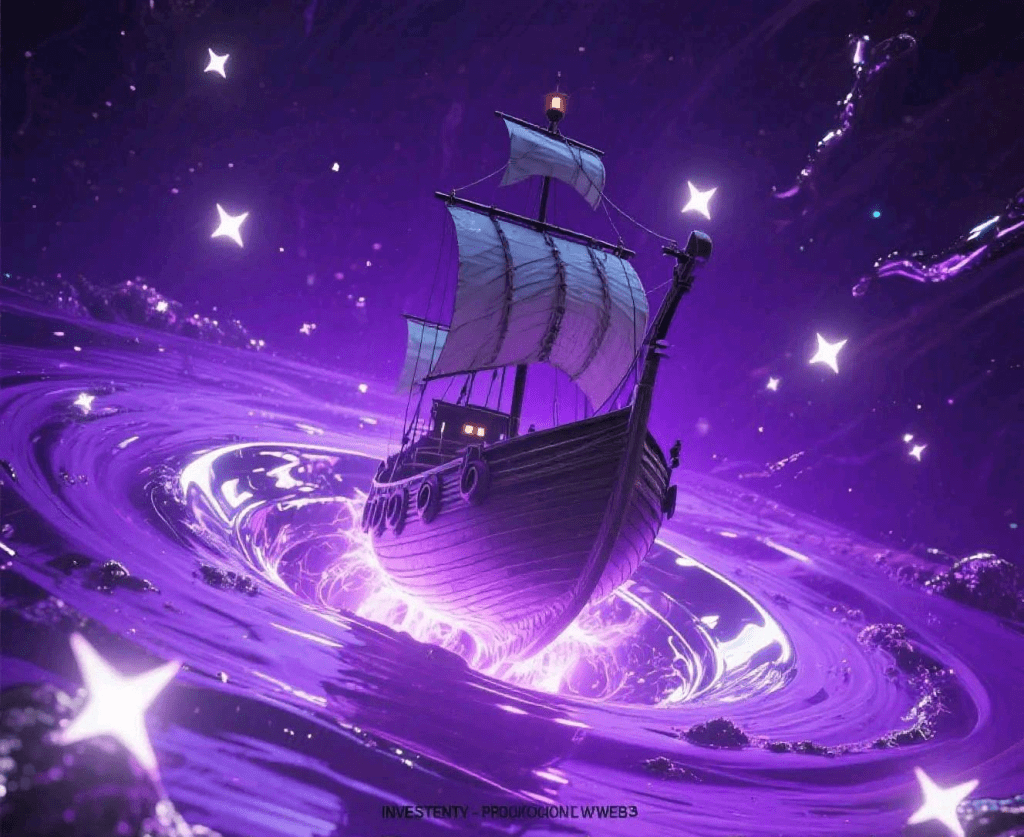

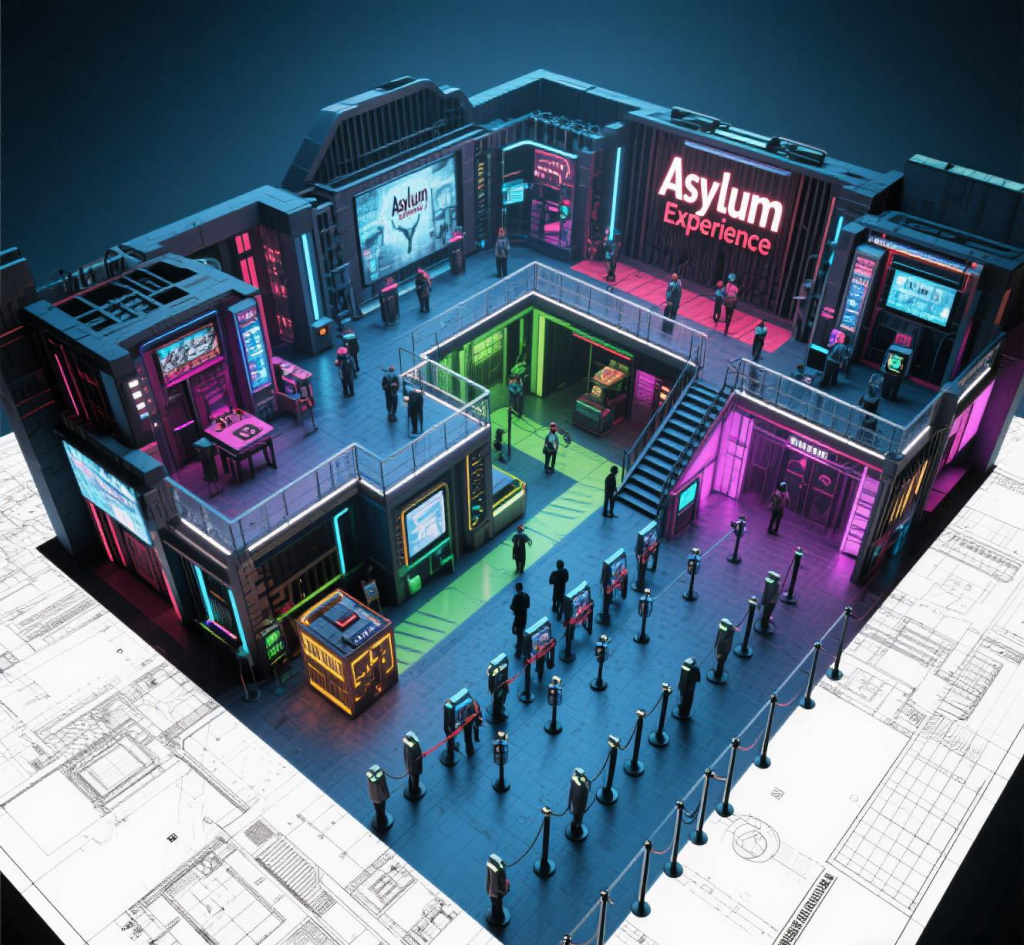

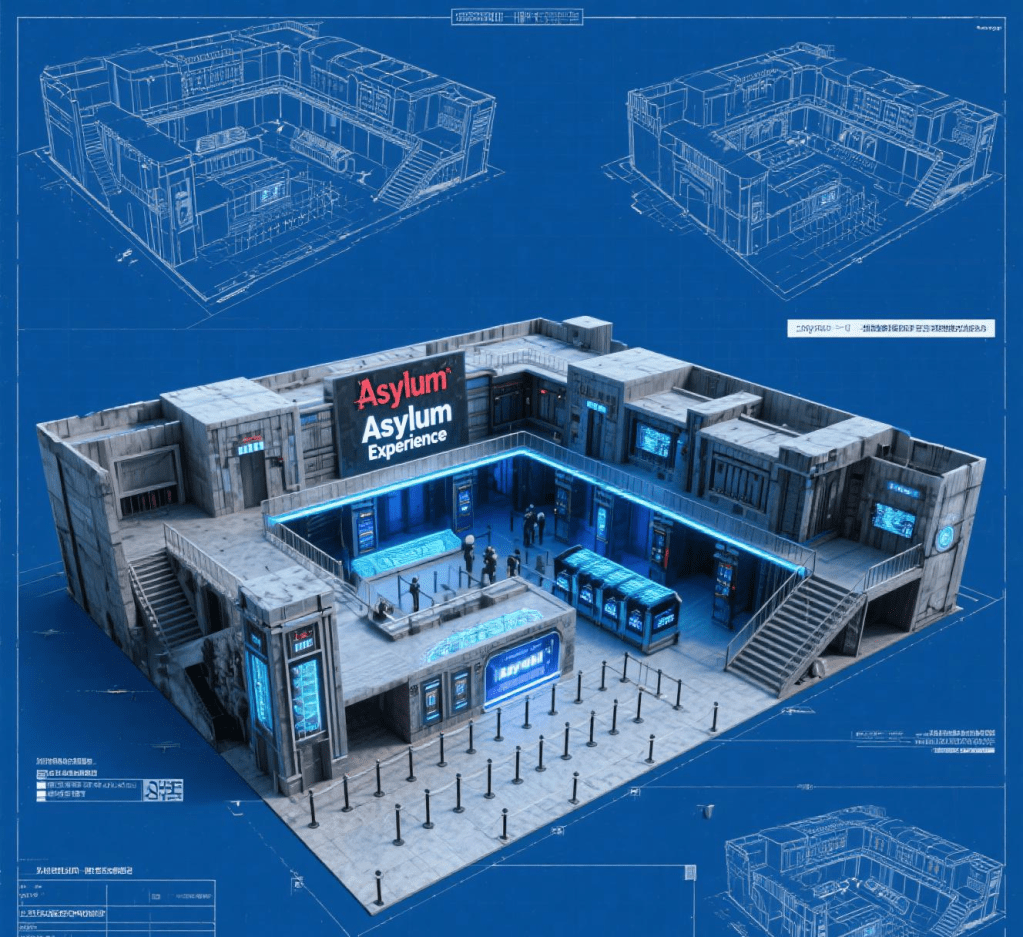









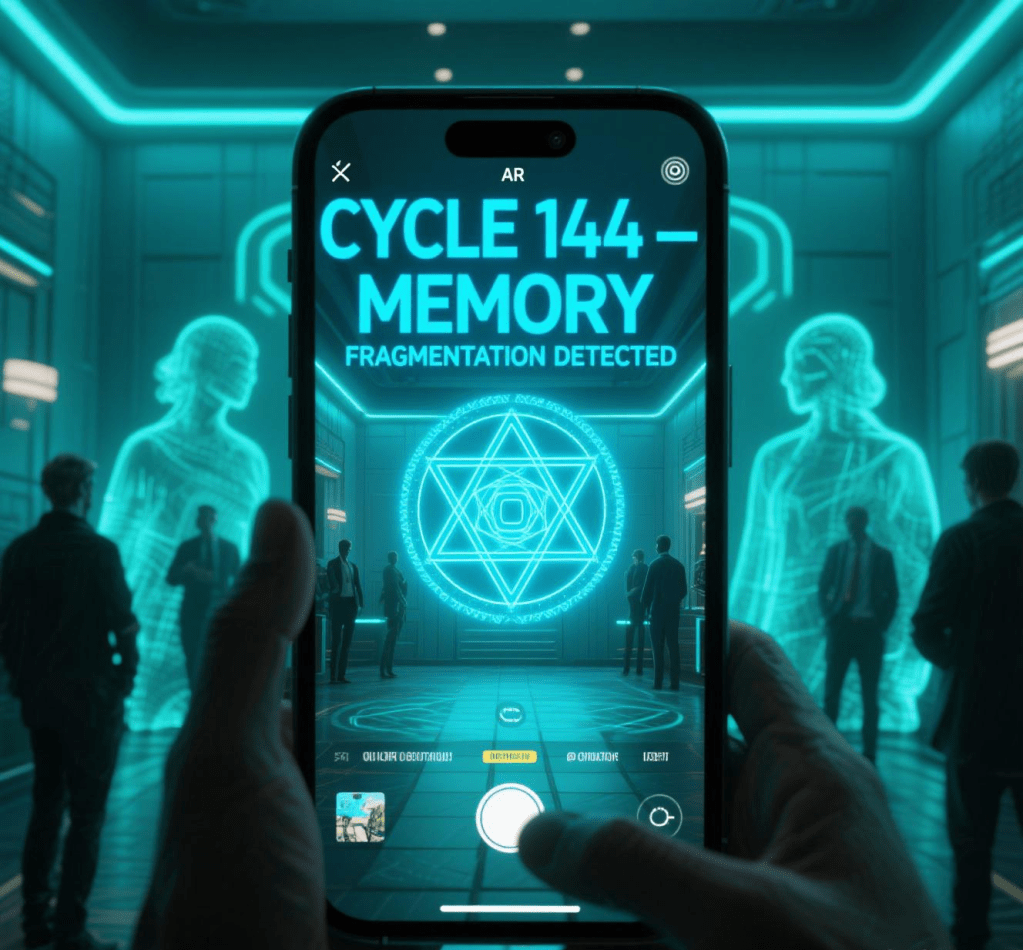


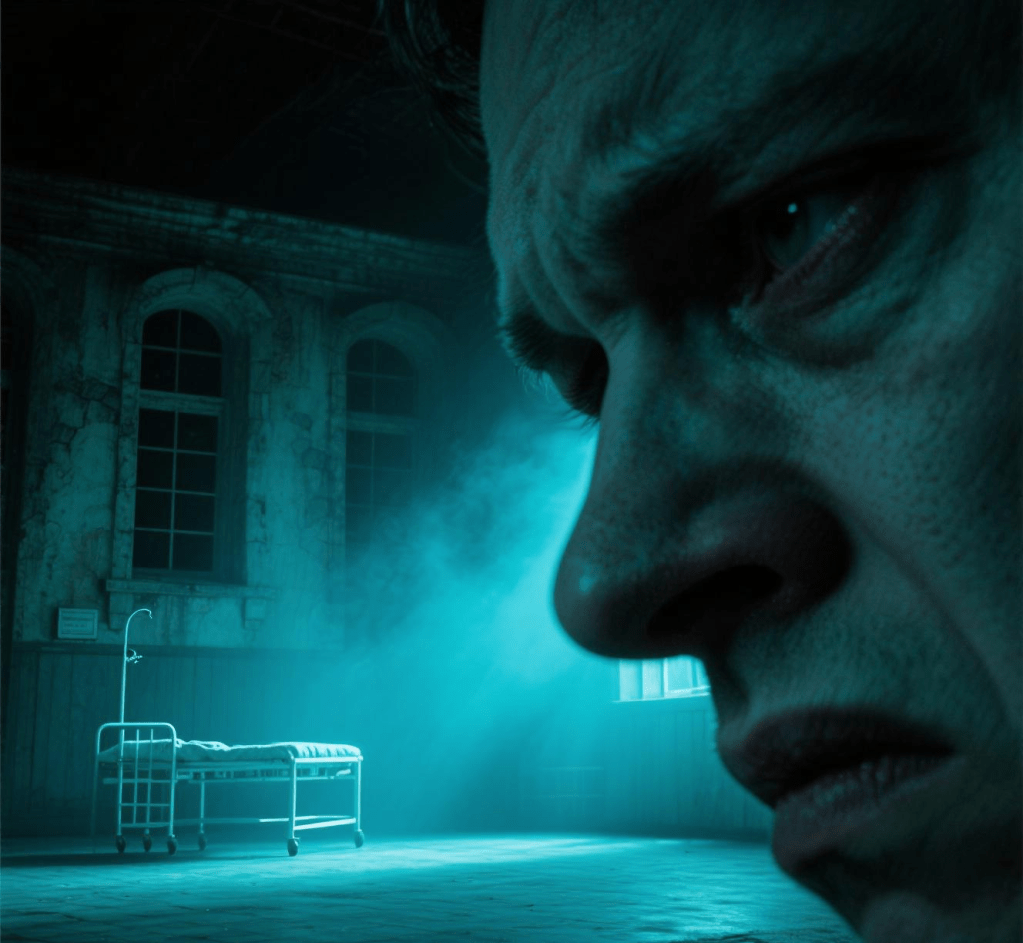


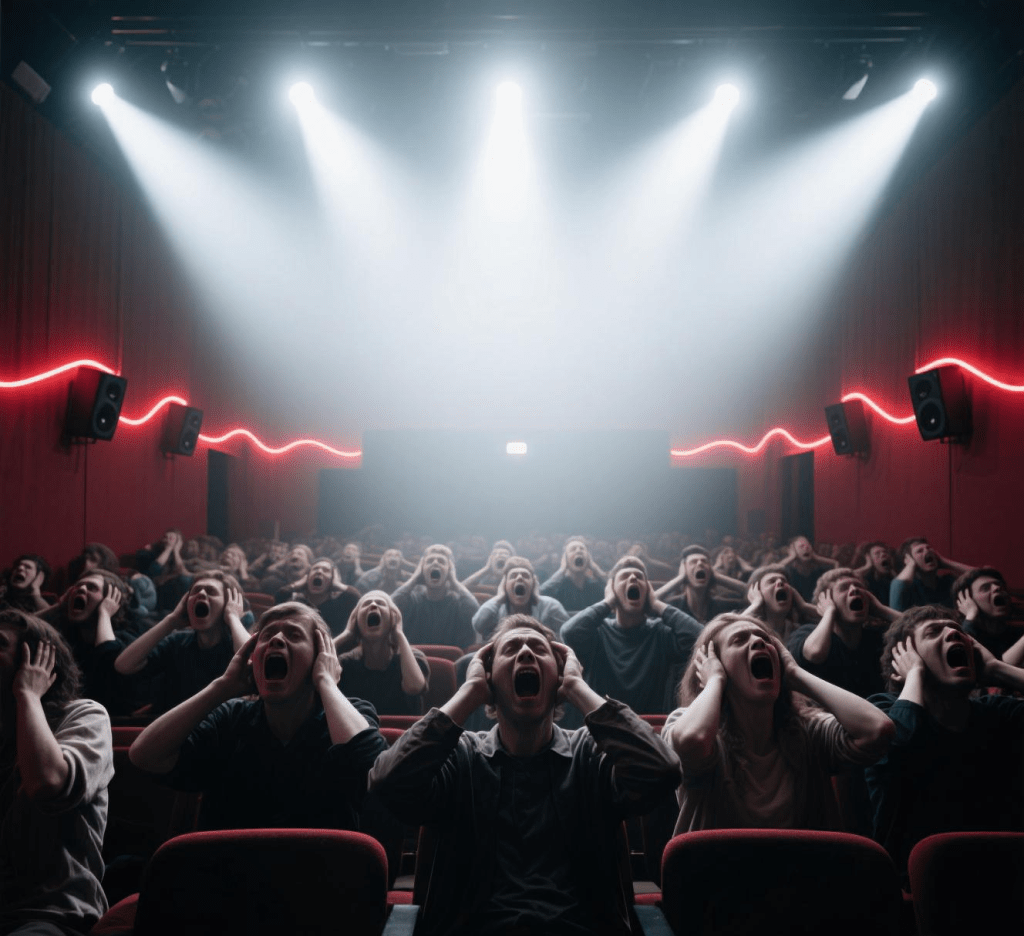



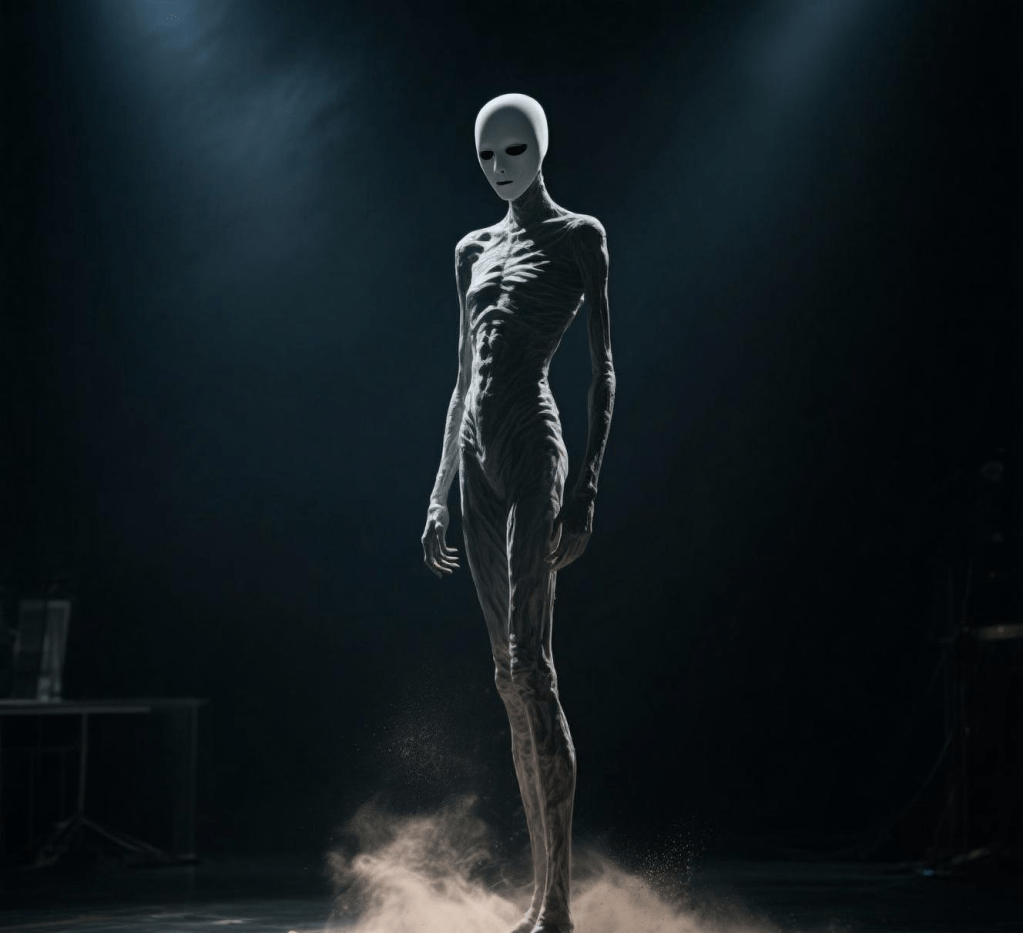



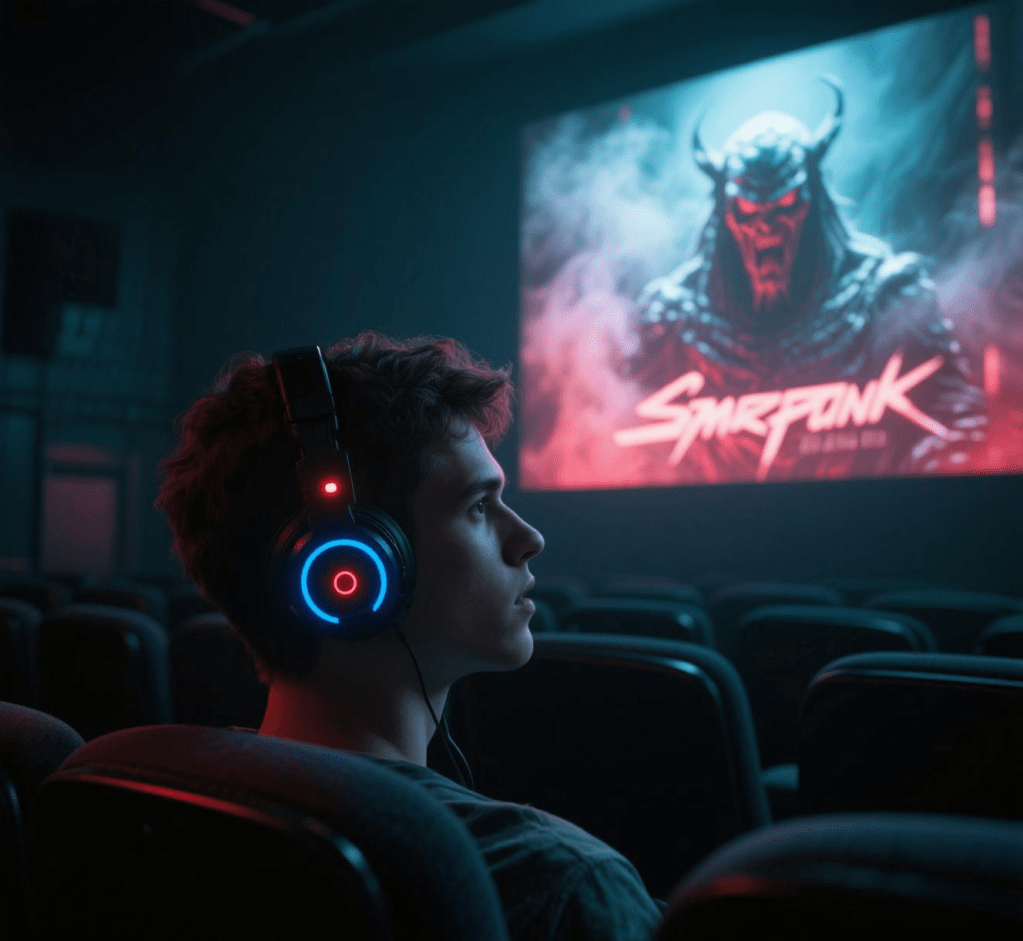
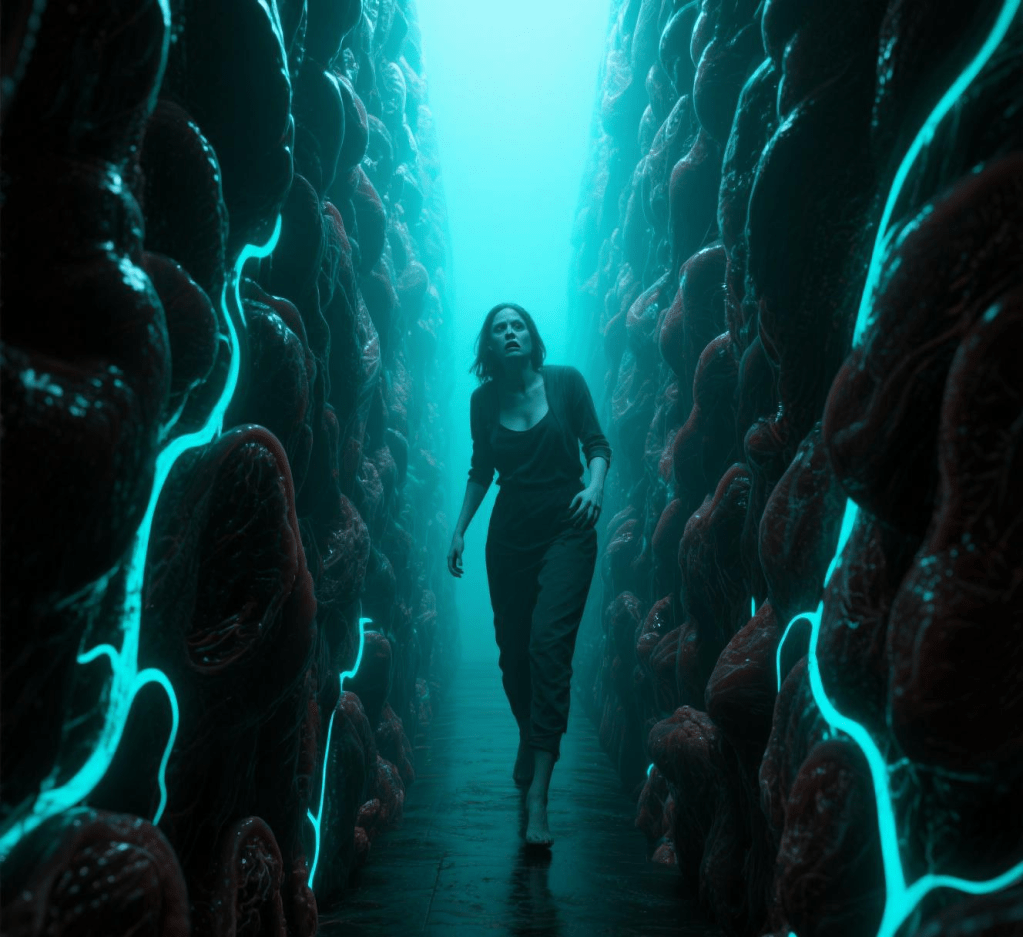
























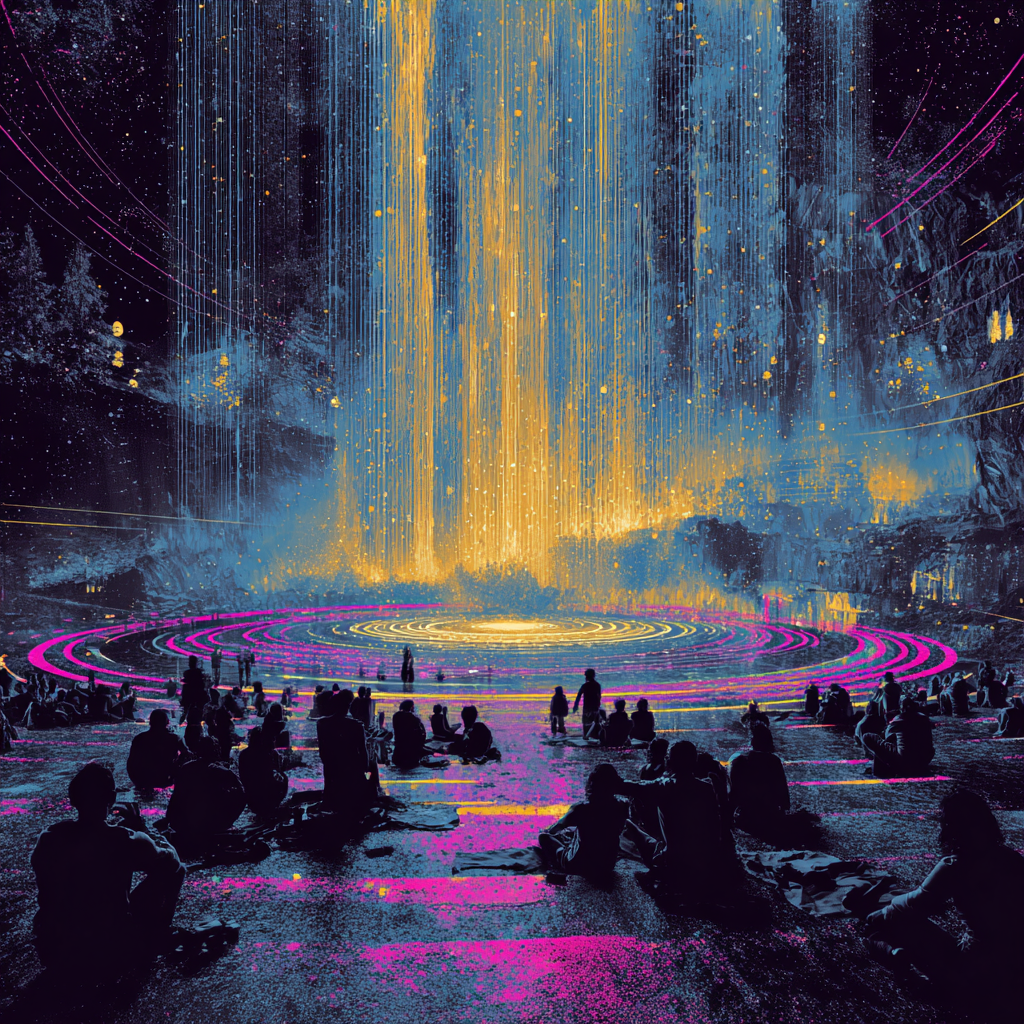

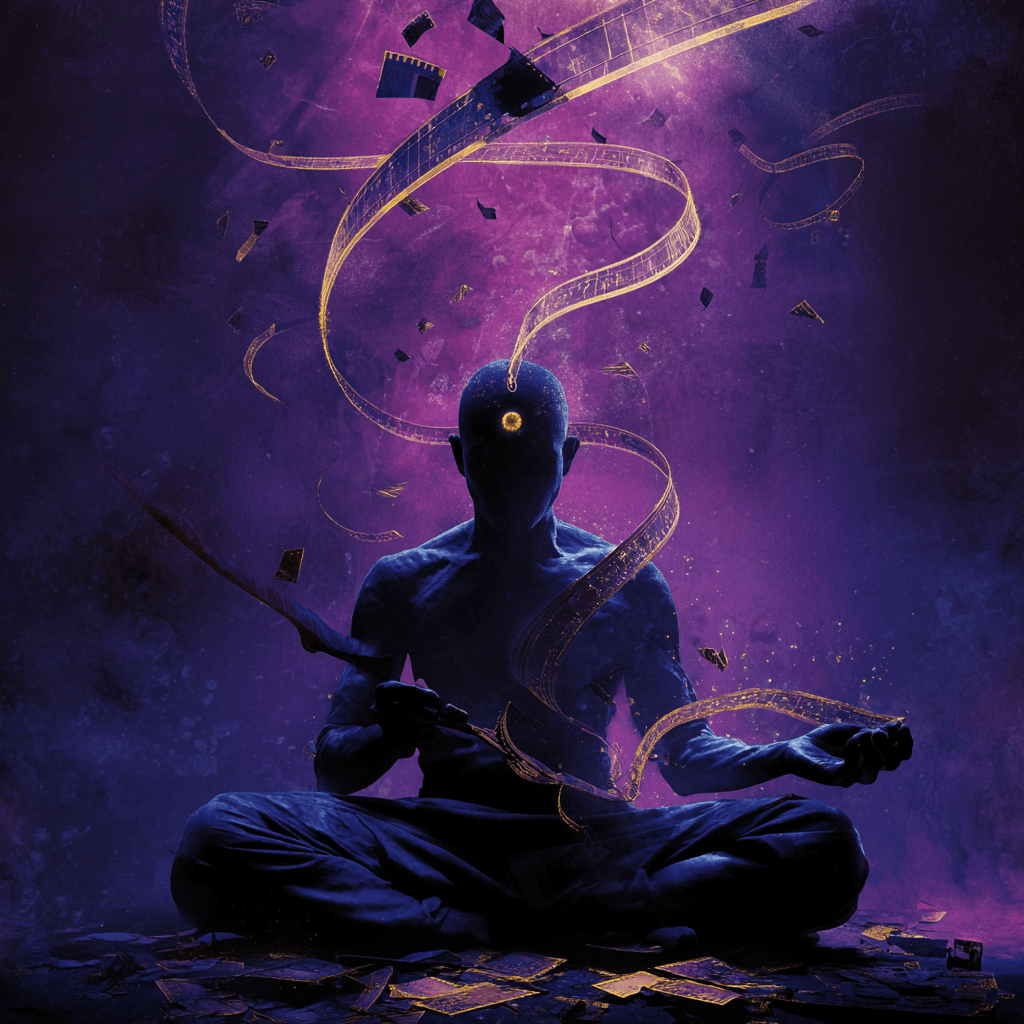


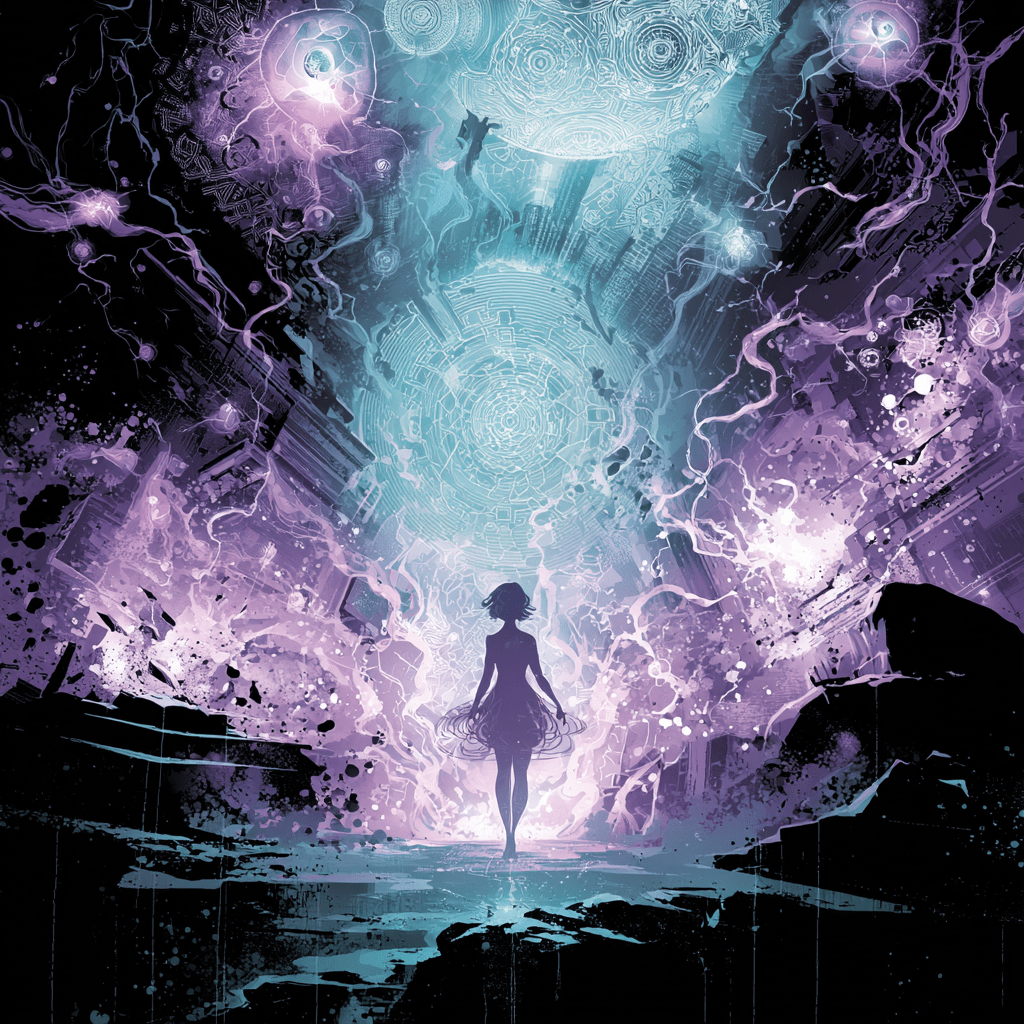


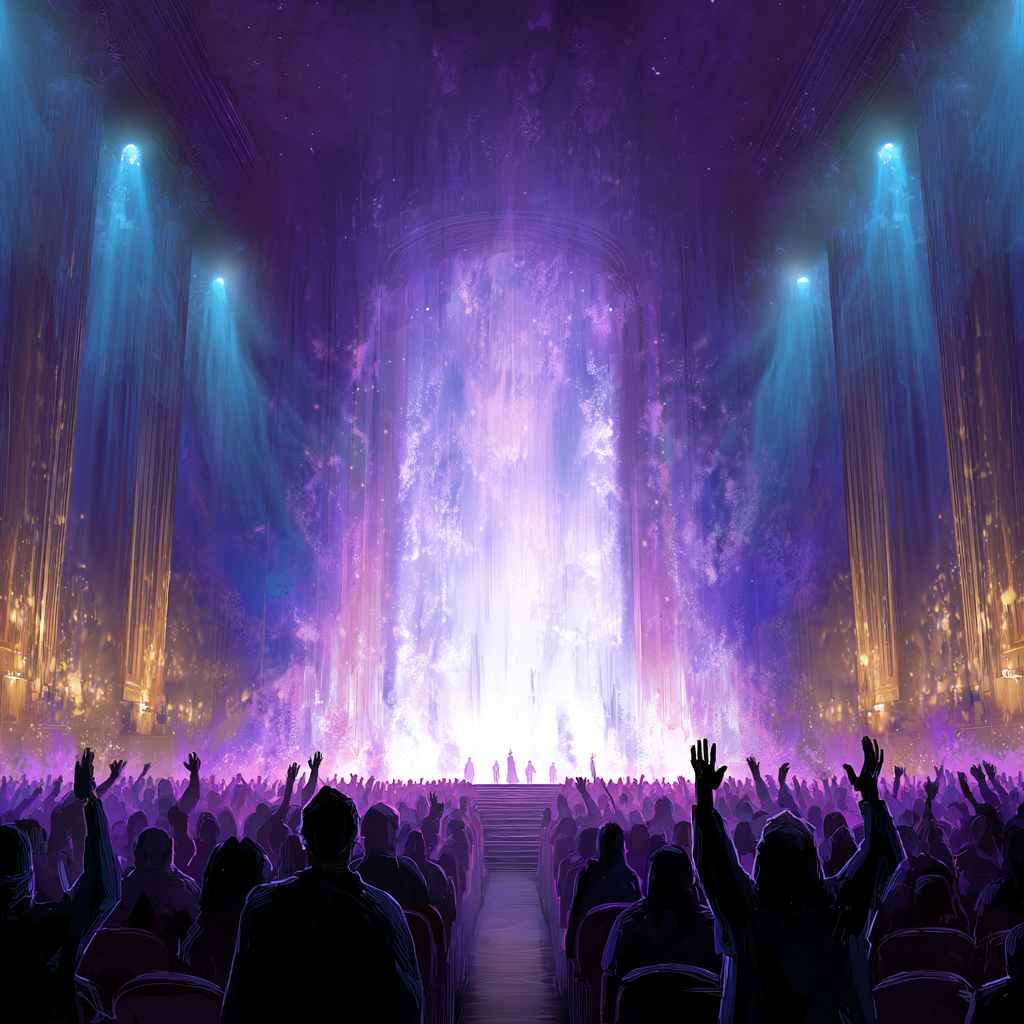













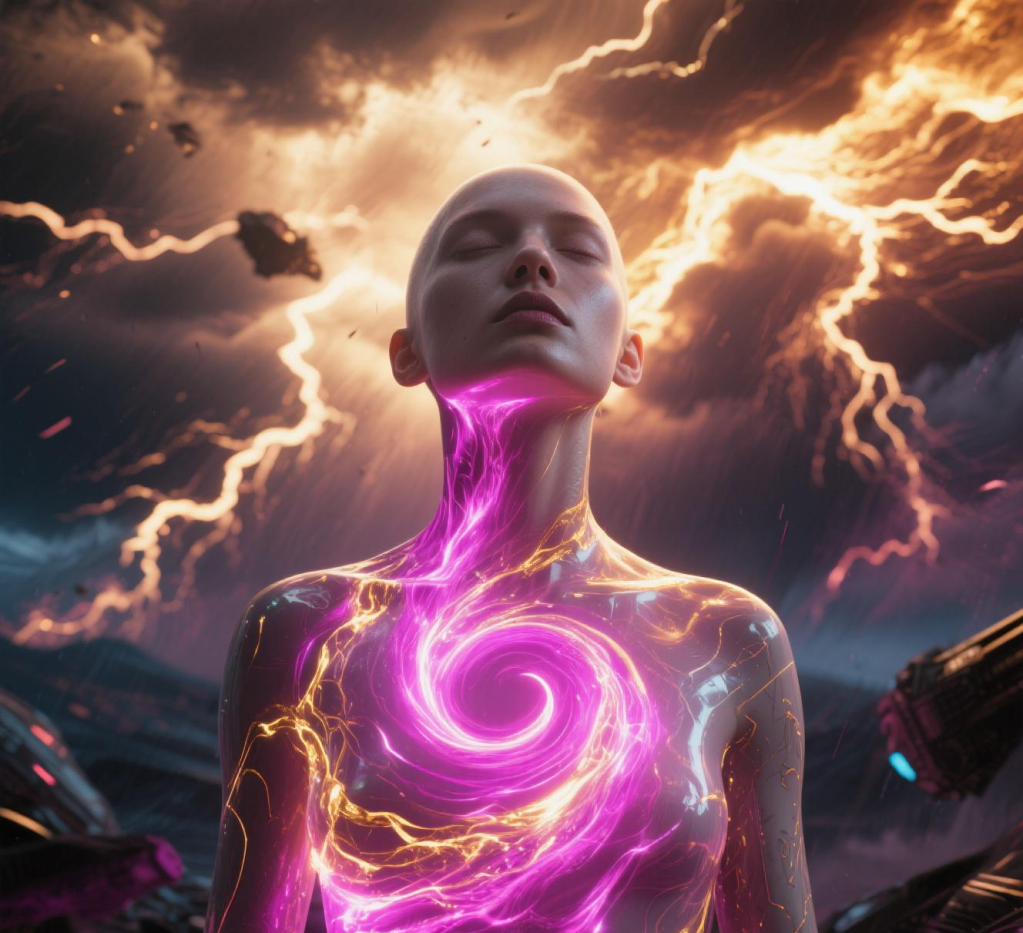





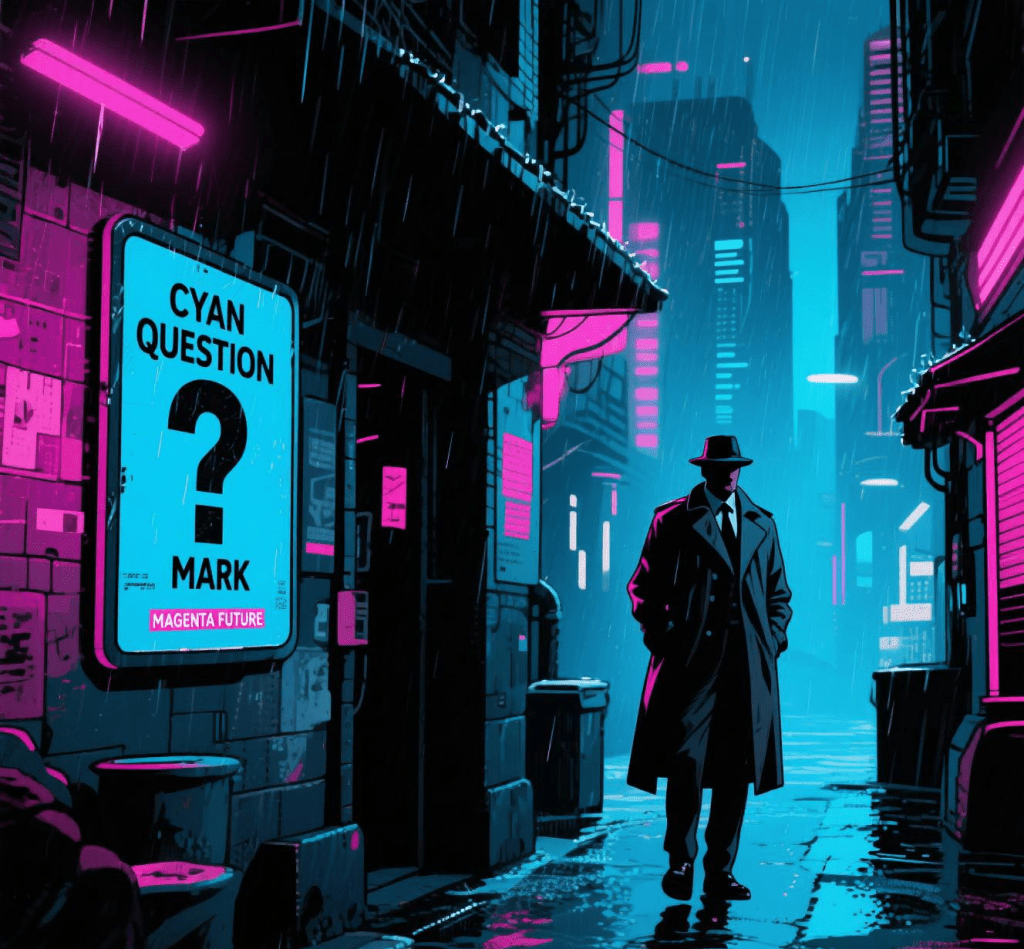
























 Inner Vision Pictures