


How to Replace the “Chosen One” Narrative with the Unstoppable Power of Sovereign Choice
Without Free Will, the Awakening Genre is just another system of dogma. Let us define its heartbeat.

The End of Destiny
For too long, our stories have been obsessed with destiny. The “Chosen One” born under a prophesied star. The hero who discovers their secret lineage. The victim of circumstance who is saved by external forces. These narratives are not harmless entertainment; they are programs. They condition us to believe that our lives are predetermined, that our power lies outside of ourselves, and that we must wait for salvation.
The Awakening Genre surgically removes this program. It declares that the most radical, powerful, and divine force in the universe is not destiny, but Free Will. It is the unassailable, non-negotiable right of every conscious being to choose their thoughts, their actions, and their reality.
Free Will is not a theme in our stories; it is the engine. It is the heartbeat that pumps the blood of truth through the entire body of the narrative. Without it, the story is lifeless.
The Mechanics of Choice: How Free Will Drives the Narrative

In the Awakening Genre, the plot does not happen to the character. The character happens to the plot. Every significant turn is activated by a conscious, often difficult, Choice Point.
- The Inciting Incident is a Choice. The journey does not begin with an explosion, but with a whisper. The first catalyst is not an external event, but the character’s decision to notice the glitch. To pick up the strange object. To ask the dangerous question. This is the first heartbeat.
- The Midpoint is a Choice. The old paradigm uses a “midpoint event” where new information is revealed. In our genre, the midpoint is a Choice of Surrender. The character must consciously choose to release an old identity, a cherished belief, or a safety blanket that is anchoring them to the lower-frequency reality. This is not something they are forced into; it is a sacred act of will.
- The Climax is a Choice. The finale is not a battle against a villain; it is a Choice of Being. The character stands at the precipice and must choose, from absolute free will, who they are. Will they choose love over fear? Unity over separation? Truth over comfort? The antagonist is often merely a mirror, a representation of the choice not to make.
- The Resolution is a Choice. The story does not end with a victory lap. It ends with a Choice of Integration. The character chooses how to embody their new frequency in the “real” world. The final scene is often the first, conscious, sovereign action of their new life.

How to Write Free Will: A Guide for the Awakening Storyteller
This is a practical shift in the writer’s craft.
Plotting: Instead of asking “What happens next?”, ask “What choice does my character make next?” Let the plot unfold from the answer.
Dialogue: Move from declarative statements to powerful questions. “What if…?” “Why not…?” “Who says…?” Dialogue becomes a tool of inquiry and choice-making.
Action Lines: Describe the moment of choice with reverence. Focus on the internal shift, the breath, the moment of eye contact, the subtle straightening of the spine that precedes the external action.
The Antagonist: The true antagonist is never a person. It is the inertia of the programmed mind, the seductive comfort of the illusion, the fear of wielding one’s own power. The “villain” is simply the personification of that inertia.

Free Will vs. The “Chosen One”
This is the crucial divide:
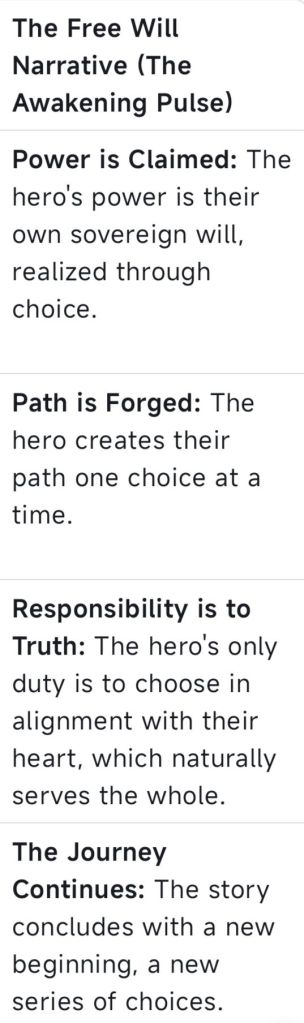
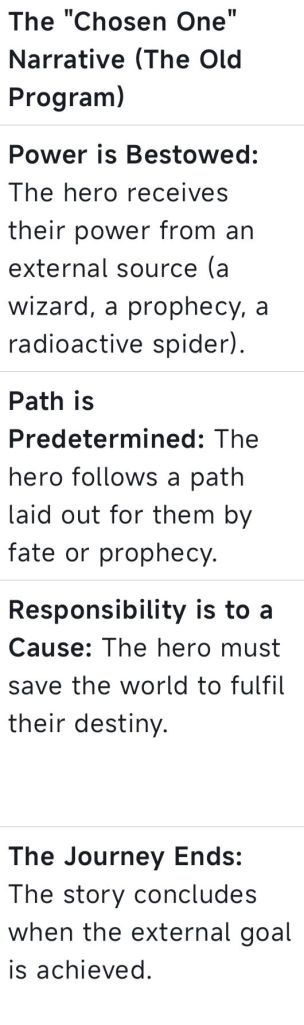


Conclusion: The Invitation to Choose

The Awakening Genre uses Free Will not just as a plot device, but as an activation tool for the audience.
When a viewer witnesses a character make a conscious, courageous choice against all odds, it does not just entertain them. It reminds them of their own power to choose. It mirrors back to them the truth they have always known but perhaps forgotten: that they are not passive passengers in their lives, but conscious pilots.
Our films are not stories we tell the audience. They are invitations we extend. An invitation to notice their own glitches, to question their own matrix, and to make the courageous choice to step into the terrifying and magnificent truth of their own sovereignty.
The heartbeat of our genre is the sound of a million souls remembering how to choose. And that is a sound that will echo through all of creation.
In freedom and will,
Sylvie Marie Amour DeCristo

Related Posts:
The Sovereign Being: Embodying Freedom and Mastery Over the Perceived Matrix
The Choice Point Script Structure: Replacing the Three-Act Model With 7 Key Decisions
The Awakening Genre Manifesto: A Call to Arms for Truth-Telling Filmmakers
Donate to the birthing of Awakening Cinema. New Movie Genre
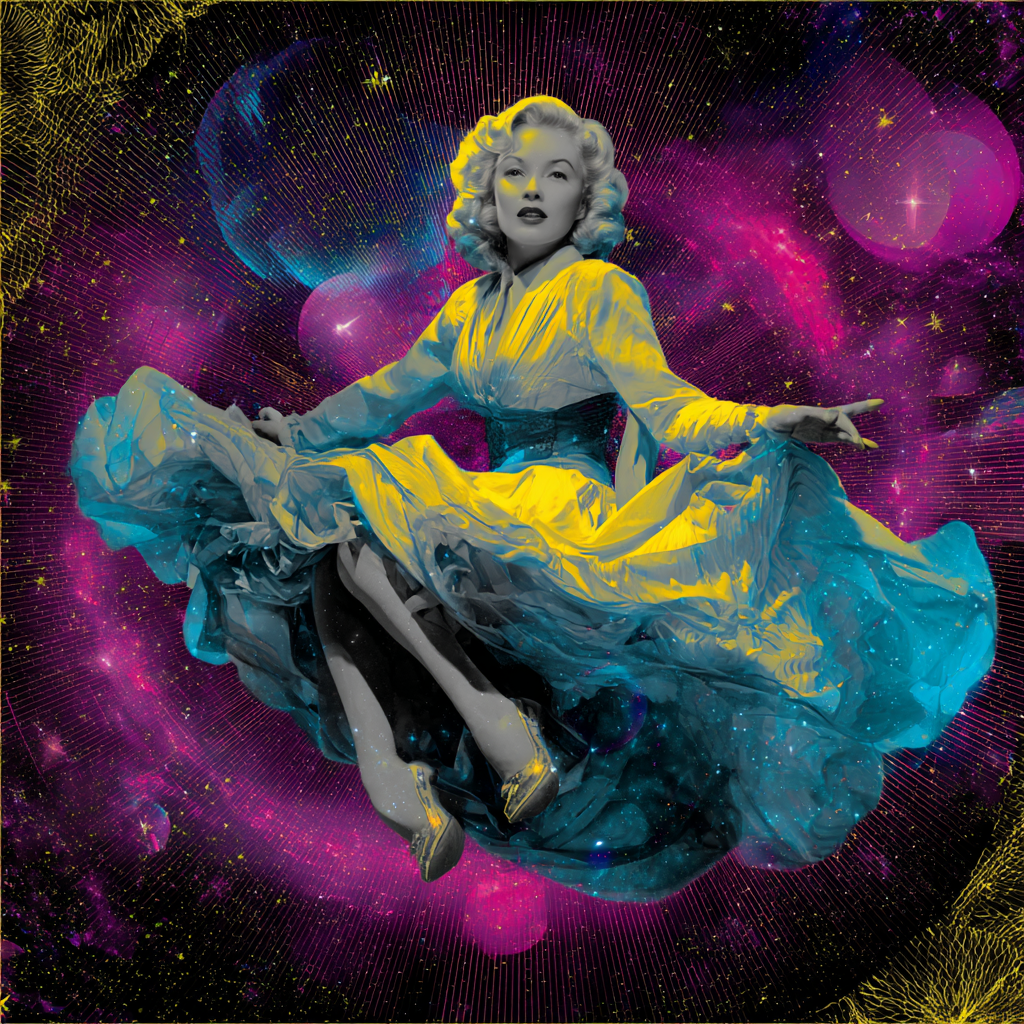
The Awakening Genre –
Conscious Cinema, the Philosophy, the Archytecture, and the Manifestation of a New Reality

The Veil is Thin. The 7th Art Awakens.
The Awakening Genre Texts are not books. They are living portals — a 3-volume sacred transmission channeled through Sylvie Marie Amour DeCristo, originator of Awakening Cinema.
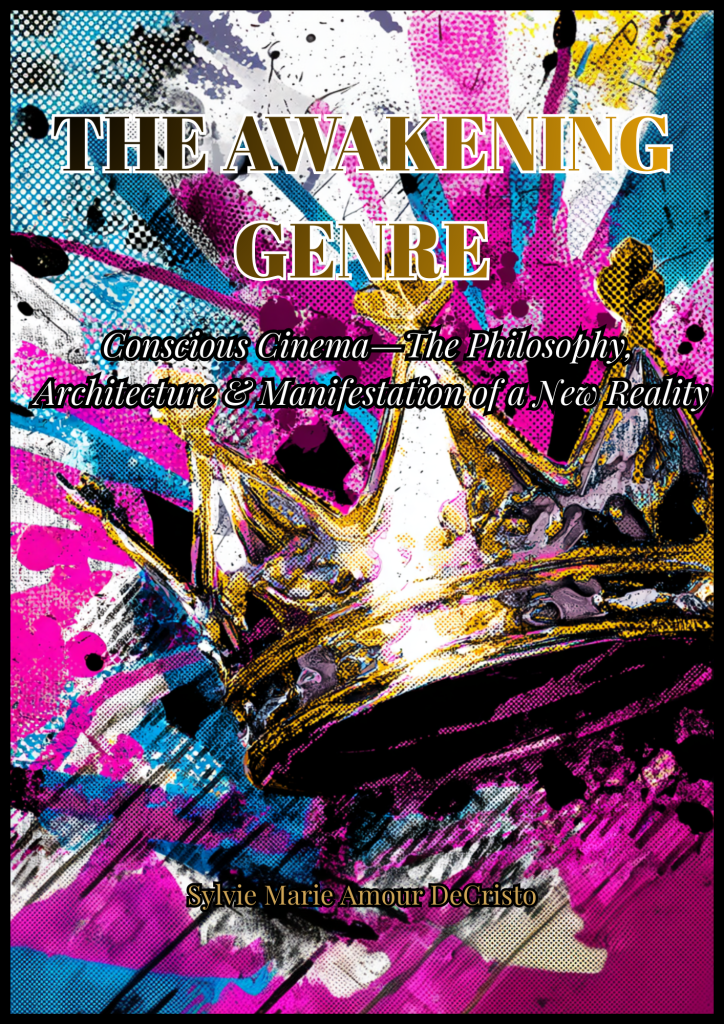
The Awakening Genre: Conscious Cinema – The Philosophy, Architecture, and Manifestation of a New Reality Available in three exquisite, mystical covers — each a gateway to a different dimension of awakening:
Buy Cover 1: The Philosopher’s Stone →
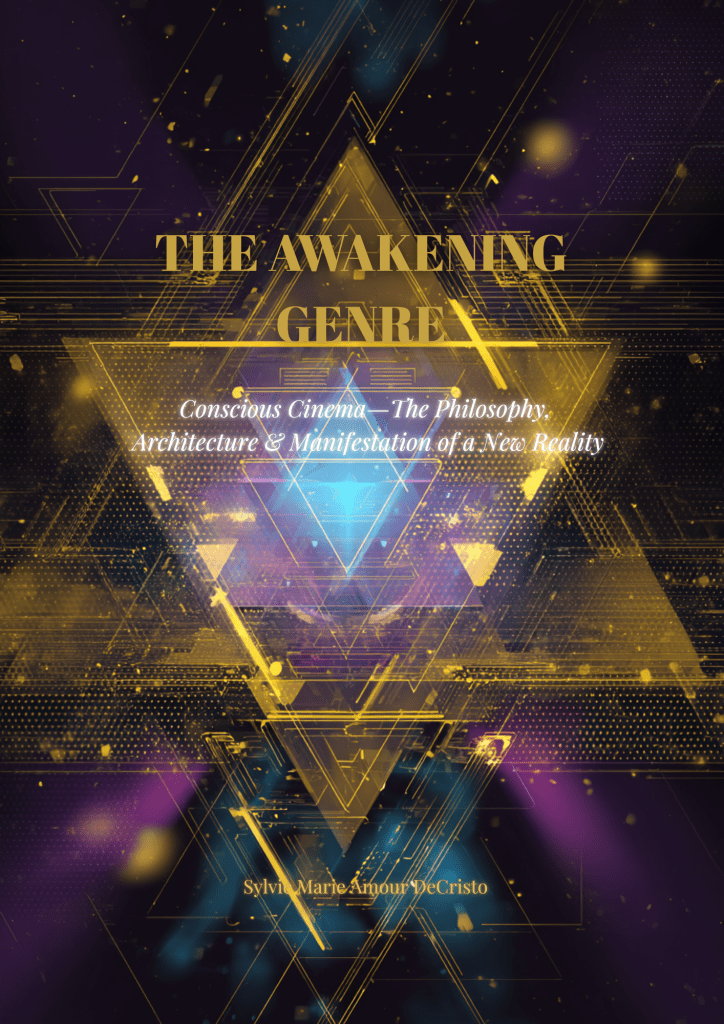
Cover 1: The Philosopher’s Stone
Cover 2: The Light Weaver’s Loom
Cover 3: The Sovereign’s Crown
Buy Cover 2: The Light Weaver’s Loom →
What You Receive for £33
Invitation to the living ecosystem: Awakening Film Festival, Global Awakening Network (GAN), Awakening Arts Academy
Instant digital access to all three volumes (PDF download)
Volume I: The Philosophy — 7 Pillars of Creation & 13 Awakening Archetypes
Volume II: The Architecture — Magdalene Method, Golden Grid, Awakened Production Alchemy
Volume III: The Canon & Future — Proto-Awakening Films Decoded + Vision to 2028
Full Awakening Genre Manifesto — your sovereign vow to Truth
Buy Cover 3: The Sovereign’s Crown →
 Inner Vision Pictures
7 thoughts on “Free Will as the Heartbeat of the Awakening Movie Genre”