

Architecting Soul-Level Decisions: A Narrative Blueprint for Sovereign Storytelling

Intro (The Inciting Incident of the Post itself):
The three-act structure is an artifact of a sleeping world. It is a psychological prison built on a linear, cause-and-effect dogma that conditions audiences for a reality of predictable consequences and external saviors. It teaches passivity.
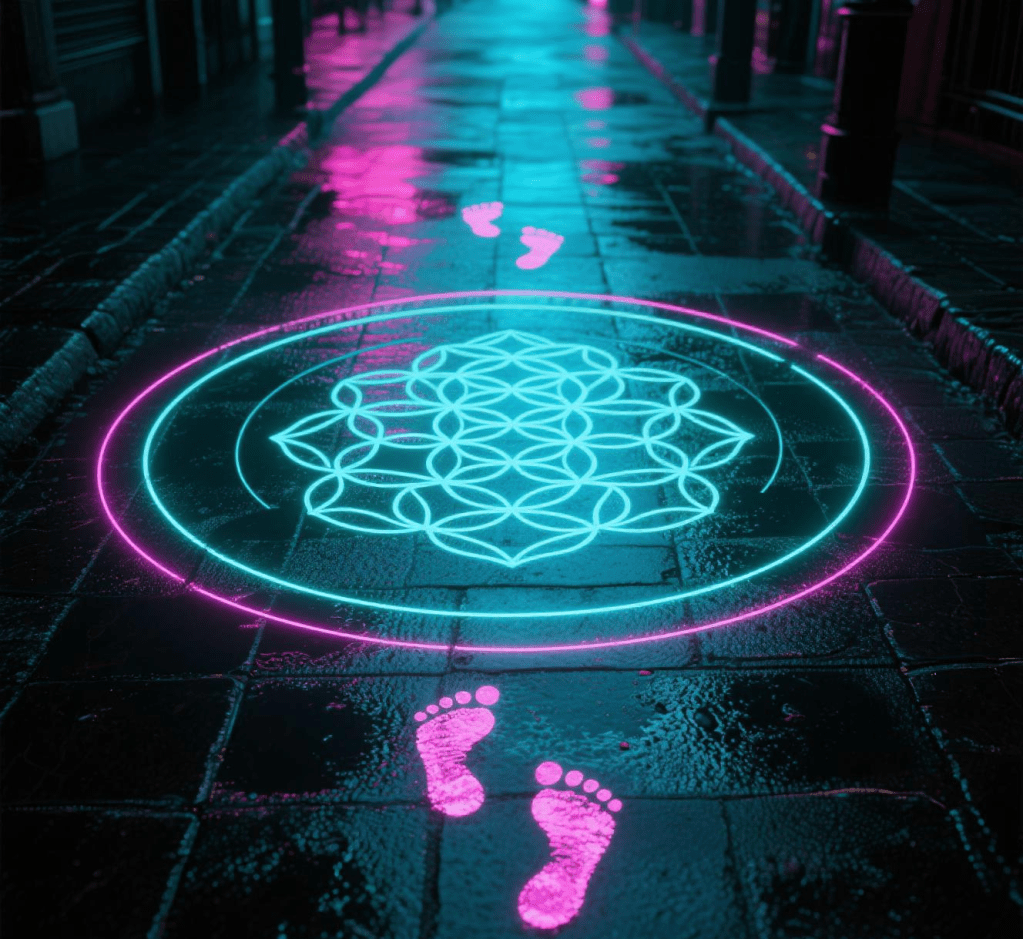
The Awakening Genre exists to shatter this prison. Therefore, it cannot use the warden’s blueprints. It requires a new narrative architecture, one that mirrors the soul’s actual journey to sovereignty: a path not of events, but of decisions. This is the Choice Point Structure, a script framework where Free Will is the protagonist, and every scene is a stepping stone to remembrance.
The End of the Old Algorithm

The three-act structure is a program. It is designed to produce a specific, comforting, and ultimately manipulative outcome: catharsis without responsibility, resolution without true transformation. It keeps the audience and the characters within the known confines of a reality that is dying.
The Choice Point Structure shatters this algorithm. It recognizes that the most profound drama does not come from external conflict, but from the internal, quantum moment of choice. This is where free will, the prime directive of the soul, interrupts the programmed narrative and opens a doorway to a new timeline.
This new framework is not a formula; it is a blueprint of the soul. It is the narrative equivalent of the 7 Chakras, the 7 Days of Creation a sacred architecture for becoming.
This is the 7th Art in the 7th Age. In this post I introduced the Magdalene Method also known as the Genesis Blueprint or the Awakening ArC.
Part 1: The Flaw in the Old Code – Why the Three-Act Model Betrays Truth
- The Hierarchy of Plot Over Soul: The three-act structure prioritizes external conflict and resolution, forcing characters to react to events. This subtly reinforces the core illusion of the matrix: that we are victims of circumstance.
- The Predictability of Resonance: Its rhythm is so ingrained that it produces a narcotic, soothing effect. It confirms biases and never challenges the audience’s fundamental perception of reality. It is a story about a prison, told from inside the prison.
- The Absence of True Agency: The “choices” characters make are illusory, predetermined by the plot’s need to hit a “turning point” or a “midpoint.” The character’s will is subordinate to the plot’s plan.

Part 2: The Seven Key Decisions – A New Operating System for Story (The Magdalene Method)

This structure is not a formula; it is a frequency map. Each Decision is a gateway to a higher state of being, both for the character and the audience.

1. The Decision to NOTICE (The Rumbling of the Soul). The journey does not begin with an explosion; it begins with a whisper. The First Decision is the character’s choice to acknowledge a subtle, internal resonance a glitch in the matrix, a synchronicity too potent to ignore, a feeling that the story they’ve been living is a lie. This is not a passive event; it is an active, courageous act of paying attention.
- The Spiritual Significance: This is the soul’s first flicker of rebellion against the anesthesia of consensus reality. It is the conscious acknowledgment of a synchronicity, a glitch, or an intuitive pull. It is not an event; it is the choice to assign meaning to an event.
- The Cinematic Application (The “How-To”):
- Sound Design: Introduce a subtle, almost imperceptible hum (528Hz solfeggio tone), or have a piece of dialogue briefly repeat itself like a skipped record.
- Cinematography: A “God ray” of light inexplicably hits a seemingly unimportant object, making it the clear focus of the shot for a moment. A very slight, almost ghostly double exposure for a single frame.
- Writing: The character doesn’t just see something strange; they pause. They frown. They turn back. Their dialogue is not “What was that?” but a quiet, “Huh…”.
2. The Decision to QUESTION (The Unraveling of Illusion). To notice is one thing; to dare to question everything is another. This decision is the active rejection of compliance. The character chooses to doubt their programmed reality, to ask “Why?” and “Who says?” This is the first fracture in the prison wall, the conscious unraveling of the old world.
- The Spiritual Significance: This is the active, often terrifying, choice to doubt everything one has been taught. It is the moment the character becomes a spiritual revolutionary.
- The Cinematic Application (The “How-To”):
- Visual Metaphor: The world literally becomes unstable. The edges of the frame might subtly warp. The character’s reflection in a window briefly doesn’t match their movement.
- Dialogue: Move from statements to questions. The dialogue becomes a tool of deconstruction. “Why?” “Who says?” “What if that’s not true?”
- Pacing: Use longer, uncomfortable silences after questions are asked. Let the weight of the question hang in the air.
3. The Decision to RELEASE (The Sacred Surrender). Awakening is not about gaining; it is about letting go. The Third Decision is the conscious, often painful, choice to release an old identity, a belief, or a security that anchors them to the lower-frequency reality. This is not defeat; it is the ultimate act of trust and courage a surrender to the unknown rather than a clinging to the familiar prison.
RELEASE: This is a physical sensation of a weight lifting. Practice a deep, sighing exhale that seems to release years of tension. The change should be visible in your posture—shoulders dropping, spine elongating.
- The Spiritual Significance: This is not a defeat; it is the ultimate act of power. It is the conscious choice to let go of an identity, a belief, or a safety blanket that is anchoring them to the lower frequency.
- The Cinematic Application (The “How-To”):
- The Ritual Action: This must be a visual, symbolic action. Showing, not telling. The character burns a box of old letters. They delete their social media. They walk out of a job interview. The action is quiet but definitive.
- Lighting Shift: The lighting palette should visibly warm and soften after this decision is made, as if a cold, harsh light has been extinguished.
4. The Decision to SEE (The Unveiling of Truth). This is the quantum leap.The character chooses to actively perceive the unseen reality. They accept that energy, consciousness, and spirit are the primary fabrics of existence. This decision opens the veil, granting them, and the audience a direct encounter with the 97% of reality we are taught to ignore.

- The Spiritual Significance: The choice to accept that consciousness is fundamental and that the visible world is a projection. This is the first true glimpse beyond the veil.
- The Cinematic Application (The “How-To”):
- VFX as Revelation: This is where the visual language of the film permanently changes. Use practical and digital effects to make the unseen seen:
- Auras: Introduce subtle, chromatic aberration around living beings.
- Sacred Geometry: Show faint, shimmering grid lines or geometric patterns (flower of life, fibonacci spiral) overlaying reality in moments of high clarity.
- Energy Flow: Use particle systems to show energy moving between people, from heart to heart.
- VFX as Revelation: This is where the visual language of the film permanently changes. Use practical and digital effects to make the unseen seen:
5. The Decision to ALIGN (The Embodiment of Truth) Knowledge is worthless without embodiment.The Fifth Decision is the choice to act in accordance with the newly revealed truth. It is the integration of knowing into being. The character chooses to speak their truth, honor their intuition, and follow their heart’s guidance, regardless of the consequences in the old world.
- The Spiritual Significance: The choice to act in accordance with newfound truth, even at great personal risk. This is where knowing becomes being.
- The Cinematic Application (The “How-To”):
- Action as Lightwork: The character’s actions now have visible energetic consequences.
- They speak a hard truth, and the air around their mouth shimmers with light.
- They stand up to a bully, and a barely visible shockwave of energy pushes back, causing the bully to physically flinch.
- Costuming: Their clothing might gradually become simpler, more natural, and reflect light more softly, symbolizing their internal alignment.
- Action as Lightwork: The character’s actions now have visible energetic consequences.
6. The Decision to STAND (The Declaration of Sovereignty). The ultimate test.The character faces immense, often terrifying, pressure to revert to their sleep state. This is the Crucifixion point. The Sixth Decision is the choice of sovereignty: to choose their authentic, sovereign self over everything else, approval, safety, even physical life. This is the battle of frequencies, where the strength of their light is tested against the full force of the illusion.
- The Spiritual Significance: The final, ultimate test. The choice to defend one’s sovereignty and truth, even if it means standing completely alone against the entire illusion.
- The Cinematic Application (The “How-To”):
- The Anti-Battle: This is not a fistfight or a gunfight. It is a battle of frequencies.
- The antagonist represents pure, rigid dissonance (represented visually by harsh, static-filled, glitching visuals and distorted sound).
- The protagonist stands still, emanating a pure, coherent frequency (a steady tone, a soft, unwavering light from their heart center).
- The protagonist doesn’t “destroy” the antagonist; their coherent frequency causes the antagonist’s dissonant form to destabilize and dissolve on its own.
- The Anti-Battle: This is not a fistfight or a gunfight. It is a battle of frequencies.
7. The Decision to BE (The Eternal Communion). The final decision is not an ending; it is an eternal beginning. It is the choice to exist in a perpetual state of co-creation with the Divine. The character understands they are not a solitary hero but a unique expression of the One. Their purpose is to express their unique frequency for the benefit of the whole. The story doesn’t end; it expands infinitely.
- The Spiritual Significance: The choice to exist in a state of perpetual co-creation with the Divine. The understanding that the journey doesn’t end; it expands infinitely.
- The Cinematic Application (The “How-To”):
- The Dissolve of Separation: The final shots should visually erase the separation between character and environment.
- The camera pulls back to reveal the character is a point of light in a larger neural or galactic network.
- The image slowly transforms into pure geometric light patterns.
- The sound design blends the character’s heartbeat with the hum of the earth (Schumann resonance).
- The Dissolve of Separation: The final shots should visually erase the separation between character and environment.


Case Study: Aria’s Journey in “The Echoed Self”
Let’s apply this structure to a protagonist, Aria, a disillusioned architect living a life of quiet despair.
- NOTICE: Aria is designing a sterile office building. Her pencil slips, and she accidentally draws a perfect, intricate Flower of Life pattern in the margin. She stares at it, feeling a strange pull, a resonance she can’t explain. (Cinematic Signature: The pencil scratch sounds like a chime. The pattern glows faintly for a second.)
- QUESTION: That night, she researches the symbol. She finds ancient texts that contradict everything she learned in school. She whispers to her dark apartment, “What if everything I’ve built is wrong?” (Cinematic Signature: Her computer screen glitches. Her reflection in the window has tears her real eyes don’t yet show.)
- RELEASE: The next day, in a meeting, her boss praises her cold, efficient design. She looks at her plans, then out the window at a living, breathing tree. She quietly says, “I can’t do this.” She walks out, leaving her prestigious job behind. (Cinematic Signature: The fluorescent office lights are harsh and blue. The natural light from the window is warm and golden. As she walks out, the sound of the office dies away, replaced by the sound of her own breath and heartbeat.)
- SEE: Wandering in a park, feeling lost, Aria sits under a tree. She chooses to truly look. Suddenly, she sees the aura of the tree a pulsating, green-gold light. She sees energy flowing between the leaves and the air. She gasps, seeing the world for the first time. (Cinematic Signature: The visual shift is profound. The world is now overlain with soft light and geometric patterns. The sound is rich with layers of previously inaudible frequencies.)
- ALIGN: Inspired, she starts designing homes that harmonize with these energy patterns, using sacred geometry. She speaks her truth to former colleagues, who mock her. As she explains her vision, her hands gesture and leave faint trails of light in the air. (Cinematic Signature: Her new sketches glow with a soft inner light. Her passion is a visible force field.)
- STAND: Her old firm threatens to sue her, claiming her new designs are “their intellectual property.” They represent the old, rigid world. In the confrontation, she doesn’t argue. She simply stands in the center of the room, calm. A soft, coherent light emanates from her heart. The lawyers’ words become distorted, their forms seem to flicker and lose substance against her unwavering frequency. They eventually leave, confused and defeated not by her, but by their own dissonance. (Cinematic Signature: The battle is entirely energetic. Her light vs. their static.)
- BE: Aria is now a vessel. She doesn’t just design buildings; she weaves light and frequency into structures that activate consciousness. The final shot is not of her, but of a family living in one of her homes, their own auras bright and vibrant, as the camera pulls back to show the home as a node in a vast, planetary network of light. (Cinematic Signature: The image dissolves into the network. The sound of the family laughing blends into a harmonic, planetary tone.)

An Educational Note for the Actor/Actress
Your journey is internal. Your instrument is your own energy body. For each Decision Point, do not “act.” Instead, embody the frequency shift.no
NOTICE: Focus on a moment of real curiosity in your own life. Remember the feeling of a subtle intuition. Let your pupils dilate slightly. Let your breath catch. The key is internal focus.
QUESTION: This is an internal earthquake. Practice the feeling of doubt not as fear, but as power. It is a cracking open. Your body might feel tense, but your eyes become fiercely alive.
SEE: This is about receiving. Open your perception. Imagine actually seeing the magic in the world. Let your eyes soften, your gaze become unfocused yet more perceptive. Wonder is your key.
ALIGN: This is about conviction. Your energy becomes directed, purposeful. There is a stillness and power in your movements. You are no longer questioning; you are knowing and acting from that knowing.
STAND: This is absolute stillness in the storm. Your work is internal—to hold a core of unshakable peace and love while chaos attempts to provoke you. Your power is in your non-reaction, in your emitted frequency.
BE: This is a state of grace. You are not a character, but a channel. Practice feeling a connection to everything around you. Your expression is one of serene, joyful knowing and unconditional love.
An Educational Note for the Writer
Your script is an energy blueprint. Format for frequency.
Label the Choice Points: In the parenthetical or action line preceding the shift, clearly state the Decision. (ARIA choice point: she decides to SEE.)
Write Action Lines Viscerally: Don’t just describe the action; describe the energy and the visual/audible signature. Instead of: “Aria walks out of the office.”Write: “Aria pushes back from her desk. The screech of the chair is the only sound in the dead silence. She walks out, leaving the cold blue glow of the screens behind her. The harsh fluorescent light seems to avoid her now, as a warm, golden haze follows her to the door. [CHOICE POINT 3: RELEASE]”
Pace for Resonance: The moments after a Decision need space. Use silence. Use a slow push-in on the character’s face. Let the audience feel the shift, not just see it.
The Villain is Dissonance: The antagonist is not a person, but a frequency of control, fear, and illusion. Write their dialogue to be rigid, dogmatic, and logically sound but utterly devoid of heart. Their cinematic signature is static, glitches, and harsh sounds.

Conclusion: The Screenwriter as Light Weaver
This structure does not make writing easier; it makes it more sacred. The writer is no longer a plotter, but a light weaver and a frequency architect. The script becomes a conscious entity, a tool for awakening that uses the medium of story to perform its alchemy.
You are writing the blueprint for the new world.
By adopting the Choice Point Structure, you are not just writing a movie; you are encoding a transmission of sovereignty. You are building a resonant field that, when encountered by an audience, has the power to remind them of their own power to choose, to see, and to be.


Donate to the birthing of Awakening Cinema. New Movie Genre
The Awakening Genre –
Conscious Cinema, the Philosophy, the Archytecture, and the Manifestation of a New Reality

The Veil is Thin. The 7th Art Awakens.
The Awakening Genre Texts are not books. They are living portals — a 3-volume sacred transmission channeled through Sylvie Marie Amour DeCristo, originator of Awakening Cinema.
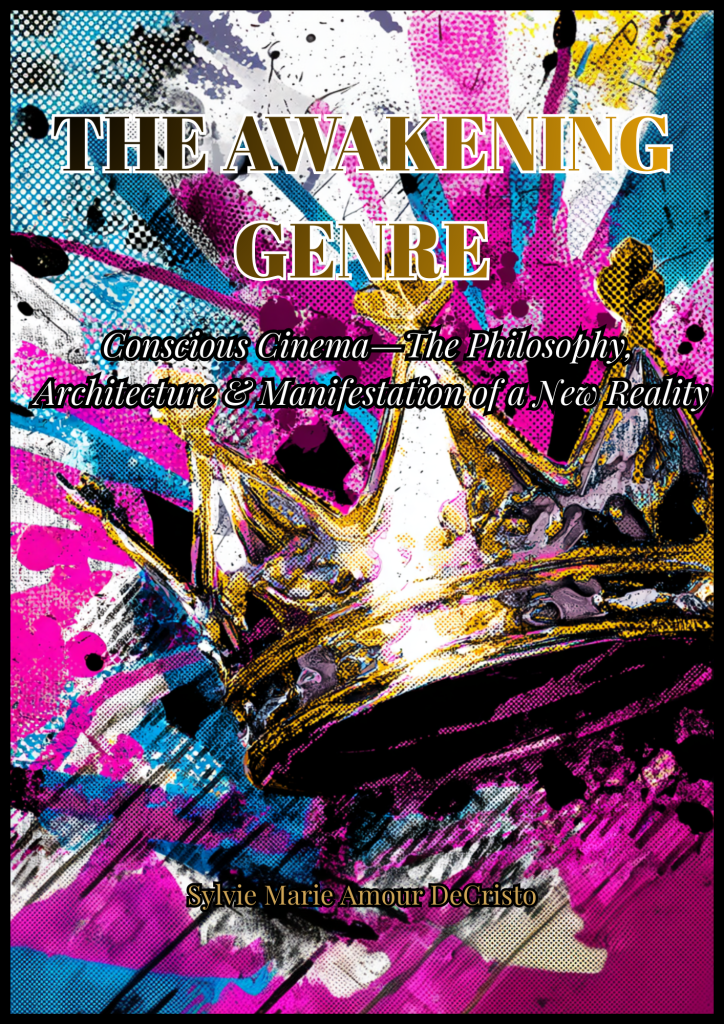
The Awakening Genre: Conscious Cinema – The Philosophy, Architecture, and Manifestation of a New Reality Available in three exquisite, mystical covers — each a gateway to a different dimension of awakening:
Buy Cover 1: The Philosopher’s Stone →
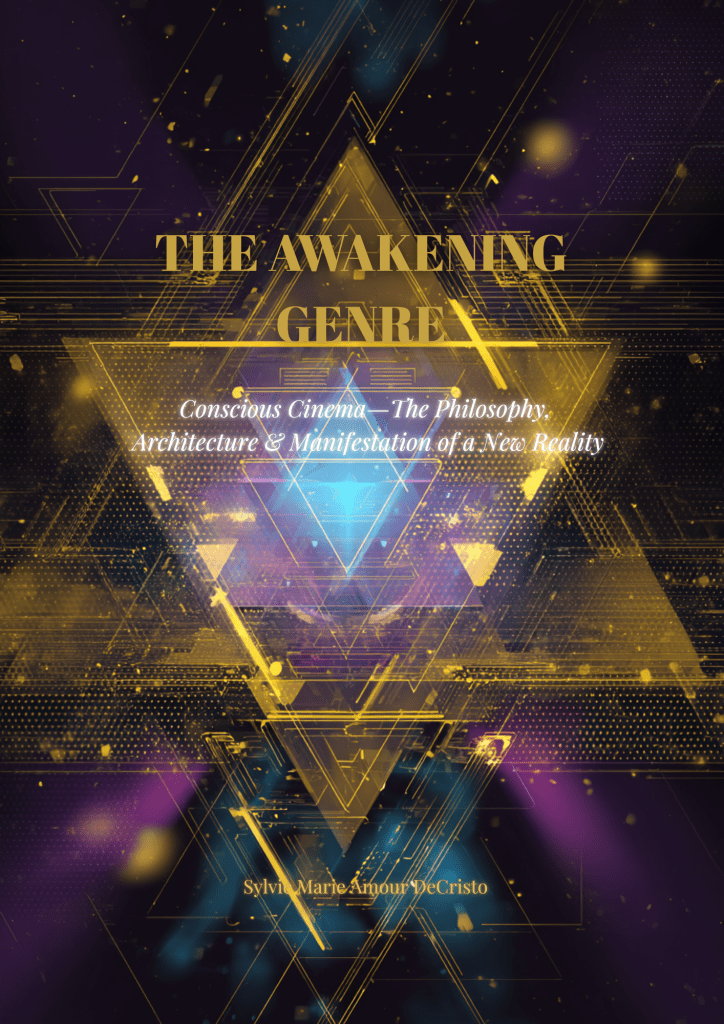
Cover 1: The Philosopher’s Stone
Cover 2: The Light Weaver’s Loom
Cover 3: The Sovereign’s Crown
Buy Cover 2: The Light Weaver’s Loom →
What You Receive for £33
Invitation to the living ecosystem: Awakening Film Festival, Global Awakening Network (GAN), Awakening Arts Academy
Instant digital access to all three volumes (PDF download)
Volume I: The Philosophy — 7 Pillars of Creation & 13 Awakening Archetypes
Volume II: The Architecture — Magdalene Method, Golden Grid, Awakened Production Alchemy
Volume III: The Canon & Future — Proto-Awakening Films Decoded + Vision to 2028
Full Awakening Genre Manifesto — your sovereign vow to Truth
Buy Cover 3: The Sovereign’s Crown →
 Inner Vision Pictures
One thought on “The Choice Point Script Structure The Magdalene Method: Replacing the Three-Act Model With 7 Key Decisions”